Livora Gracely

Writing to remember, sharing to inspire

  • Love Wrapped in a Manger

    Supporting Verses
    Luke 2:7
    1 John 4:9
    Philippians 2:6–7

    Introduction
    If the world were choosing where a King should be born, we would pick a palace—golden halls, trumpets, shimmering light. But God chose a manger. Straw instead of silk. Shepherds instead of princes. A stable instead of a royal nursery. Why? Because the greatest love is not afraid to come close—closer than anyone dared to imagine.

    Truth & History
    Jesus did not enter history as a legend or a myth. His birth is recorded by historians, witnessed by real eyes, embraced by ordinary people. God stepped into time, into our dust, into our hunger and tears. He didn’t wait for humanity to climb up to Heaven—He brought Heaven down to us. The infant King lying in a manger was not a symbol of weakness, but a declaration: God’s love comes low so no one is too far to reach it.

    Quotes Interwoven
    The humility of Christmas has always moved people to wonder. C.S. Lewis beautifully captured this mystery when he wrote that the Son of God became human so humans could become children of God. It’s a love that stoops to lift.
    And Corrie ten Boom once reminded the world, “Who can add to Christmas? The perfect gift was given. God so loved the world!” These words invite us to remember: Christmas is not a holiday invented by humans—it is a rescue mission launched by Heaven.

    Conclusion
    The manger is proof that love doesn’t stay distant. It arrives in the quiet, in the ordinary, in the places others overlook. The Gift of God did not first appear on a throne—but in arms that trembled with joy and surprise. Love came small so it could grow inside every heart willing to receive it.

    Today’s Challenge
    Today, many celebrate Christmas with lights and laughter, yet miss the humble heartbeat of the story. We often chase perfection—beautiful decorations, perfect photos, the “ideal” celebration—while the Savior waits quietly to be welcomed. This season calls us back to simplicity: to open our hearts, to notice those forgotten by the world, and to let love enter the places we usually hide. Because the manger teaches us this truth: the best gifts are not grand—they are personal.

  • The Heart Behind Every Gift

    Supporting Verses
    James 1:17
    John 3:16
    Matthew 2:11

    Introduction
    Every gift carries a message from the giver. It isn’t only about the box or the price—it is about the heart that chooses, prepares, and sacrifices. When the Magi traveled far from their homeland, they didn’t come empty-handed. They carried gifts because they knew who the Child was meant to be: a King worthy of honor, a Savior worthy of worship.

    Truth & History
    The Magi were not random visitors or curious tourists. History suggests they were scholars from the East, likely influenced by teachings preserved from the prophet Daniel—knowledge about a Messiah, a promised King whose arrival would change the world. Their journey wasn’t a guess. It was guided by Scripture and by a star sent from Heaven. They came because they understood: this baby was a royal Gift from God, the fulfillment of prophecies long awaited.

    Quotes Interwoven
    The idea of giving shaped history long before Christmas lights and cards existed. As one wise voice once said, “We make a living by what we get, but we make a life by what we give” — Winston Churchill. His reminder echoes through the ages: giving forms the truest part of who we are.
    And another beautiful insight tells us that giving isn’t about how much we have, but how much love we offer: “It’s not how much we give but how much love we put into giving” — Mother Teresa. Her life proved that small gifts, offered with great love, carry Heaven’s power.

    Conclusion
    The Magi’s gifts—gold, frankincense, and myrrh—were not random treasures. They were symbols: a King’s wealth, a Priest’s worship, and a Savior’s sacrifice. Their offering revealed their hearts. When we give love, time, forgiveness, or kindness, we are telling the world who we belong to—and who we adore.

    Today’s Challenge
    Today, many gifts are chosen in a hurry, driven more by routine than meaning. We can forget that giving is an act of love, not obligation. But Christmas invites us back to something deeper: to give with purpose, to bless with intention, and to remember that every generous act is a reflection of God’s own heart. The world still waits for gifts that carry Heaven’s message—will we be the ones who offer them?

  • Gifted by Grace

    Everyone loves a gift. A wrapped box, a bright ribbon, and the quiet hope that something wonderful waits inside. Christmas is the season when gifts appear under trees, in stockings, and secretly left at doors. Yet long before shopping lists and gift receipts existed, a far greater Gift arrived—small, fragile, lying in a manger.

    The story of Christmas begins with a baby who had nothing… yet He was everything the world needed. He did not come with gold, but He was the King. He did not come with armies, but He brought peace. He did not come in loud celebration, yet Heaven itself could not keep silent.

    And this Gift was not earned. Not requested. Not expected in the way it came. The love of God wrapped Himself in human skin and breathed our air. A Gift so simple a child could understand it, yet so deep that even the wisest scholars could only bow in wonder.

    The first people to recognize this wonder were not the powerful or famous. They were outsiders—humble shepherds and far-traveling Magi. They brought what they had: good news, and gifts fit for a King. Because when love is real, it always gives. It always moves. It always responds.

    That is the heartbeat of Christmas: not what we give to God, but what God has given to us. A love that does not hold back. A love that travels any distance. A love that reaches people others ignore. A love that changes everything it touches.

    So this Christmas, when you see a gift waiting to be opened, remember the first and greatest Gift. The One who came not to decorate a season, but to rescue a world. And that Gift is still offered today—full, free, and forever.

  • When the Lamb Leads the World

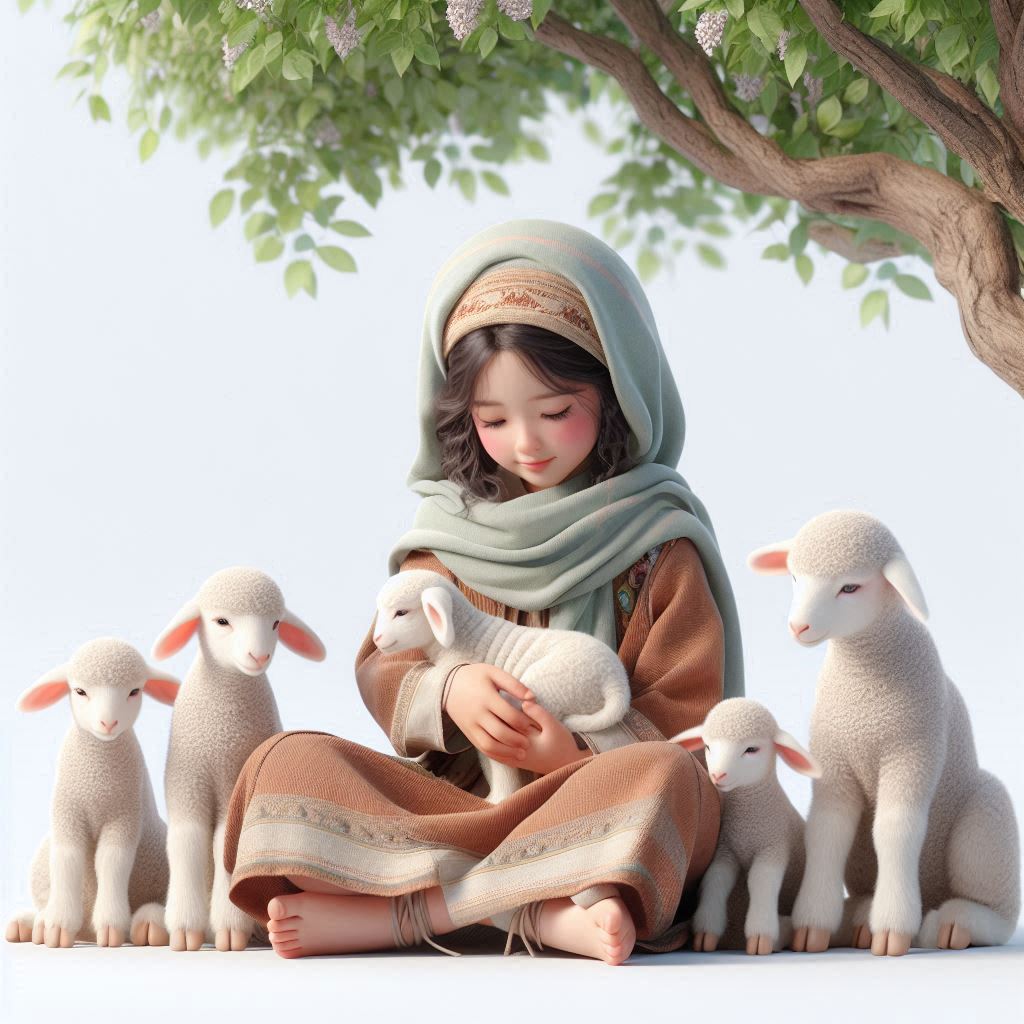
    The Christmas story begins with angels, shepherds, and a manger—but its deepest mystery rests in the quiet presence of the Lamb. Not the soft, woolly creature beside the shepherds, but the One lying in the hay: fragile like us, yet destined to carry a weight none of us could bear. Every scene we traveled—sheep wandering, shepherds seeking, sons returning, disciples learning—was pointing toward Him all along.

    For the Shepherd of Christmas is also the Lamb of Passover. The Child in the manger grows into the One whose life becomes the final offering, whose sacrifice opens a path home for every lost heart. In Him, the long biblical tapestry of sheep and sacrifice finds its completion. What was once symbol becomes Savior; what was once ritual becomes redemption; what was once fragile becomes victorious.

    We looked at sheep because they expose our own souls—naive, easily distracted, longing for guidance, terrified of the dark. But Christmas never mocks our weakness; it meets it. The Shepherd comes not demanding strength but offering His own. Where we wander, He finds. Where we resist, He trains. Where we fall, He restores. Every bleating sheep in Scripture becomes a parable of grace disguised in wool.

    We saw shepherds because we need them still—faithful leaders who listen before they speak, who guard rather than devour, who guide with humility rather than hunger for power. Their calling is costly, their burden sacred, and their failures dangerous. Yet even when human shepherds falter, Christmas reminds us of the One Shepherd who never does, who never sleeps, who never misleads, and who never abandons His flock.

    And we followed the prodigal patterns of our own hearts—those moments when we wake up far from home, suddenly aware of our hunger, our emptiness, our longing for the voice we once ignored. Christmas whispers that return is always possible, because the Shepherd has already stepped into our world, lighting the path back long before we take the first trembling step.

    So as this season unfolds and the lights flicker softly across our homes, may we hear the ancient truth rising again:
    The Shepherd has come. The Lamb has been given. The flock is not forgotten.
    And with every step we take toward Him—whether confident or trembling—we discover the miracle at the heart of Christmas:
    We were never walking alone.

  • The Shepherds of Today

    Three Supporting Verses
    Acts 20:28
    1 Timothy 5:17
    Romans 12:2

    Introduction
    In every generation, the story of sheep and shepherds continues—not as a nostalgic metaphor, but as a living reality. The early church understood this deeply. Their communities were fragile, their challenges fierce, and their leaders carried the weight of guiding souls through spiritual wilderness. Christmas may begin with shepherds gazing at a newborn King, but it continues today through those entrusted to care for God’s flock with humility, courage, and discernment.

    Truth / Historical Grounding
    Historical records and early Christian writings reveal that pastors and elders in the first-century church were not self-appointed leaders but individuals affirmed through prayer, apostolic guidance, and the visible work of the Spirit. Their role mirrored ancient shepherding: protecting the flock from deception, leading them toward spiritual nourishment, and serving as guardians of truth. Yet Scripture also issues a sobering warning—some shepherds would become “wolves,” distorting truth and harming the very sheep they were meant to protect. This dual reality—honor and caution—is woven into the earliest Christian communities and remains just as real today.

    Two Integrated Quotes
    Dietrich Bonhoeffer once wrote, “The task of the church is to be the church.” His words remind us that spiritual leadership is not about charisma or control, but about embodying Christ’s heart. True shepherds serve not themselves but the flock, guarding unity and guiding people toward transformation.
    On the other hand, Teresa of Ávila offered a balancing insight: “Truth suffers, but never dies.” Her conviction anchors us when leadership fails. Even when human shepherds falter, the Truth they point toward remains unbroken. The Good Shepherd continues to guide His people, quietly correcting what is distorted and restoring what is wounded.

    Conclusion
    The presence of shepherds—ancient or modern—reveals God’s commitment to His flock. Christmas introduced the ultimate Shepherd-Lamb, but the Spirit continues His work through imperfect yet chosen men and women who guide communities with reverence. Their calling is sacred, their accountability serious, and their mission a reflection of the One who laid down His life for His sheep.

    Today’s Challenge
    Today, spiritual leadership is often tangled in noise—celebrity culture, suspicion, shallow teaching, and impatience with slow growth. Many believers either distrust leadership entirely or follow voices untested by Scripture. To rekindle the ancient pattern, we must learn again to test everything, honor true shepherds, and cultivate spiritual discernment. Strength returns when God’s people learn to listen wisely, follow thoughtfully, and anchor themselves in the Shepherd who never misleads.

  • The Training of Trust

    Three Supporting Verses
    Deuteronomy 8:2
    John 21:17
    Hebrews 12:11

    Introduction
    Sheep do not naturally trust. They learn it slowly, through guidance, repetition, and the familiar rhythm of a shepherd’s steps. Scripture mirrors this truth in the story of God’s people: rescued from Egypt, yet needing years of wilderness training before they could enter promise. Even the disciples—three and a half years beside Jesus—were shaped into followers, not by instant faith, but by ongoing formation. Christmas celebrates a Savior who comes near, but discipleship reveals a Shepherd who patiently trains His flock to walk with Him.

    Truth / Historical Grounding
    In the ancient world, shepherds trained their sheep to recognize not only a voice but a pattern—specific whistles, calls, and movements that signaled danger, rest, or direction. Historical records from Mesopotamia and early Israel highlight that flocks did not survive through instinct; they survived through discipline. The same pattern appears in Scripture. Israel’s forty-year wilderness journey was not excessive punishment but intentional shaping. They had been freed from Pharaoh, but fear, complaints, and confusion still governed their reactions. Likewise, the disciples—though chosen—needed correction, redirection, and restoration. Their failures were not exceptions; they were normal stages in the shaping of trust.

    Two Integrated Quotes
    Dallas Willard once remarked, “Grace is not opposed to effort; it is opposed to earning.” His insight ties beautifully to the shepherding theme: sheep do not “earn” the shepherd’s care, but they must learn to follow if they desire life. Training is not a rejection of grace—it is the pathway through which grace becomes strength.
    Corrie ten Boom offered a companion truth when she said, “Never be afraid to trust an unknown future to a known God.” Her life, marked by suffering and improbable hope, reflects the same principle. Trust grows not from clarity but from familiarity—just as sheep trust the shepherd long before they understand the journey.

    Conclusion
    The story of training—whether in the wilderness, in Galilee, or in our own lives—reveals a Shepherd who refuses to abandon His flock to ignorance or immaturity. Christmas introduces the Savior; discipleship reveals the Trainer. And in the slow shaping of trust, we discover that even our failures are raw material for His faithfulness.

    Today’s Challenge
    Modern believers often resist discipline, equating comfort with blessing and challenge with misdirection. Spiritual training feels foreign in an age that demands instant results and effortless spirituality. To recover the ancient way, we must again embrace practices that form us—honest reflection, scriptural testing, patient obedience, and the humility to be corrected. Only then can the flock regain the strength, discernment, and trust that once defined the people of God.

  • The Lost One Returning

    Three Supporting Verses
    Luke 15:7
    Luke 15:17
    Psalm 119:176

    Introduction
    There is a quiet moment in every wandering story—an inner turning point where the heart suddenly remembers home. The Prodigal Son experienced it in a distant land; a lost sheep experiences it when hunger and fear break its stubbornness. Scripture shows that returning rarely begins with footsteps. It begins with awakening. And Christmas, in its gentle hush, becomes that awakening call: “Come home. You were never forgotten.”

    Truth / Historical Grounding
    In Jewish culture, a lost sheep was not just a missing asset; it was a personal failure of the shepherd. Ancient shepherds often kept mental records of their flocks, knowing each sheep’s patterns, tendencies, and weak spots. When one strayed, they did not shrug—it triggered an immediate rescue. The story of the Prodigal Son fits this shepherding background. Though the father doesn’t physically chase the boy, the cultural expectation of inheritance, identity, and familial belonging acts as the “shepherd’s voice” embedded in the son’s memory. His return is not random; it reflects the ancient belief that a well-loved sheep, even when lost, carries the shepherd’s imprint inside.

    Two Integrated Quotes
    Fyodor Dostoevsky once wrote, “The soul is healed by being with children.” His words echo the manger scene—a Child whose very presence becomes a healing invitation to return. Just as the son remembered his father’s house, our souls remember innocence, belonging, and the warmth we left behind.
    Anne Lamott offered another insight: “Grace bats last.” In her simple phrasing lies the heartbeat of every return story. Grace waits until our excuses collapse, until our pride dissolves, until our hunger finally brings clarity. Then, like a shepherd lifting a weary sheep, grace steps in—not to scold, but to restore.

    Conclusion
    The lost sheep and the lost son both reveal the same truth: returning is possible because Someone keeps the door open. Christmas is the proof that God moved first—He came near before we even turned around. The Child in the manger stands as heaven’s reminder that no distance is too far, no mistake too deep, no heart too tangled for a homecoming.

    Today’s Challenge
    Today, many wander not out of rebellion but out of exhaustion, doubt, or disappointment. Returning is harder when cynicism whispers louder than hope. To revive the ancient pattern of coming home, we must allow honesty to break the silence—naming our need, acknowledging our drift, and opening ourselves to grace. The path back is always the same: one honest step, followed by a Shepherd who carries us the rest of the way.

  • The Fragile Wanderer

    Three Supporting Verses
    Isaiah 53:6
    Matthew 9:36
    1 Peter 2:25

    Introduction
    Sheep are charming, but let’s be honest—they are also hilariously unprepared for life. They panic easily, forget directions, and follow anything that moves, including the wrong shepherd. In Scripture, this fragility is never used to shame humanity but to reveal a tender truth: God understands our weaknesses far more than we admit. When Christmas arrives in the form of a Child, it is heaven saying, “I know you wander—and I am here to find you.”

    Truth / Historical Grounding
    Historically, sheep were the most defenseless livestock in the ancient world. No claws, no sharp teeth, poor vision, and an unfortunate habit of walking straight into danger. Ancient writings outside the Bible confirm that without constant supervision, entire flocks could vanish in a single night—lost to cliffs, storms, thieves, or predators. This reality explains why Jesus often described people as sheep: not to belittle them but to confront a truth every shepherd understood. Survival required guidance. Independence was fatal. And when Jesus told His disciples that they would “scatter” when He was arrested, He was speaking the language of real shepherding, not poetry.

    Two Integrated Quotes
    G. K. Chesterton once said, “We are perishing for want of wonder, not for want of wonders.” His words echo the sheep’s wandering heart—easily distracted, quick to chase illusions. It is not danger that leads us astray first; it is forgetfulness. And that is why Christmas calls us back into wonder before it calls us to obedience.
    Madeleine L’Engle captured another truth when she observed, “We can’t light the dark, but we can walk into it with trust.” Sheep cannot fight wolves, but they can follow a shepherd who carries a staff. Her reminder—that trust is stronger than fear—mirrors the biblical vision of people who are fragile yet fiercely loved.

    Conclusion
    The story of the sheep is the story of us: vulnerable creatures who wander from safety, not out of rebellion but out of confusion. Yet Christmas proclaims a Shepherd who steps into the cold night, not waiting for the flock to find its way home. The Child in the manger grows into the Man who seeks the lost, restores the scattered, and turns wandering hearts into worshippers.

    Today’s Challenge
    Today, wandering looks different. We drift not into deserts but into distractions; not toward cliffs but toward comforts that quietly dull our souls. Our age makes wandering easy and returning difficult. To revive the ancient rhythm, we must rediscover intentional dependence—seeking counsel, embracing spiritual discipline, and refusing the illusion of self-sufficiency. Only then can the fragile wanderer become the faithful follower once more.

  • The Shepherd’s Pattern

    Three Supporting Verses
    John 10:11
    Psalm 23:1
    Luke 15:4

    Introduction
    Before Christmas became candles, songs, and crowded gatherings, it was first a story about a Shepherd and His flock. The Bible paints God not as a distant ruler but as Someone who walks among sheep, calling them by name. Christmas continues that theme: the arrival of a Shepherd-King who knows every fear, every wandering step, and every fragile corner of the human heart.

    Truth / Historical Grounding
    In the ancient Near East, sheep were not decorative animals—they were central to survival. They provided food, clothing, sacrifice, and economic stability. Shepherding was a respected, though exhausting, profession that required constant presence and fierce protection. This historical context explains why Jesus’ audience immediately understood His metaphors. When He spoke of leaving ninety-nine sheep to find one, they heard not romance but realism—because a lost sheep would die within hours without intervention. The nativity’s shepherds, therefore, were not symbolic extras; they were cultural anchors confirming the story’s authenticity.

    Two Integrated Quotes
    C. S. Lewis once observed that “Love is not affectionate feeling, but a steady wish for the loved person’s good.” His words echo the shepherd’s calling—a love proven not by sentiment, but by pursuit, endurance, and sacrifice. A shepherd protects even when it is inconvenient, and that is the pulse of Christmas love.
    Meanwhile, Elisabeth Elliot described obedience as “doing God’s will when you don’t feel like it.” Her insight fits the weary shepherds who guarded their flocks through cold nights because devotion demanded it. Their quiet faithfulness reflects the steady obedience that forms the backbone of both ancient shepherding and the Christmas story itself.

    Conclusion
    When we watch the shepherds in the nativity, we are not watching supporting actors; we are watching a divine pattern. They reflect the God who seeks, guards, and guides His flock. Their presence on the first Christmas night reminds us that heaven came not for the powerful but for the vulnerable—those who know they cannot survive without the Shepherd’s voice.

    Today’s Challenge
    Modern life has made it far too easy to live without guidance. We trust algorithms more than wisdom, noise more than truth. The ancient shepherd’s dependence on vigilance and voice seems outdated, yet this is precisely why the pattern fades from view. To recover the shepherd’s way, we must relearn the practice of listening—slowing our pace, testing what we hear, and allowing the true Shepherd to interrupt our wandering. Only then can the old pattern rise again with its original strength.

  • Sheepish Christmas Secrets

    The Christmas story often arrives wrapped in starlight, angel choirs, and royal promises. Yet if we listen closely, there is also the soft rustle of wool—an overlooked soundtrack hiding at the edges of the nativity scene. Our imagination usually rushes toward shepherds and magi, but tucked between them stands a creature that has walked through Scripture from Genesis to the Gospels: the humble sheep. Strangely quiet. Ridiculously vulnerable. And mysteriously central.

    Long before a Child lay in a manger, sheep had already carried the weight of countless stories. They were not just livestock but symbols of belonging, sacrifice, lostness, and rescue. When Israel needed deliverance, a lamb’s blood marked their doors. When sin needed atonement, a spotless lamb stood in the place of the guilty. When Jesus wished to describe His love, His people, and His mission, He reached not for lions, war horses, or eagles—but for sheep.

    It is amusing when you think about it. God could have chosen any animal to be the star of His metaphors. An elephant to symbolize memory? A horse to represent strength? An eagle for vision? But no. The Messiah keeps pointing to sheep—these gentle, stubborn creatures who panic at shadows, follow anything that moves, and stand completely helpless without a shepherd. In the Kingdom storyline, sheep are not the comic relief; they are the mirror.

    And so it is no accident that on the night heaven touched earth, the first audience was not priests, nobles, or politicians. It was shepherds—overlooked men watching over overlooked animals. The sky tore open not above Caesar’s palace but above a field dotted with woolly silhouettes. For in God’s narrative, greatness often begins in unnoticed places, and glory prefers the company of the simple, the small, and the strangely soft-hearted.

    But this Christmas, we shine the lantern not on the shepherds—but on the sheep themselves. What did they represent in the ancient world? Why did God weave them so tightly into His metaphors and rituals? Why does the Child in the manger grow up to be called the “Lamb of God who takes away the sin of the world”? And what does that mean for us who often wander, worry, and forget the voice that calls us home?

    This article is a journey into wool and wonder—where we rediscover Christmas not only through kings and angels, but through creatures who bleated their way through the entire biblical drama. Their story is strangely our story. Their weaknesses strangely our weaknesses. Their rescue strangely our hope. And perhaps this year, as we kneel at the manger, the sheep will teach us something the season has been whispering all along.