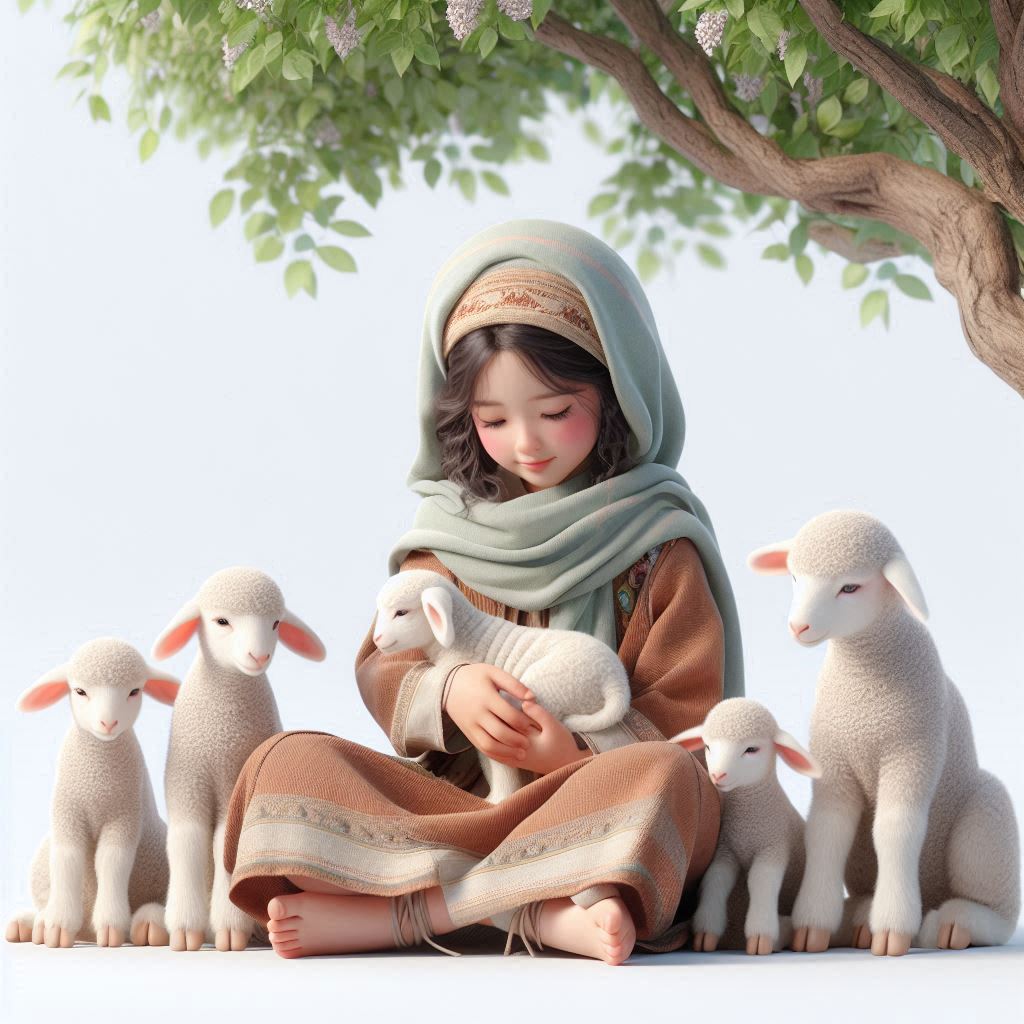
The Fragile Wanderer
Three Supporting Verses
Isaiah 53:6
Matthew 9:36
1 Peter 2:25
Introduction
Sheep are charming, but let’s be honest—they are also hilariously unprepared for life. They panic easily, forget directions, and follow anything that moves, including the wrong shepherd. In Scripture, this fragility is never used to shame humanity but to reveal a tender truth: God understands our weaknesses far more than we admit. When Christmas arrives in the form of a Child, it is heaven saying, “I know you wander—and I am here to find you.”
Truth / Historical Grounding
Historically, sheep were the most defenseless livestock in the ancient world. No claws, no sharp teeth, poor vision, and an unfortunate habit of walking straight into danger. Ancient writings outside the Bible confirm that without constant supervision, entire flocks could vanish in a single night—lost to cliffs, storms, thieves, or predators. This reality explains why Jesus often described people as sheep: not to belittle them but to confront a truth every shepherd understood. Survival required guidance. Independence was fatal. And when Jesus told His disciples that they would “scatter” when He was arrested, He was speaking the language of real shepherding, not poetry.
Two Integrated Quotes
G. K. Chesterton once said, “We are perishing for want of wonder, not for want of wonders.” His words echo the sheep’s wandering heart—easily distracted, quick to chase illusions. It is not danger that leads us astray first; it is forgetfulness. And that is why Christmas calls us back into wonder before it calls us to obedience.
Madeleine L’Engle captured another truth when she observed, “We can’t light the dark, but we can walk into it with trust.” Sheep cannot fight wolves, but they can follow a shepherd who carries a staff. Her reminder—that trust is stronger than fear—mirrors the biblical vision of people who are fragile yet fiercely loved.
Conclusion
The story of the sheep is the story of us: vulnerable creatures who wander from safety, not out of rebellion but out of confusion. Yet Christmas proclaims a Shepherd who steps into the cold night, not waiting for the flock to find its way home. The Child in the manger grows into the Man who seeks the lost, restores the scattered, and turns wandering hearts into worshippers.
Today’s Challenge
Today, wandering looks different. We drift not into deserts but into distractions; not toward cliffs but toward comforts that quietly dull our souls. Our age makes wandering easy and returning difficult. To revive the ancient rhythm, we must rediscover intentional dependence—seeking counsel, embracing spiritual discipline, and refusing the illusion of self-sufficiency. Only then can the fragile wanderer become the faithful follower once more.


Leave a comment