Soul’s Seal
To test Jesus, the Pharisees and Herodians set a trap by asking,
“Is it lawful to pay taxes to Caesar, or not?” (Mark 12:14).
The question seemed like a clever snare:
a “yes” answer would anger His Jewish audience,
while a “no” would accuse Him of rebellion before Rome.
Witty Wisdom
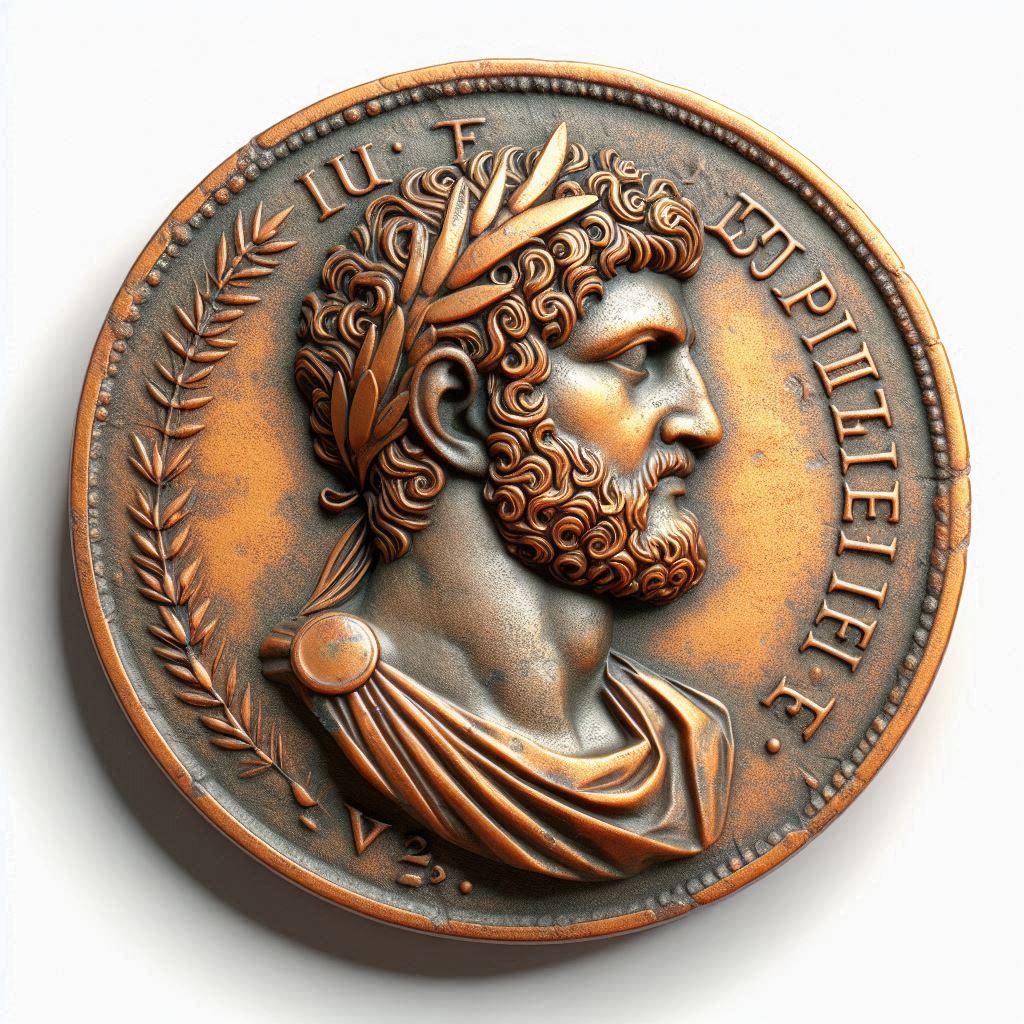
Jesus asked for a denarius and said,
“Whose image and inscription is this?”
They replied, “Caesar’s.”
Then He answered,
“Render to Caesar the things that are Caesar’s,
and to God the things that are God’s”
(Mark 12:16–17).
A profound truth
A coin bearing Caesar’s image belongs to Caesar.
But man, bearing God’s image (imago Dei), belongs to God.
Jesus was not merely teaching about taxes
—He was unveiling the essence of identity and ownership.
Illustration
Imagine holding two objects:
a coin stamped with Caesar’s profile, and a human face reflecting God’s likeness.
Which holds greater value?
The coin can be spent, but the human soul carries eternal inscription.
Just as Caesar’s stamp proves political authority,
God’s stamp—His Spirit—marks our eternal belonging
(Eph. 1:13–14).
The Puzzle of Identity
A rabbi once quipped:
“The coin of Caesar is silver; the coin of God is flesh and breath.
Which is richer?”
Even emperors cannot mint a soul;
only God breathes life.
While we give coins to rulers,
we give our very selves to God.
Scriptural Cross-References
- “Let us make man in our image, after our likeness” (Gen. 1:26).
- “The earth is the Lord’s, and everything in it” (Ps. 24:1).
- “You are not your own; you were bought with a price” (1 Cor. 6:19–20).
Meditative Quotes
“Caesar may have his image on a coin,
but God has His image on your soul.”
— Augustine.
“When Jesus spoke of the coin,
He was pointing beyond politics to
the very essence of who we belong to.”
— N. T. Wright.
The question of taxes turned into the revelation of ownership:
if Caesar claims coins by his image,
how much more should God claim you,
stamped with His likeness and redeemed by His Son


Leave a comment