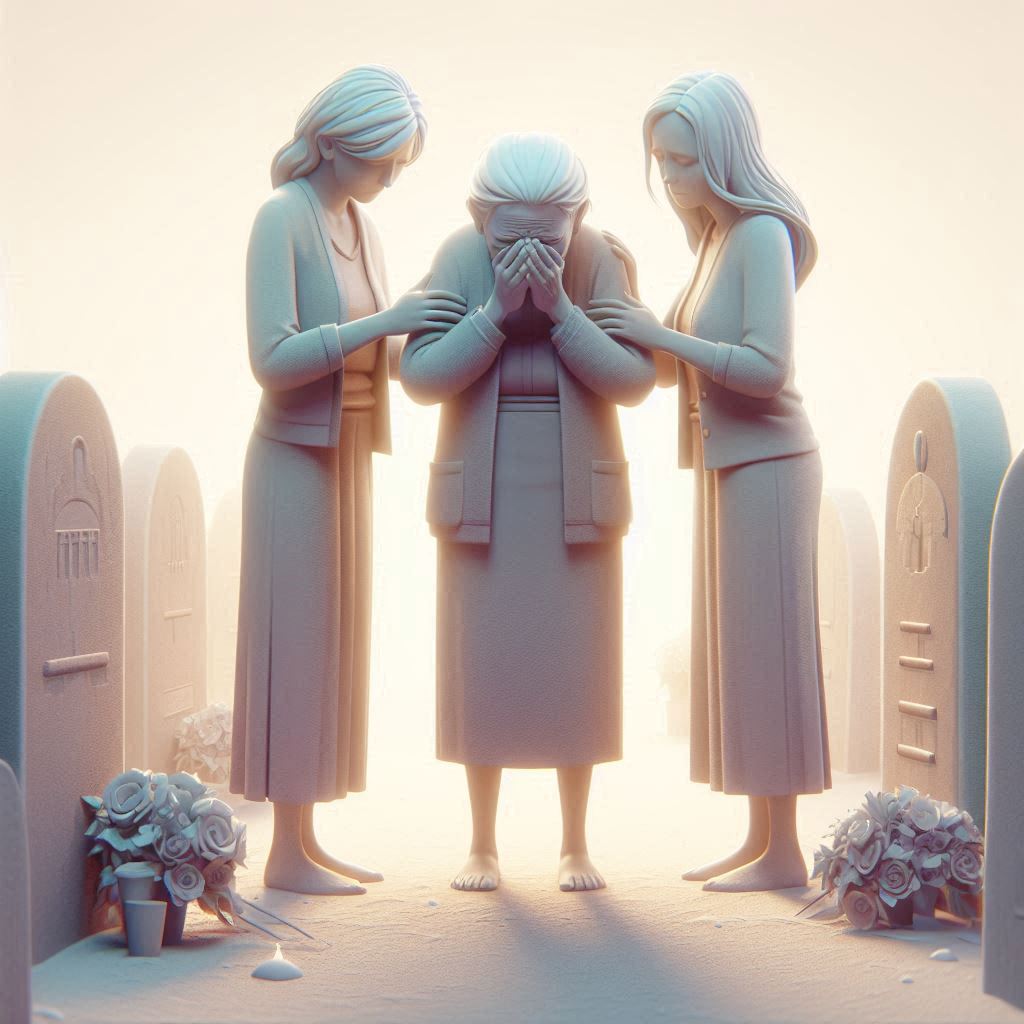
The Extinguishing of a Line
After the death of Elimelech, Naomi’s two sons, Mahlon and Chilion, took Moabite wives: Orpah and Ruth (Ruth 1:4).
Yet within ten years, both sons also died, leaving Naomi without husband, without sons, and without descendants. In that culture, this was more than personal grief—it was the extinction of her family’s name and inheritance in Israel.
כָּרֵת (karēt), meaning “to cut off.”
This word was often used of judgment or the end of a covenant line (cf. Genesis 17:14; Leviticus 20:17). For Naomi, the deaths of Mahlon and Chilion felt like being cut off—not only from joy but from the future itself.
The Bitter Irony of Their Names
Names in Scripture often reveal character or destiny.
Mahlon means “sickness” and Chilion means “wasting” or “destruction.”
Their very names foreshadowed fragility and sorrow.
This reminds us of Isaiah 40:6–7: “All flesh is grass, and all its beauty is like the flower of the field. The grass withers, the flower fades, but the word of our God will stand forever.”
Josephus remarks in Antiquities that those who intermarried outside God’s covenant often found trouble and sorrow. Here again, Naomi’s family tasted this truth. By leaving Bethlehem, they gained Moabite wives but lost the hope of a lasting heritage.
The Desolation of Naomi
Now Naomi stands as a widow without heirs, and her two daughters-in-law are widows in a foreign land. In the ancient world, widowhood was often synonymous with helplessness (cf. Lamentations 1:1). Without husband or sons, Naomi felt abandoned by God Himself. Later she will cry, “The Almighty has dealt very bitterly with me” (Ruth 1:20).
Here we glimpse the theology of suffering: sometimes God allows His people to feel stripped of every earthly security so that they might discover His hidden provision.
Paul echoes this in 2 Corinthians 1:9: “We felt that we had received the sentence of death. But that was to make us rely not on ourselves but on God who raises the dead.”
Illustrations from Scripture
From the Old Testament, recall Job, who lost not only wealth and health but also all his children (Job 1:18–19). Job cried out in grief but eventually discovered that the Redeemer still lived (Job 19:25). From the New Testament, remember Mary Magdalene at the tomb (John 20:11–18). She wept, believing all hope was gone because her Lord was dead. Yet in the very place of loss, she encountered the risen Christ. Both Job and Mary reveal what Naomi would one day discover: God’s purposes are hidden but never absent.
Theological Reflection
The deaths of Mahlon and Chilion mark the lowest point of Naomi’s story. Her arms were empty, her house was silent, her name was fading. This is the picture of Israel without hope, and of every soul apart from Christ—cut off, bitter, and barren. Yet it is precisely in such hopelessness that the Redeemer’s light shines brightest.
Application for Believers Today
This teaches us not to measure our hope by outward prosperity or family strength.
Many today mourn dreams cut off, names forgotten, or futures lost.
Yet Scripture declares that “a bruised reed He will not break, and a smoldering wick He will not quench” (Matthew 12:20, quoting Isaiah 42:3).
What Naomi could not see was that through Ruth, the line of David—and ultimately the Messiah—was still alive in God’s plan


Leave a Reply