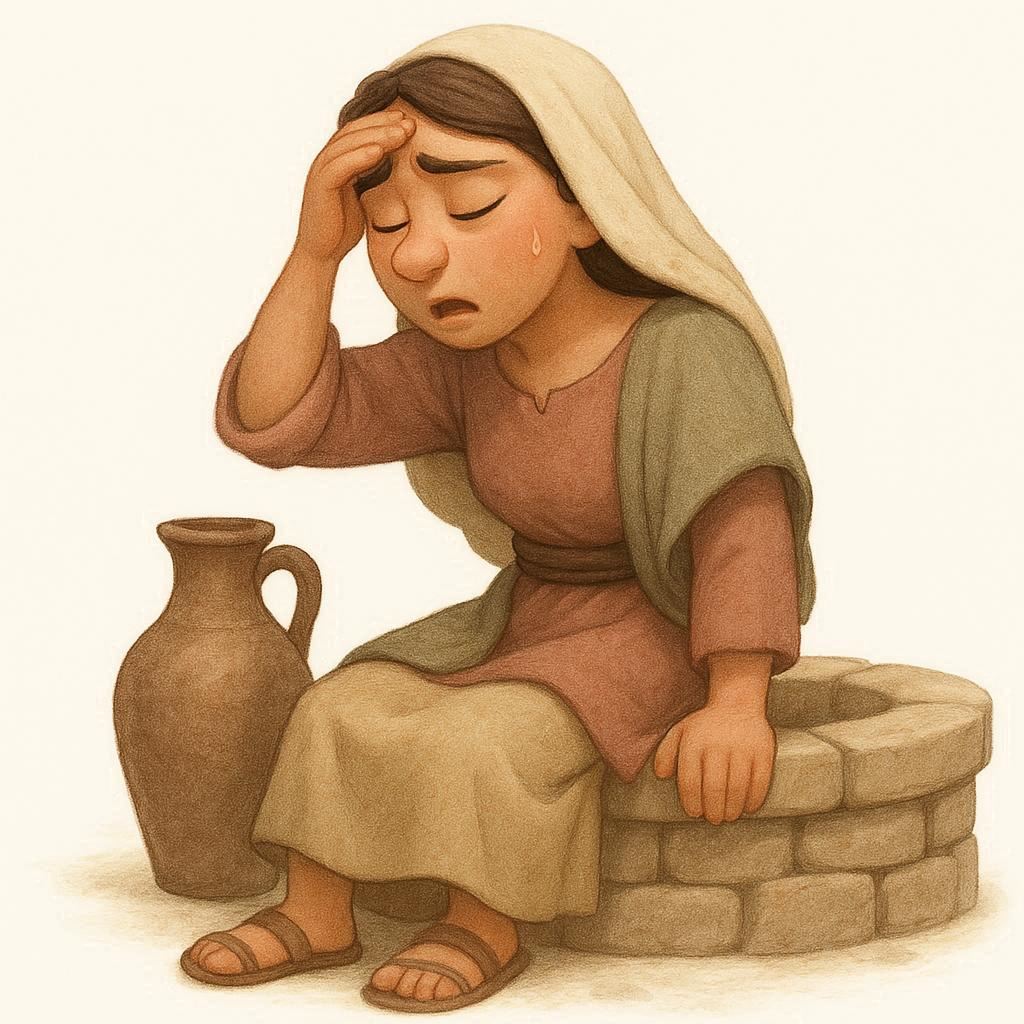
The Samaritan woman’s story (John 4) is not merely about a sinner corrected, but a broken heart healed. She carried shame—five husbands, a sixth man, and the scorn of her village. In history, Josephus wrote how Samaritans were despised by the Jews, considered impure and unworthy. So who would care for such a woman? Who would notice her pain at the well at noon, when others avoided her?
But Jesus did. He pierced through her defenses, not to condemn but to restore. He revealed her past without rejection. This is the divine paradox: exposure that becomes healing. He is the one who, as the Psalmist says, “heals the brokenhearted and binds up their wounds” (Psalm 147:3). No rabbi of that era would have given her dignity, but the Messiah did.
Her tears became her testimony. Her shame became her song. She discovered her true identity not in men, not in religion, but in the Messiah who said, “I who speak to you am He” (John 4:26). The wound turned into worship. What she lost in human love, she found in the eternal love of God.
This is the pattern of God’s freedom:Not ignored wounds, but wounds healed.Not silenced stories, but stories turned into witness.Not rejection, but adoption.
Paul later echoes this in 2 Corinthians 5:17: “If anyone is in Christ, he is a new creation; the old has gone, the new has come.” That is why many in Sychar believed “because of the woman’s testimony” (John 4:39). She was freed to set free.
The keyword here is ἁλήθεια (aletheia) – “truth, reality unveiled.”For when truth touches a wounded soul, healing begins.


Leave a Reply