Livora Gracely

Writing to remember, sharing to inspire

    • “For You, God, tested us; You refined us like silver.” (Psalm 66:10)
    • “These [trials] have come so that the proven genuineness of your faith—of greater worth than gold, which perishes even though refined by fire—may result in praise, glory and honor when Jesus Christ is revealed.” (1 Peter 1:7)
    • “See, I have refined you, though not as silver; I have tested you in the furnace of affliction.” (Isaiah 48:10)
    Furnace Truth

    A vessel shaped but not fired is useless.

    It may look complete, but the moment water touches it, it dissolves back into mud.

    Without the furnace, beauty is fragile, and form is deceptive.

    The fire is not optional; it is essential.

    In the same way, God does not merely shape us—He proves us.

    Life’s trials are not punishments but furnaces. They harden character, seal identity, and prepare us for endurance. Without the fire of testing, we remain unstable, unable to carry the weight of purpose.

    The truth is simple: fire does not destroy clay; it strengthens it. Fire does not erase the Potter’s work; it finalizes it.

    Purifying

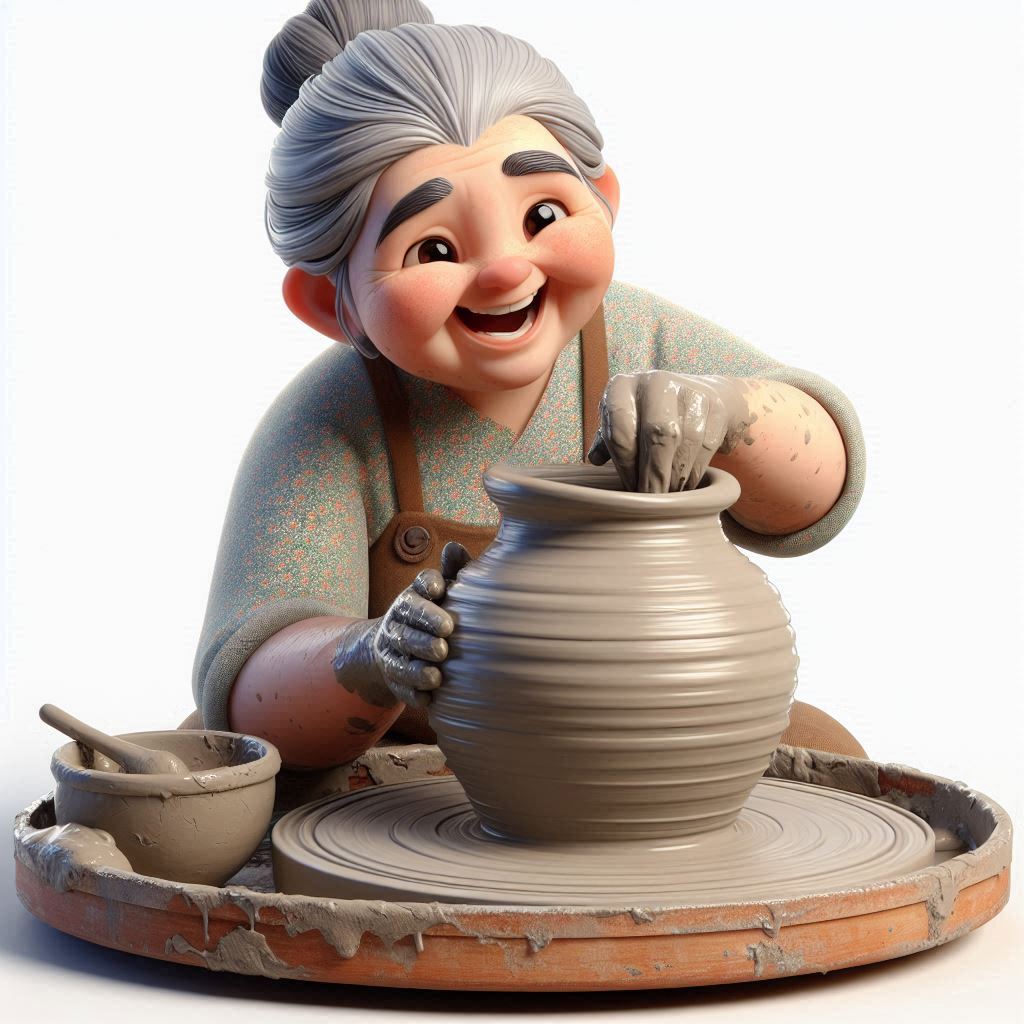
    Imagine a ceramic bowl placed on a shelf before it enters the kiln. It appears beautiful, but at the touch of water, it collapses. Only after hours in the fiery furnace does the clay become strong, able to hold what it was designed for.

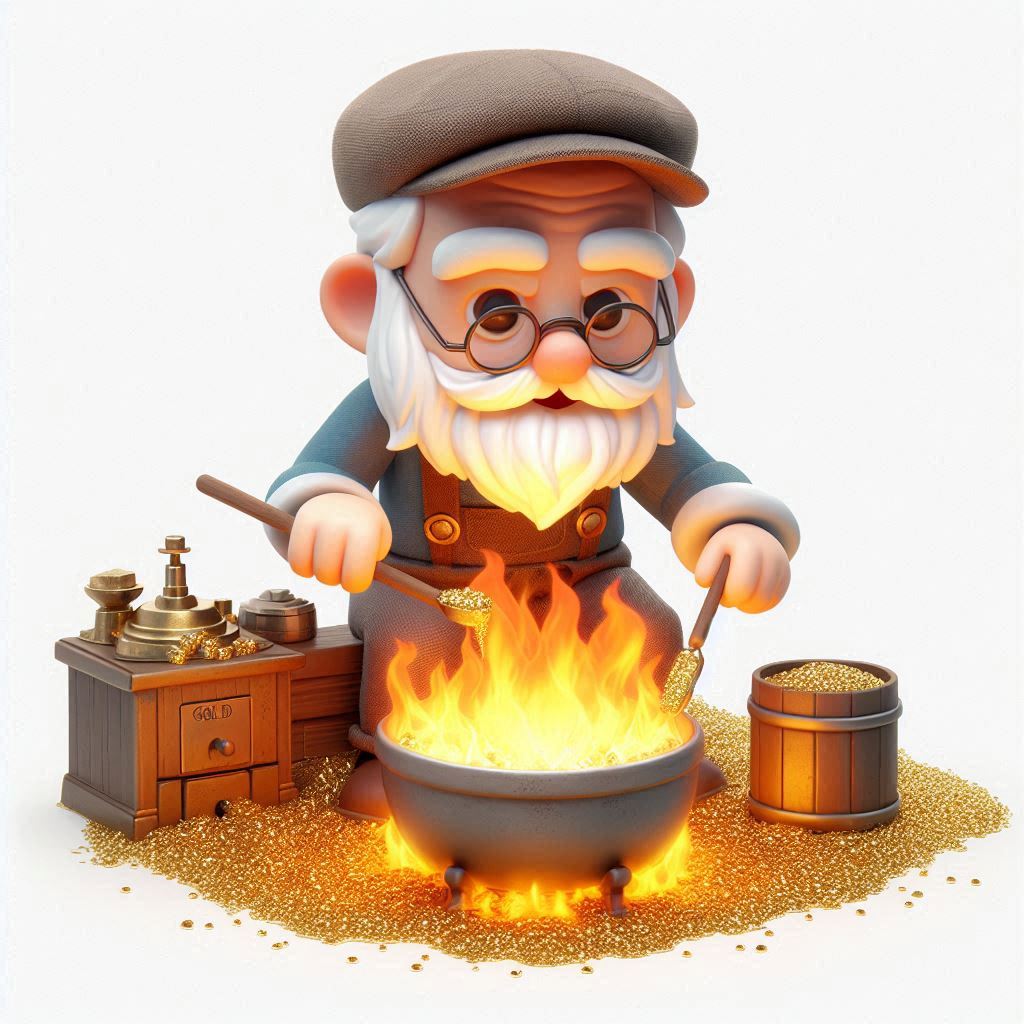
    The same principle is seen in nature. Gold, in its raw form, is mixed with impurities. Only when passed through fire does it emerge radiant, pure, and valuable. Trials, then, are God’s refining furnace, not His rejection.

    Think of Daniel’s three friends in Babylon. They entered the furnace expecting death, yet walked out without even the smell of smoke, their faith shining brighter than before (Daniel 3). The fire they feared became the testimony that still inspires faith centuries later.

    Unfinished Clay

    Ancient potters understood that firing clay was a delicate, even dangerous, process. If the clay was not properly prepared, the vessel could explode in the kiln. If the heat was too weak, the pot would remain fragile. Only the right intensity of fire could seal the vessel into lasting strength.

    Jeremiah’s audience would have understood this instantly: a vessel not yet fired was unfinished, half-made. To stop short of the furnace was to waste the potter’s effort.

    Quotes
    • “Gold is tested by fire; men by affliction.”
      – Seneca
    • “When I am in the furnace, I remember:
      the Potter’s hands are not absent in the fire.”
      – Amy Carmichael
    Completing Fire

    The fire is not the end of us—it is the making of us.

    Every believer who endures trials comes out stronger, purer, and more capable of holding the treasures God intends.

    To fear the fire is to misunderstand its purpose.

    In God’s hands, fire never consumes—it completes.

    Present Challenge

    Why is the fire resisted today?

    Because our culture idolizes comfort.

    Pain, loss, and struggle are seen as interruptions rather than instruments.

    We seek quick escapes, easy solutions, and instant relief.

    Yet by avoiding the furnace, we forfeit the strength that only trials can produce.

    If the church is to rise again as vessels of honor, we must recover a theology of suffering. Fire must be welcomed as God’s means of readiness. Affliction must be seen as the Potter’s kiln, burning away what is weak, leaving only what is strong. In this way, every trial becomes not a tomb, but a testimony.

    • “And if that nation I warned repents of its evil, then I will relent and not inflict on it the disaster I had planned.” (Jeremiah 18:8)
    • “If it does evil in My sight and does not obey Me, then I will reconsider the good I had intended to do for it.” (Jeremiah 18:10)
    • “Whoever remains stiff-necked after many rebukes will suddenly be destroyed—without remedy.” (Proverbs 29:1)
    Shaping Pressure

    The potter’s workshop is not a place of comfort; it is a place of pressure.

    Clay must yield, bend, and spin according to the will of the one shaping it.

    Yet Jeremiah’s vision warns of two tragic responses:

    clay that is never touched, and
    clay that resists the shaping hand.

    Some people live untouched by God, remaining as they were found—raw earth, never surrendered to the wheel.

    Others come near, even experience God’s hand, but pull away when the process grows painful.

    They refuse the fire, seeking escape from trials, and so they remain fragile, never strengthened for true purpose.

    Resistance is costly.
    A vessel that resists the potter’s touch cannot be completed.
    A lump of clay that refuses the fire cannot endure.

    Illustration

    Think of bread dough.
    Without heat, it remains soft, sticky, and quickly spoils.
    Only when placed in the oven does it become bread—nutritious and ready to serve.
    In the same way, clay that avoids the wheel or refuses the kiln never becomes useful.

    History offers examples as well. Israel, God’s chosen nation, often resisted His shaping hand.
    Despite repeated warnings, they hardened their hearts, preferring idols to obedience.
    As a result, the vessel cracked, and God allowed them to be carried into exile.

    The warning is clear:

    refusal to be shaped does not preserve freedom; it ensures brokenness.

    Historical Truth

    Archaeologists studying ancient pottery note how often broken shards are found at dig sites. These fragments tell the story of vessels that once held promise but cracked under pressure or were discarded because of flaws. Jeremiah himself describes watching a vessel “spoiled” in the potter’s hand, only for the potter to crush it and begin again (Jeremiah 18:4).

    In the same way, nations and individuals who resist God’s shaping are not abandoned without warning. God often remakes, disciplines, or gives another chance. Yet persistent resistance ultimately leaves only shards—a reminder of what could have been.

    Quotes
    • “God cannot fill what is already full of itself.”
      – Charles Spurgeon
    • “Surrender is the key that turns clay into a vessel of purpose.”
      – Mother Teresa
    Conclusion

    There are only two choices: surrender or resistance.
    Surrender leads to purpose, while resistance leads to ruin.
    God’s love is patient, but His plan cannot be fulfilled in lives that refuse His hand.
    To resist may feel like freedom in the moment, but in reality, it is the loss of destiny.

    Present Challenge

    Why is resistance so common today?

    Because we live in an age that glorifies autonomy—“no one can tell me what to do.”

    Many recoil at the idea of surrender, mistaking it for weakness.

    Yet in rejecting God’s hand, they miss the only shaping that leads to strength.

    To revive the possibility of becoming enduring vessels, we must relearn the courage of submission.
    Trials must be seen not as punishment but as fire that strengthens.
    Discipline must be embraced not as rejection but as the Potter’s design.
    Only then will clay become a vessel fit for honor.

    • “Jesus said to the servants, ‘Fill the jars with water’; so they filled them to the brim. Then He told them, ‘Now draw some out and take it to the master of the banquet.’ They did so, and the master of the banquet tasted the water that had been turned into wine.”
      (John 2:7–9)
    • “The jar of flour was not used up and the jug of oil did not run dry, in keeping with the word of the Lord spoken by Elijah.”
      (1 Kings 17:16)
    • “While He was in Bethany… a woman came with an alabaster jar of very expensive perfume, made of pure nard. She broke the jar and poured the perfume on His head.”
      (Mark 14:3)
    Unique Vessels

    Not all vessels look alike.

    Some are large, plain, and functional; others are small, delicate, and rare.

    The beauty of Jeremiah’s vision is that God does not shape every person into the same mold.
    Instead, He designs vessels for different purposes—some for public use, some for sacred moments, and some for hidden, intimate expressions of love.

    Living Clay

    Our mistake is often comparison.

    We think the large water jars are more valuable than the small perfume jar, or that a common kitchen jar is less sacred than one used in worship.

    But in God’s economy, value is not measured by size or visibility.
    It is measured by purpose.
    Each vessel fulfills a role designed by the Potter Himself.

    Illustration

    Consider three vessels from Scripture:

    1. The Wedding Jars of Cana – Large, ordinary stone jars that once held water became instruments of Jesus’ first miracle, turning water into the finest wine (John 2). Their greatness was not in appearance, but in obedience—they were available when needed.
    2. The Jars of Flour and Oil – In the house of a poor widow during Elijah’s time, humble kitchen vessels carried endless provision. Though simple and unremarkable, they sustained life in a time of famine (1 Kings 17).
    3. The Alabaster Jar of Perfume – Small, fragile, and costly, this vessel held pure nard used to anoint Jesus before His death (Mark 14). In earthly terms, it seemed wasteful; but in heaven’s eyes, it was priceless worship.

    Each jar carried a different volume, but each served a divine moment. In fact, the smallest jar carried the most expensive content, proving that God does not measure value by size.

    Historical Truth

    In ancient Near Eastern society, vessels were as diverse as the people who made them. Archaeological digs in Israel reveal jars ranging from massive cisterns holding gallons of water, to delicate flasks for oils and perfumes. Every household relied on pottery—whether for cooking, storage, or ritual use.

    The Bible’s mention of specific vessels shows God’s deliberate use of ordinary objects for extraordinary purposes. The miracle at Cana would not have occurred without jars; the survival of Elijah and the widow depended on simple kitchen vessels; and the memory of Mary’s devotion endures because of one fragile jar broken in worship. These were not symbols; they were historical realities, grounding spiritual truth in everyday life.

    Quotes
    • “It is not the vessel’s size,
      but its surrender,
      that determines its usefulness.”
      – A.W. Tozer
    • “Even the smallest jar
      can hold the sweetest fragrance.”
      – Corrie ten Boom
    Conclusion

    Every life is shaped differently.

    Some are designed for visible impact, others for quiet faithfulness.

    Some hold the ordinary provisions of daily life, others release rare treasures at sacred moments.

    But all are essential to the divine plan.

    To despise our shape is to question the wisdom of the Potter.

    To embrace it is to discover freedom and dignity in His purpose.

    Present Challenge

    Why do we struggle with this truth today?

    Because modern culture elevates visibility, quantity, and fame as measures of worth.
    We admire the “big vessels” while overlooking the hidden ones.
    As a result, many feel insignificant, unvalued, or envious of others’ roles.

    To revive Jeremiah’s vision, we must return to the truth that purpose defines value.

    The kitchen jar, the wedding jar, and the perfume jar all mattered in God’s story.
    Likewise, every life—whether public or private, large or small—has eternal significance when surrendered to the Potter’s hand.

  • Scripture References
    • “Like clay in the hand of the potter, so are you in My hand, Israel.” (Jeremiah 18:6)
    • “Yet You, Lord, are our Father. We are the clay, You are the potter; we are all the work of Your hand.” (Isaiah 64:8)
    • “Does not the potter have the right to make out of the same lump of clay some pottery for special purposes and some for common use?” (Romans 9:21)
    Surprising Fact

    Human character does not arrive fully formed.
    Just as clay taken from the earth is raw, unrefined, and without purpose, so is the human heart at birth.
    We may appear functional, even outwardly successful, yet without the shaping hand of God we remain fragile, incomplete, and easily broken.

    Jeremiah’s vision of the potter’s house is not merely a story about Israel; it is a timeless picture of humanity. God, the eternal Potter, takes ordinary lives—dust mixed with water—and presses them, turns them, remolds them. Why?

    Because left untouched, we would never discover our true design. We would remain lumps of earth, untested and unused.

    Every human being must pass through this process.
    Without it, we live without direction, constantly reshaped by culture, emotions, or fleeting desires.
    But when surrendered to God’s hands, the same fragile material becomes purposeful, strong, and—most importantly—fit for His use.

    Metaphor

    Imagine walking into a potter’s workshop.
    On one shelf lies a lump of clay, still damp and formless.
    On another, a vessel sits half-shaped on the spinning wheel, wobbling with every turn.
    At the back of the room, finished pots gleam after passing through the fire:
    sturdy, beautiful, and ready for use.

    Which of these three images reflects your life?
    Are you still raw clay, undefined and uncommitted?
    Are you resisting on the wheel, unsteady because you fight the Potter’s touch?
    Or have you surrendered fully, endured the fire, and emerged as a vessel with strength and purpose?

    This is why the process matters:

    only clay that submits can become a vessel.

    And only vessels that endure the fire can last.

    Provides Context

    The metaphor Jeremiah used was not abstract or poetic fantasy.
    Pottery was central to ancient Israelite life.
    Archaeological discoveries across the Middle East reveal thousands of clay jars, bowls, and vessels dating back to biblical times.
    They stored water, grain, oil, and wine; they were used in worship, in trade, and in the home.

    In fact, entire archaeological eras are named after pottery styles—the “Iron Age pottery” or the “Bronze Age vessels.”
    Pottery was the very fabric of daily life.
    Thus, when Jeremiah spoke of God as the Potter, his audience instantly understood:

    life itself depended on vessels, and every vessel had been through fire.

    Quotes
    • “God never wastes a hurt.
      He will turn your broken pieces into vessels of grace.”
      – Rick Warren
    • “Brokenness is the invitation for God to
      shape us into something new.”
      – Elisabeth Elliot
    Conclusion

    We must be shaped because life without God’s touch is shapeless.
    Our potential remains hidden, our purpose undiscovered.
    The Potter does not force us; He invites us to the wheel.
    But once we are in His hands, He will form us into something more than we could ever imagine.

    Present Challenge

    Why is this process so often resisted today?

    Because modern culture teaches self-definition—“I am whoever I choose to be”—and glorifies independence from God.

    Many prefer to stay unshaped, mistaking raw clay for freedom.
    But the unshaped life cannot endure the pressures of reality; it cracks under strain.

    To revive the possibility of becoming vessels of honor, we must recover the art of surrender: yielding to Scripture, embracing discipline, and allowing trials to refine us instead of hardening us.

    Only then can we rediscover the power of Jeremiah’s vision—a humanity shaped by divine hands, ready to serve and endure.

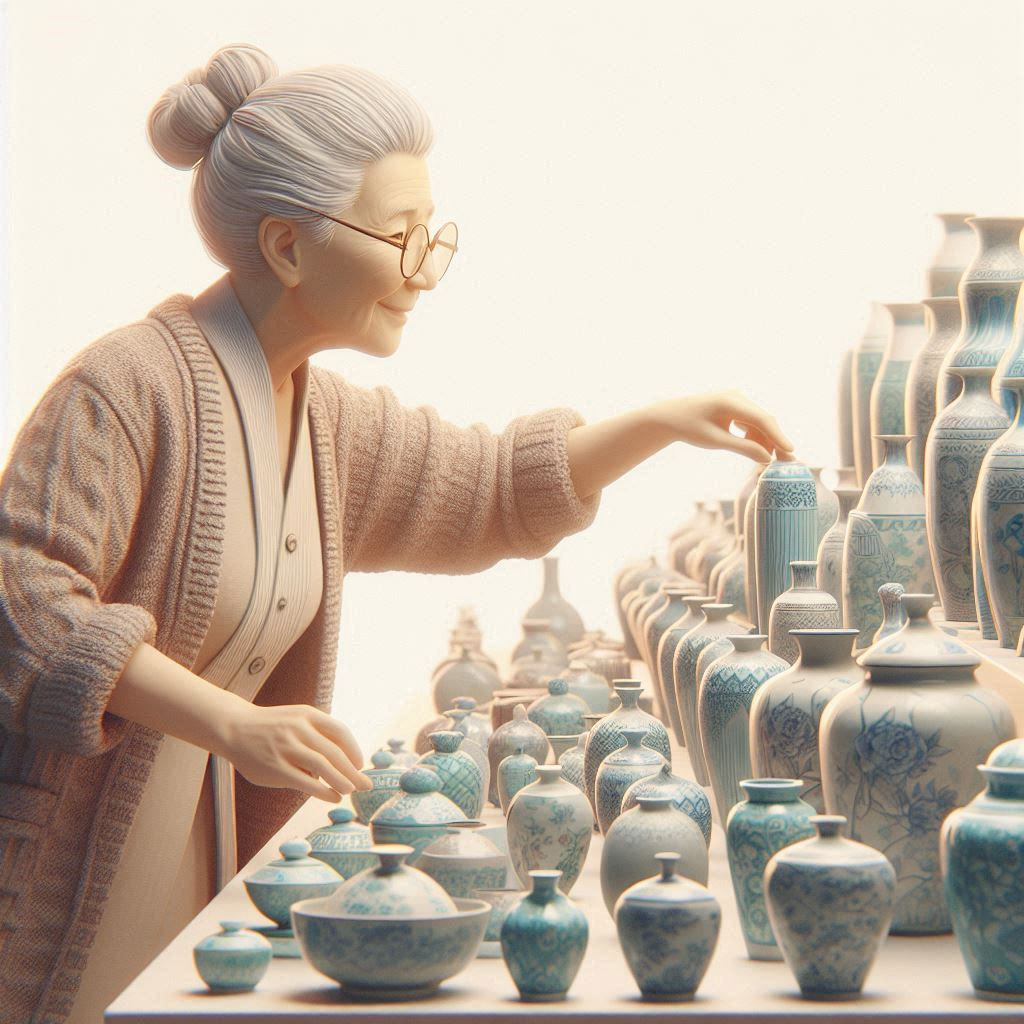
  • Most people are fascinated by antique vases, especially valuable, high-end pieces from countries like China and Russia.
    We admire their beauty, unique designs, and intricate details, proudly taking photos next to them.
    We know that the larger and more stunning the vase, the higher its value, particularly those crafted by master potters using perfect techniques and expensive, colorful pigments.

    Clay’s Journey

    However, behind the breathtaking beauty of these vases lies a long and difficult process.
    It starts with the meticulous selection of the finest clay, which is then carefully filtered and refined.
    The clay is repeatedly shaped on a potter’s wheel, a delicate process that requires incredible precision, until it achieves the artist’s intended form.
    After the basic shape is made, intricate patterns are added and painted with vibrant, costly pigments.

    The process is far from over. The vase is then coated in a strengthening glaze before being fired in a kiln.
    It endures a day-long firing at a specific, intense temperature—a trial by fire that determines its strength and durability. Finally, it’s left to cool for several days, a period of silent rest that completes its transformation.

    Skill’s Worth

    This rigorous process, combined with strict quality control, ultimately allows the finished vase—a simple lump of clay at its core—to be displayed and sold for a spectacular price.

    The immense value is determined not by the original material, but by the potter’s unparalleled skill, the quality of the materials used for decoration, and the long, painstaking artistic process involved.

    A Parallel Journey

    Beautiful vases are like great historical figures.

    Their greatness isn’t a matter of luck; it’s the result of an incredibly challenging life journey.
    They become remarkable because they learned to be humble, resilient, and patient, enduring immense pressure and impossible obstacles.

    But so often, we only see the final product:

    a person’s success or a vase’s fantastic price.

    We fail to recognize that both are the result of a shaping process.


    A Deeper Look

    In the end, the value of both a masterpiece and a person is measured not by their initial state, but by the journey of refinement.

    It is the fire, the pressure, and the patient shaping that transform ordinary clay—and ordinary lives—into something truly precious and invaluable

  • Have you ever wondered why it feels like hardship is a constant companion?
    Why does suffering feel endless, pushing us to our limits?
    The Bible itself confirms this reality.
    Even Jesus, the Son of God, walked a difficult road that led to the cross.

    Forging Faith

    The spiritual path is never easy or free from tests.
    We’ve all been through what feels like an unending trial.
    But we’ve also learned that these hardships don’t just leave us with scars—they make us stronger.

    We’re like clay pots hardened in a kiln, emerging stronger and ready to hold the precious things God has given us without breaking.

    Shaped by Fire

    This truth became clear as we looked at the lives of people in the Bible.

    It’s an unchanging pattern:

    anyone God truly used was first tested in the fire.

    This fire isn’t random; it’s a process designed by the Potter himself to lovingly shape and prepare each of us.

    Gold’s Worth

    The Bible puts it this way in 1 Peter 1:6–7:

    “In all this you greatly rejoice,
    though now for a little while you may have had to suffer grief in all kinds of trials.
    These have come so that the proven genuineness of your faith
    —of greater worth than gold,
    which perishes even though refined by fire
    —may result in praise, glory and
    honor when Jesus Christ is revealed.”

  • We often thank the wrong person.

    A story about a butcher and a tailor shows us why.

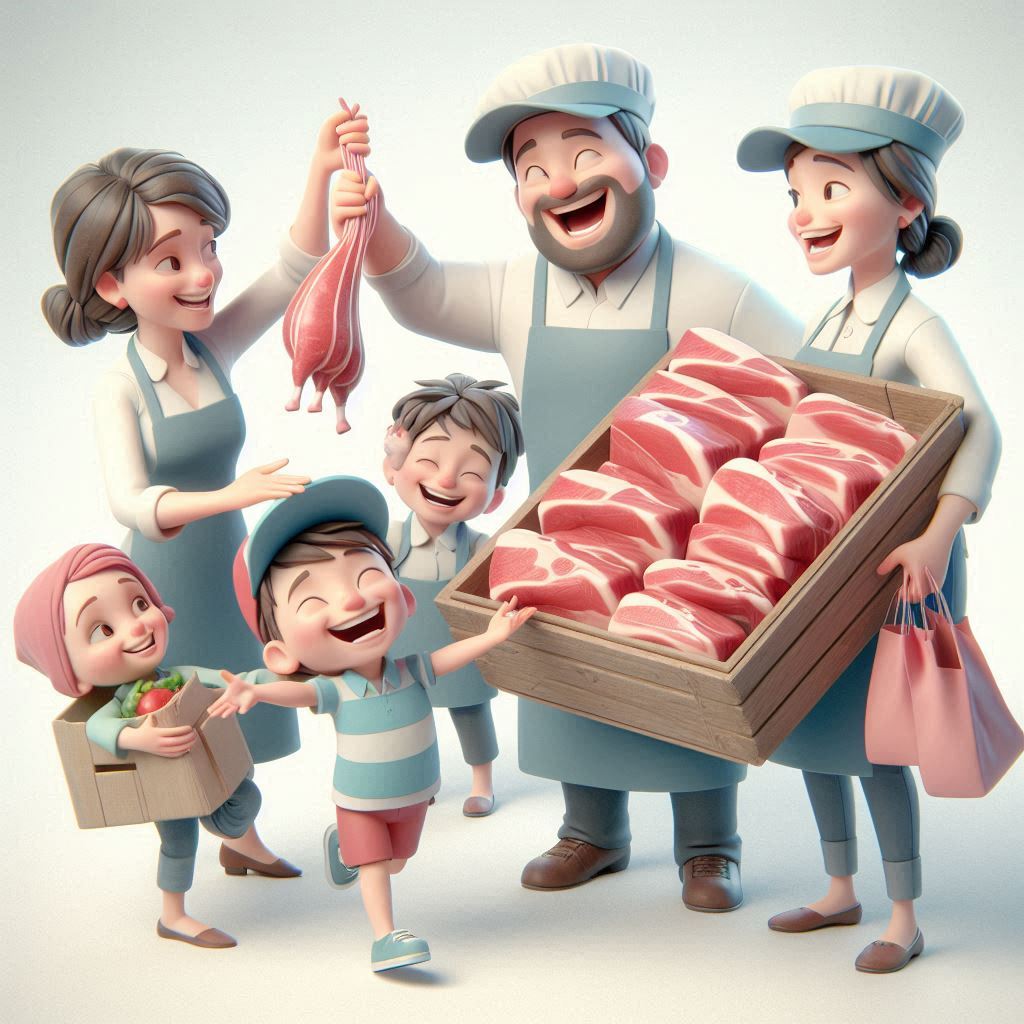
    In a town, there lived two important people: a butcher and a tailor.
    The butcher was known for his kindness because he often gave away “free” meat to the townspeople.
    He was so generous that his fame spread throughout the city.

    Meanwhile, the tailor was considered a strange and stingy man. People often mocked him and treated him with hostility.

    Then, one day, the tailor died. The entire town was in an uproar because the butcher suddenly stopped giving away any meat.

    When the people demanded to know why, the butcher explained that from then on, every piece of meat would need to be paid for. The “free” meat was no more.

    The butcher then revealed a secret: it was the tailor who had always paid for every single piece of meat that the butcher had given away.

    Echoing Grace
    • Matthew 10:8 – “Freely you have received; freely give.”
    • Hebrews 13:16 – “Do not neglect to do good and to share what you have, for such sacrifices are pleasing to God.”
    • 1 Corinthians 15:10 – “But by the grace of God I am what I am, and his grace toward me was not in vain. On the contrary, I worked harder than any of them—though it was not I, but the grace of God that is with me.”

    Getting saved is not a gift we get to keep just for ourselves.

    It’s a gift meant to flow out to others.
    Just like the farmer’s kindness inspired the people in his village to take care of him when he was weak, God’s grace moves us to be kind to others in our own way.

    The grace we receive from God should be shown in the way we live.
    If we keep it locked inside, we go against what it’s meant to be, because grace is like living water—it’s not meant to sit still, but to flow.

    The Living Proof

    The first Christians were known for being very generous.

    The Bible says that “there was not a needy person among them” because people gladly shared what they had. This was so special that even people who weren’t Christians noticed their kindness.

    One historian, even though he made fun of Christians, admitted that they “take care of one another” and “give freely.” This kindness from the whole group, which came from Jesus’s command, was a very clear sign that their faith was real. God’s grace changed their lives so that others could see it.

    Profound Gems

    A wise man named Francis of Assisi said,
    “For it is in giving that we receive.”

    Another wise woman, Elisabeth Elliot, said,
    “The secret is Christ in me, not me in a different set of circumstances.”

    The Unkindness Trap

    The grace we get must become the grace we live.

    If we hold on to kindness and don’t share it, we break the chain of grace.
    But if we show kindness to others, we honor the Giver.

    Just as the villagers served the farmer, we are called to live our lives in a way that shows we have freely received, and so we freely give.

    This isn’t about paying God back, but about letting his love overflow from us, like fruit growing on a tree.

    The Unseen Supply

    Today, many people are worried about not having enough, which can stop them from being generous with their time, money, or kindness.

    Being proud or suspicious can also stop us from helping others.

    Grace isn’t just a private comfort; it’s something for the world to see.

    To bring back this kindness, we must remember Jesus’s command: “Freely you have received; freely give.”

    When we show kindness to others in our own way, the world will once again get a glimpse of God’s grace living among us.

  • A dimension yet to be explored

    In our ministry, we often meet poor families who haven’t eaten for one or two days.
    Even when they have food, it is often not fit to eat, yet the happiness on their faces is so abundant.
    It is often us who are strengthened and comforted by their perseverance.
    Our gifts are always received with grateful faces, and they never stop giving thanks to God.

    They are far more resilient when fasting, while we find it very difficult to go through our own days of fasting.
    Although their spiritual depth is unspoken, we realize there is a dimension we have not yet touched.

    Daily Thanks
    • Matthew 6:11 – “Give us this day our daily bread.”
    • 1 Thessalonians 5:18 – “Give thanks in all circumstances; for this is the will of God in Christ Jesus for you.”
    • Philippians 4:6 – “Do not be anxious about anything, but in everything by prayer and supplication with thanksgiving let your requests be made known to God.”

    God’s grace isn’t a single big box that opens once in our lives.
    It’s a special storehouse that opens every single morning.

    Like fresh milk, His grace comes to us new each day.
    Being thankful for it turns a simple need into a great joy.
    When we pray with a thankful heart, we don’t change God’s mind, but we do open our own eyes to see how much He takes care of us every day.

    The Unseen Giver

    There was once a woman who prayed loudly for bread every night.
    A man who liked to mock her heard her prayer and threw a loaf of bread through her window.
    “It was not God but I who gave it to you!” he said.

    She replied, “The devil may have brought it, but God sent it.”
    Gratitude helps us see who the real Giver is, even when the gift comes in a strange way.

    The Lifeline

    The very first Christians practiced being thankful every day.
    This was often done in their prayers and songs.
    Early Christian writings from the first century talk about this.

    Even Roman writers from that time noticed that Christians would gather early in the morning to sing songs to Jesus. Their happiness and thankfulness, even when they were in danger, came from the fresh grace they received every day.

    It wasn’t just human strength—it was God’s daily supply at work.

    Wise Words

    A wise man named John Chrysostom once said,
    “The thankful heart is a fortress against the enemy.”
    This means that a heart full of thanks is a strong place that bad things can’t get into.

    A great writer, Maya Angelou, taught,
    “Let gratitude be the pillow upon which you kneel to say your nightly prayer.”
    She meant that thankfulness should be a soft place for us to rest our hearts when we talk to God.

    A Grateful Life

    A daily supply from God needs a daily thank you from us.
    We don’t live on yesterday’s grace or on tomorrow’s promise.
    We live on the grace we have today.
    When we start each day with a thankful heart, we grow stronger in our faith.
    Grace is always fresh, but it is gratitude that helps our hearts taste how sweet it is.

    In our world today, we often forget the little good things that happen every day.

    We demand a lot, we don’t notice the simple blessings, and we complain when we get what we need, but not in the way we want it.

    Many people don’t say thank you because they think good things are just a coincidence or something they did on their own.

    To get back to being thankful, we need to practice noticing God’s hand in our daily lives—in a sunrise, a warm meal, or a kind word.

    When we do this, we will see God’s daily grace again, and our hearts will learn to be happy for what is freely given.

    • 1 Peter 2:2 – “Like newborn infants, long for the pure spiritual milk, that by it you may grow up into salvation.”
    • Colossians 3:16 – “Let the word of Christ dwell in you richly, teaching and admonishing one another in all wisdom, singing psalms and hymns and spiritual songs, with thankfulness in your hearts to God.”
    • Psalm 1:2 – “But his delight is in the law of the LORD, and on his law he meditates day and night.”
    The New Start

    Salvation is not the end of our journey—it’s just the start of our growth.

    Just like a baby can’t grow strong without milk every day, we can’t grow strong in our faith without reading God’s Word every day.

    Gratitude makes this food taste sweet, and the Word makes us strong.

    Living without being thankful and reading the Bible is like drinking water without any good vitamins; it might feel good for a moment, but it can’t keep you healthy and strong for life.

    Stillness Grows

    Imagine a small child sitting peacefully each morning with a glass of milk, sipping it slowly while the house is still quiet.

    That quiet time is full of unseen strength.

    In the same way, a person who quietly reads the Bible and prays with a thankful heart grows stronger and deeper on the inside.

    Others may not notice right away, but over time, that inner strength becomes clear for all to see.

    Timeless Habit

    The first Christians, as told in the book of Acts, spent time every day learning from the apostles and praying.

    This habit made them strong and helped them through tough times and even when people were mean to them.

    We know from history, like the letters from a man named Pliny the Younger, that Christians often met before the sun came up to sing and read from their holy writings.

    Being thankful and reading the Word were not just an option—they were their lifeline.

    This was not a made-up story, but a real way of life for the early church, just like Jesus himself who would often go to quiet places to pray.

    Words of Life

    A great leader, Martin Luther, once said,
    “The Bible is alive, it speaks to me; it has feet, it runs after me; it has hands, it lays hold of me.”
    This means the Bible isn’t just a book; it’s an active friend who helps us.

    Another wise woman, Teresa of Ávila, taught that
    “Prayer is an act of love; words are not needed. Even if sickness distracts from thoughts, all that is needed is the will to love.”
    This reminds us that we don’t have to say perfect words when we pray; God simply wants our hearts.

    Daily Devotion

    Just as milk builds our bodies, the Bible and prayer, when we approach them with thankfulness, build our souls.

    Growth in faith isn’t loud or flashy; it’s a quiet, steady, and sure process.

    Without this daily food, our faith stays weak.

    But with it, we can grow up strong, able to stand firm in hard times and live a full, fruitful life.

    Finding Stillness

    In our world today, being quiet is rare and there are many things to distract us.

    Many people spend their time on news, TV, and other opinions, but they forget about God’s Word.

    Thankfulness is often replaced by complaining.

    Because of this, our spiritual growth can stop.

    To get our strength back, we must make time for the Bible, prayer, and being thankful, even in small ways every day.

  • Fresh Mercy
    • Ephesians 2:8 – “For by grace you have been saved through faith. And this is not your own doing; it is the gift of God.”
    • Lamentations 3:22–23 – “The steadfast love of the LORD never ceases; his mercies never come to an end; they are new every morning; great is your faithfulness.”
    • John 1:16 – “From his fullness we have all received, grace upon grace.”

    The gift of salvation isn’t a single moment to be looked at from far away.

    It’s a never-ending river of God’s love pouring into our lives every single day.

    Just as our bodies need fresh food and drink, our souls need God’s grace every morning.

    It doesn’t come from our hard work or from anything we can pay; it is a gift from God’s endless kindness.

    A Daily Pour

    Imagine a kind farmer who leaves bottles of milk at the gate every morning.

    The milk is free for anyone to take.

    Children joyfully run to get a drink, the sick find new strength, and tired workers drink deeply.

    No one can say they bought it, and no one can brag that they deserved it.

    It is simply there, fresh and new, every single day.

    This is what grace is like: fresh, daily, unearned, and it gives us life.

    The Unshakable Fact

    This truth is not just a story; it is based in history.

    Jesus Himself said, “It is finished” (John 19:30), a public act that was seen in Jerusalem.

    Even Roman records and the writings of a historian named Josephus show that Jesus was crucified under Pontius Pilate.

    The first followers of Jesus, like Paul, always said that we are saved by Jesus alone, not by following rules or by doing good things.

    They were willing to be hurt or even die to prove that their story was true.

    Salvation is not a made-up myth; it is a real event from history.

    Profound Simplicity

    As the great thinker Augustine of Hippo once said,
    “God gives where He finds empty hands.”
    It means that God gives His grace to those who know they need it, not to those who think they can do it on their own.

    Another brave woman, Corrie ten Boom, taught us,
    “You may never know that Jesus is all you need, until Jesus is all you have.”
    She learned this when she had nothing left in a terrible concentration camp, and she found that God’s grace was all she truly needed.

    The Invitation

    Grace is not a prize for those who are perfect; it is nourishment for those who are in need.

    Like fresh milk each morning, it meets us exactly where we are.

    To get this gift, we don’t have to pay.

    We just have to be humble enough to receive it.

    Salvation is all from God, a gift freely poured out through Jesus.

    The Forgotten Gift

    Today, many people don’t want this truth because our world teaches us to be proud and to do things by ourselves.

    We start to believe that something that is free can’t be very valuable.

    We might even try to “buy” salvation with religious rules or good deeds.

    But this makes God’s grace seem weak.

    To bring back the power of grace, we must become humble again.

    We must go back to God’s Word and prayer every day and live as people who receive gifts, not as people who earn them.

    The grace is still flowing, but many people have forgotten to be thirsty for it.