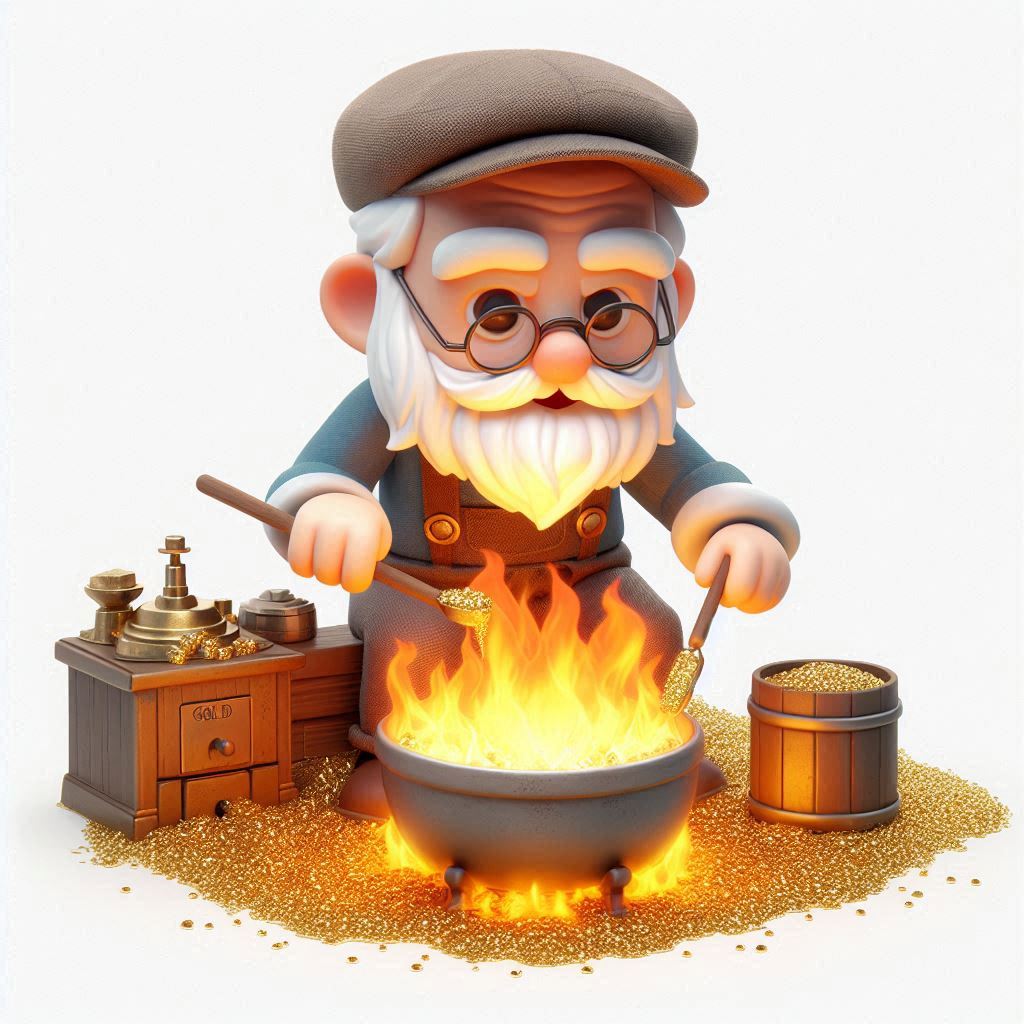
- “For You, God, tested us; You refined us like silver.” (Psalm 66:10)
- “These [trials] have come so that the proven genuineness of your faith—of greater worth than gold, which perishes even though refined by fire—may result in praise, glory and honor when Jesus Christ is revealed.” (1 Peter 1:7)
- “See, I have refined you, though not as silver; I have tested you in the furnace of affliction.” (Isaiah 48:10)
Furnace Truth
A vessel shaped but not fired is useless.
It may look complete, but the moment water touches it, it dissolves back into mud.
Without the furnace, beauty is fragile, and form is deceptive.
The fire is not optional; it is essential.
In the same way, God does not merely shape us—He proves us.
Life’s trials are not punishments but furnaces. They harden character, seal identity, and prepare us for endurance. Without the fire of testing, we remain unstable, unable to carry the weight of purpose.
The truth is simple: fire does not destroy clay; it strengthens it. Fire does not erase the Potter’s work; it finalizes it.
Purifying
Imagine a ceramic bowl placed on a shelf before it enters the kiln. It appears beautiful, but at the touch of water, it collapses. Only after hours in the fiery furnace does the clay become strong, able to hold what it was designed for.
The same principle is seen in nature. Gold, in its raw form, is mixed with impurities. Only when passed through fire does it emerge radiant, pure, and valuable. Trials, then, are God’s refining furnace, not His rejection.
Think of Daniel’s three friends in Babylon. They entered the furnace expecting death, yet walked out without even the smell of smoke, their faith shining brighter than before (Daniel 3). The fire they feared became the testimony that still inspires faith centuries later.
Unfinished Clay
Ancient potters understood that firing clay was a delicate, even dangerous, process. If the clay was not properly prepared, the vessel could explode in the kiln. If the heat was too weak, the pot would remain fragile. Only the right intensity of fire could seal the vessel into lasting strength.
Jeremiah’s audience would have understood this instantly: a vessel not yet fired was unfinished, half-made. To stop short of the furnace was to waste the potter’s effort.
Quotes
- “Gold is tested by fire; men by affliction.”
– Seneca - “When I am in the furnace, I remember:
the Potter’s hands are not absent in the fire.”
– Amy Carmichael
Completing Fire
The fire is not the end of us—it is the making of us.
Every believer who endures trials comes out stronger, purer, and more capable of holding the treasures God intends.
To fear the fire is to misunderstand its purpose.
In God’s hands, fire never consumes—it completes.
Present Challenge
Why is the fire resisted today?
Because our culture idolizes comfort.
Pain, loss, and struggle are seen as interruptions rather than instruments.
We seek quick escapes, easy solutions, and instant relief.
Yet by avoiding the furnace, we forfeit the strength that only trials can produce.
If the church is to rise again as vessels of honor, we must recover a theology of suffering. Fire must be welcomed as God’s means of readiness. Affliction must be seen as the Potter’s kiln, burning away what is weak, leaving only what is strong. In this way, every trial becomes not a tomb, but a testimony.


Leave a comment