- “Jesus said to the servants, ‘Fill the jars with water’; so they filled them to the brim. Then He told them, ‘Now draw some out and take it to the master of the banquet.’ They did so, and the master of the banquet tasted the water that had been turned into wine.”
(John 2:7–9) - “The jar of flour was not used up and the jug of oil did not run dry, in keeping with the word of the Lord spoken by Elijah.”
(1 Kings 17:16) - “While He was in Bethany… a woman came with an alabaster jar of very expensive perfume, made of pure nard. She broke the jar and poured the perfume on His head.”
(Mark 14:3)
Unique Vessels
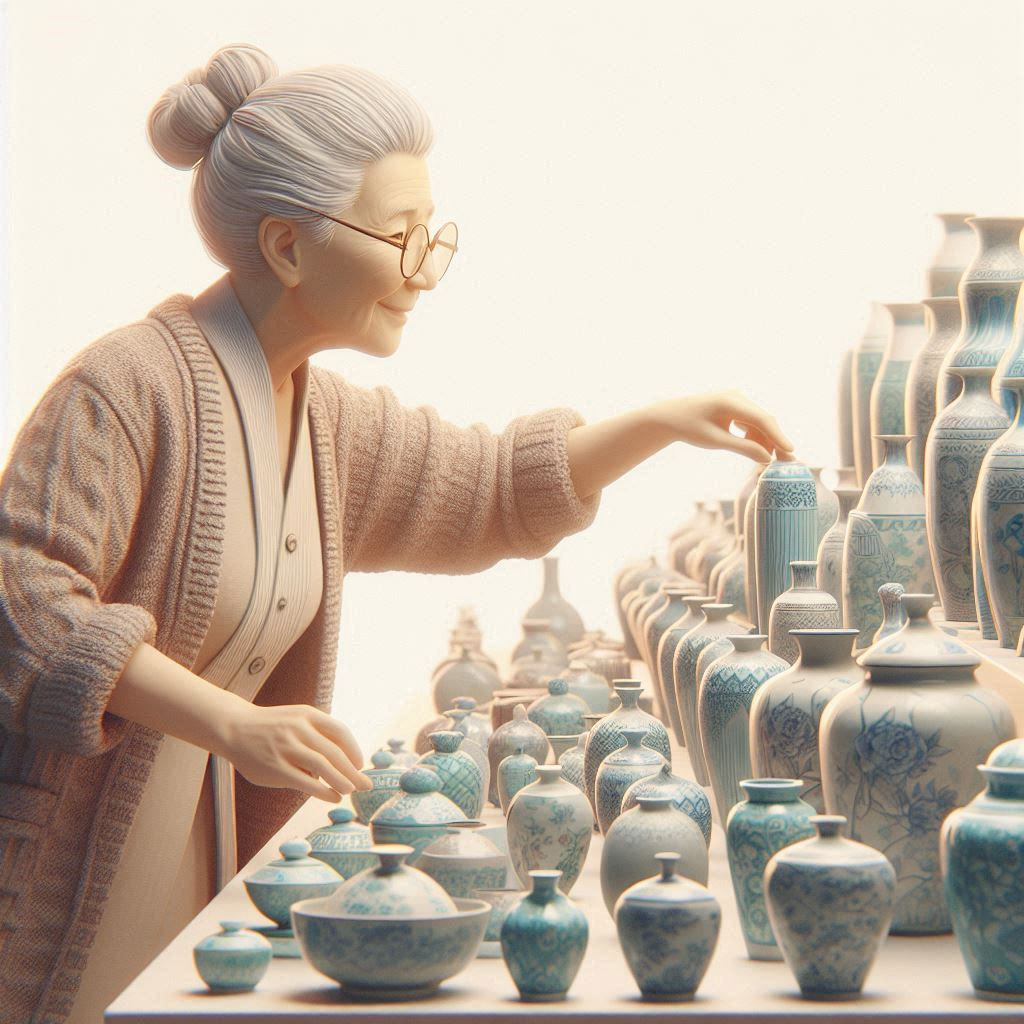
Not all vessels look alike.
Some are large, plain, and functional; others are small, delicate, and rare.
The beauty of Jeremiah’s vision is that God does not shape every person into the same mold.
Instead, He designs vessels for different purposes—some for public use, some for sacred moments, and some for hidden, intimate expressions of love.
Living Clay
Our mistake is often comparison.
We think the large water jars are more valuable than the small perfume jar, or that a common kitchen jar is less sacred than one used in worship.
But in God’s economy, value is not measured by size or visibility.
It is measured by purpose.
Each vessel fulfills a role designed by the Potter Himself.
Illustration
Consider three vessels from Scripture:
- The Wedding Jars of Cana – Large, ordinary stone jars that once held water became instruments of Jesus’ first miracle, turning water into the finest wine (John 2). Their greatness was not in appearance, but in obedience—they were available when needed.
- The Jars of Flour and Oil – In the house of a poor widow during Elijah’s time, humble kitchen vessels carried endless provision. Though simple and unremarkable, they sustained life in a time of famine (1 Kings 17).
- The Alabaster Jar of Perfume – Small, fragile, and costly, this vessel held pure nard used to anoint Jesus before His death (Mark 14). In earthly terms, it seemed wasteful; but in heaven’s eyes, it was priceless worship.
Each jar carried a different volume, but each served a divine moment. In fact, the smallest jar carried the most expensive content, proving that God does not measure value by size.
Historical Truth
In ancient Near Eastern society, vessels were as diverse as the people who made them. Archaeological digs in Israel reveal jars ranging from massive cisterns holding gallons of water, to delicate flasks for oils and perfumes. Every household relied on pottery—whether for cooking, storage, or ritual use.
The Bible’s mention of specific vessels shows God’s deliberate use of ordinary objects for extraordinary purposes. The miracle at Cana would not have occurred without jars; the survival of Elijah and the widow depended on simple kitchen vessels; and the memory of Mary’s devotion endures because of one fragile jar broken in worship. These were not symbols; they were historical realities, grounding spiritual truth in everyday life.
Quotes
- “It is not the vessel’s size,
but its surrender,
that determines its usefulness.”
– A.W. Tozer - “Even the smallest jar
can hold the sweetest fragrance.”
– Corrie ten Boom
Conclusion
Every life is shaped differently.
Some are designed for visible impact, others for quiet faithfulness.
Some hold the ordinary provisions of daily life, others release rare treasures at sacred moments.
But all are essential to the divine plan.
To despise our shape is to question the wisdom of the Potter.
To embrace it is to discover freedom and dignity in His purpose.
Present Challenge
Why do we struggle with this truth today?
Because modern culture elevates visibility, quantity, and fame as measures of worth.
We admire the “big vessels” while overlooking the hidden ones.
As a result, many feel insignificant, unvalued, or envious of others’ roles.
To revive Jeremiah’s vision, we must return to the truth that purpose defines value.
The kitchen jar, the wedding jar, and the perfume jar all mattered in God’s story.
Likewise, every life—whether public or private, large or small—has eternal significance when surrendered to the Potter’s hand.


Leave a comment