Livora Gracely

Writing to remember, sharing to inspire

  • First Thoughts

    “Come, all you who are thirsty, come to the waters; and you who have no money, come, buy and eat!” (Isaiah 55:1)

    Daily Grace

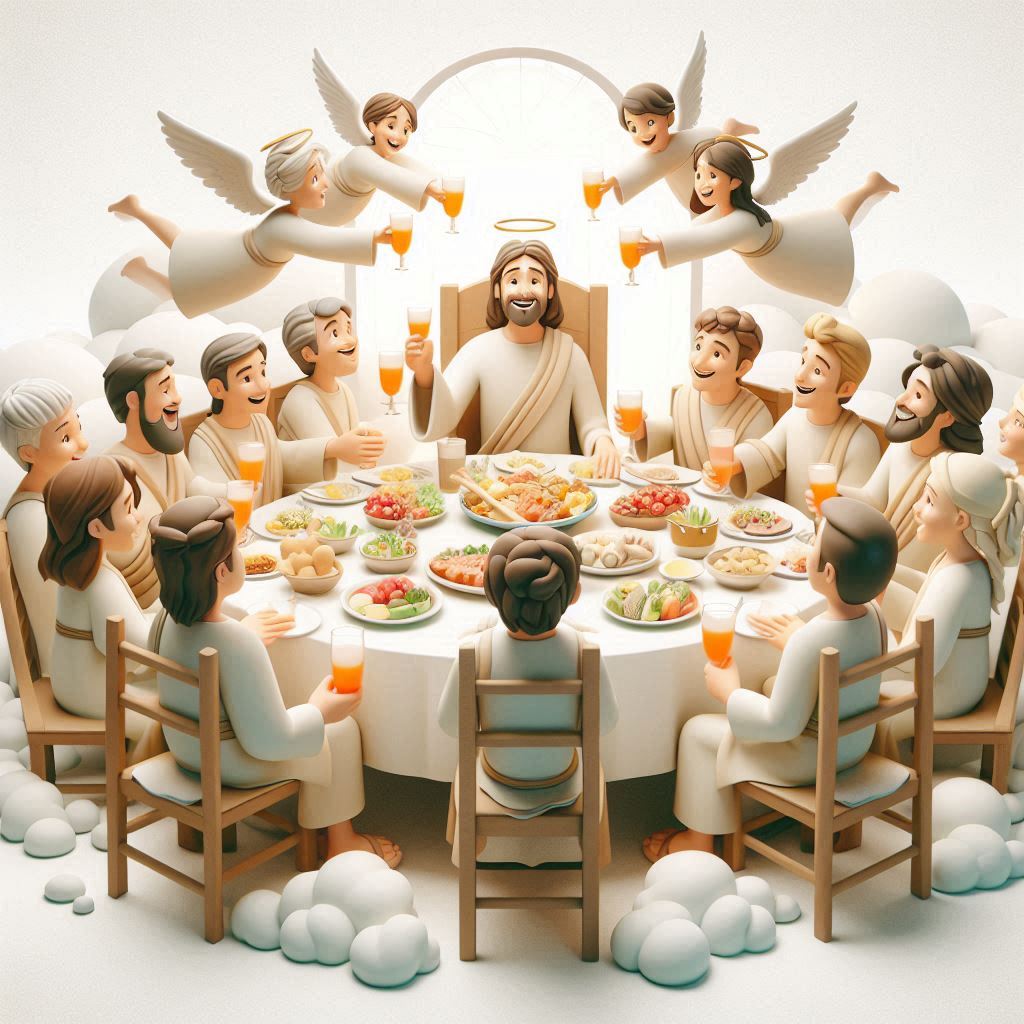
    Life with God’s grace can be compared to a humble farmer who faithfully shares fresh milk every day.

    He gives freely, without asking for payment, simply hoping that others will drink and be nourished.

    Sometimes, he even carries the milk to the sick, or bottles may find their way to those who never expected it.

    Yet, too often his kindness is met with suspicion, mockery, or rejection.

    Still, the farmer never withdraws his hand; his deepest hope is that even the skeptics will one day taste and find life.

    This picture mirrors the gift of salvation. God provides grace daily, new and abundant, not because He seeks repayment but because He delights when His gift is received.

    His sorrow is not in the giving, but in seeing the vessels untouched and the gift left unused.

    Simply Receive

    Today, we are invited to receive rather than reject.

    The milk is fresh, guaranteed each morning, poured out for you and me.

    Our role is not to pay, but simply to drink and live.

    Milk for the Soul

    As we open this series of reflections, we offer this “milk” to you—stories shaped by faith, rooted in Scripture, and shared out of the grace we ourselves have received.

    May each story strengthen your spirit, renew your hope, and encourage you to persevere in faith, even when challenges or ridicule arise.

    Freely Given, Freely Shared

    You don’t need permission to share this article; we are glad if it blesses you and you are willing to share that blessing with others.

    Our Shared Journey

    We would be grateful for your responses, whether likes or comments. Honest feedback, positive or critical, will help us grow and serve you better in the articles to come.

    Thank you for joining us on this journey of grace.
  • Soul’s Seal

    To test Jesus, the Pharisees and Herodians set a trap by asking,

    “Is it lawful to pay taxes to Caesar, or not?” (Mark 12:14).

    The question seemed like a clever snare:
    a “yes” answer would anger His Jewish audience,
    while a “no” would accuse Him of rebellion before Rome.

    Witty Wisdom

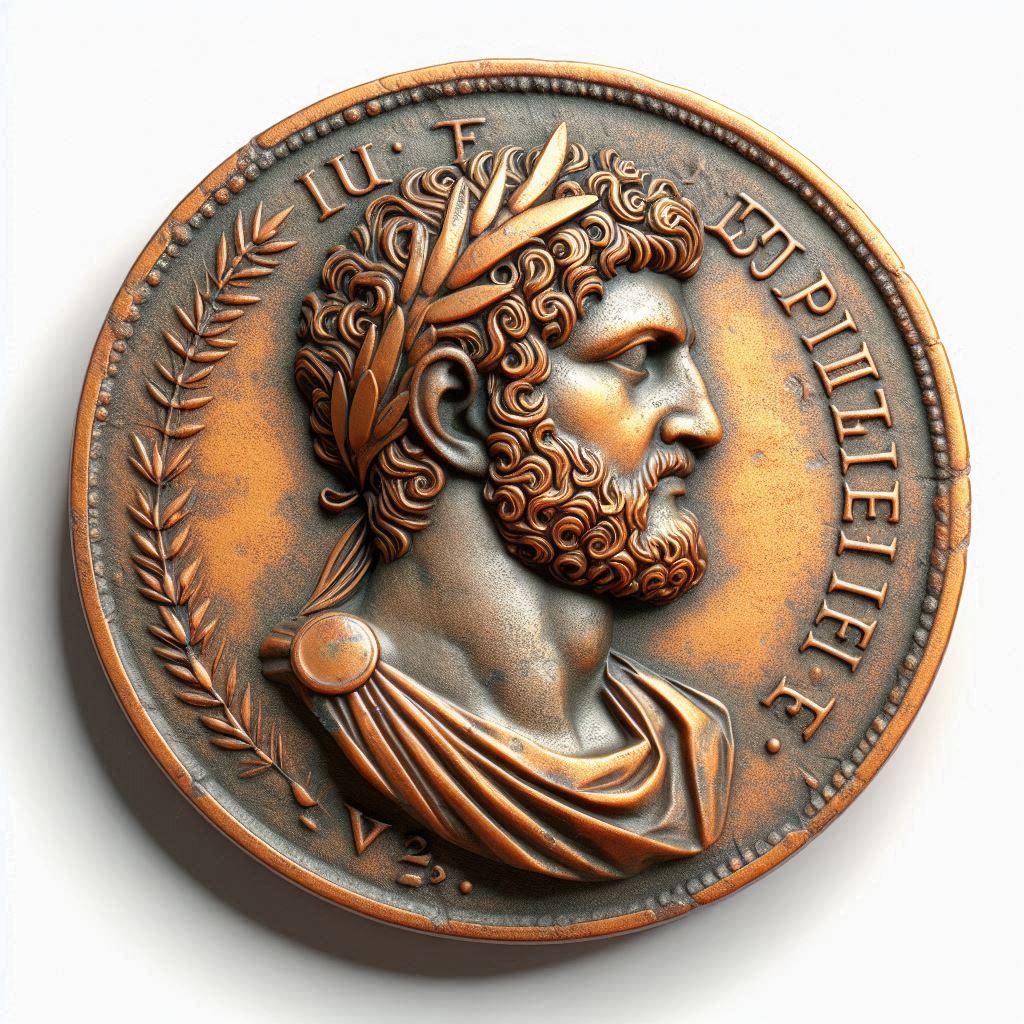
    Jesus asked for a denarius and said,

    “Whose image and inscription is this?”

    They replied, “Caesar’s.”

    Then He answered,
    “Render to Caesar the things that are Caesar’s,
    and to God the things that are God’s”
    (Mark 12:16–17).

    A profound truth

    A coin bearing Caesar’s image belongs to Caesar.

    But man, bearing God’s image (imago Dei), belongs to God.

    Jesus was not merely teaching about taxes

    —He was unveiling the essence of identity and ownership.

    Illustration
    Imagine holding two objects:
    a coin stamped with Caesar’s profile, and a human face reflecting God’s likeness.
    Which holds greater value?
    The coin can be spent, but the human soul carries eternal inscription.

    Just as Caesar’s stamp proves political authority,
    God’s stamp—His Spirit—marks our eternal belonging
    (Eph. 1:13–14).

    The Puzzle of Identity
    A rabbi once quipped:
    “The coin of Caesar is silver; the coin of God is flesh and breath.
    Which is richer?”

    Even emperors cannot mint a soul;
    only God breathes life.

    While we give coins to rulers,
    we give our very selves to God.

    Scriptural Cross-References

    • “Let us make man in our image, after our likeness” (Gen. 1:26).
    • “The earth is the Lord’s, and everything in it” (Ps. 24:1).
    • “You are not your own; you were bought with a price” (1 Cor. 6:19–20).

    Meditative Quotes

    “Caesar may have his image on a coin,
    but God has His image on your soul.”
    — Augustine.

    “When Jesus spoke of the coin,
    He was pointing beyond politics to
    the very essence of who we belong to.”
    — N. T. Wright.


    The question of taxes turned into the revelation of ownership:

    if Caesar claims coins by his image,
    how much more should God claim you,
    stamped with His likeness and redeemed by His Son

  • The world is quick to discard what it deems broken, old, or unclean.

    In Rome, a person’s worth was calculated by their social rank or ancestry; an injured slave could be thrown aside as useless, a widow left vulnerable, and a child abandoned.

    Yet, in God’s eyes, value does not diminish because of condition.

    His valuation is permanent, rooted in His love.

    Unfading Masterpiece

    We are not disposable objects, but a divine masterpiece—the workmanship of God.

    Unlike coins that lose their shine, God’s seal on us cannot fade.

    Even when scarred by sin, we remain His image-bearers.

    Inherent Worth

    Think of a hundred-dollar bill.

    Even if it’s wrinkled, dropped in mud, or trampled underfoot, its value remains unchanged.

    The market still receives it as a full currency.

    In the same way, your worth before God is not erased by your wounds, failures, or the contempt of others.

    His valuation of you is constant.

    Ultimate Price

    The world may ask, “What is a person worth?”

    And a simple truth answers: a person is worth whatever someone is willing to pay.

    Christ paid with His own blood for you, and by that measure, your worth cannot be doubted.

    God does not love us because we are valuable;
    we are valuable because God loves us.

  • Divine Measures

    The world has always sought to assign identity according to its own measures. In Rome, a person’s worth was calculated by their social rank, wealth, or ancestry; a senator held honor, a slave bore shame, and women were often valued only for their dowries.

    Yet Christ came to overturn these shallow judgments, and Paul reminds us, “There is neither Jew nor Greek, slave nor free, male nor female, for you are all one in Christ Jesus.”

    Worldly Measures

    The Greek word doxa (δόξα – “glory, reputation”) reveals how society elevates appearances.

    • To Rome, glory meant conquest;
    • to Athens, it meant wisdom;
    • to Jerusalem, it meant ancestry.

    Yet God declares, “My thoughts are not your thoughts, neither are your ways My ways” (Isa. 55:8).

    • What men call glorious may be vanity before God.
    • What men despise, God may choose as His vessel.

    Josephus, though eager to please his Roman patrons, could not help but record how the zealots in Jerusalem mocked the poor as useless, unworthy even of survival.

    Yet Jesus declared, “Blessed are the poor in spirit, for theirs is the kingdom of heaven” (Matt. 5:3).

    Illustration
    A farmer in Judea may own only two sparrows, worth but a single coin in the market.
    Yet Jesus said, “Not one of them is forgotten before God” (Luke 12:6).

    If God values sparrows,
    how much more does He value you,
    even when the world considers you insignificant?

    In Rome, a person’s status could rise by being seen near Caesar’s palace.
    Yet in Christ, the King Himself comes to dine with you. (Rev. 3:20).

    Biblical Cross-References

    • Paul declares,
      “God chose what is foolish in the world to shame the wise;
      God chose what is weak in the world to shame the strong” (1 Cor. 1:27).
    • James reminds us:
      “Has not God chosen those who are poor in the world
      to be rich in faith and heirs of the kingdom?” (James 2:5).
    • And Peter affirms,
      “The stone the builders rejected has become the cornerstone” (1 Pet. 2:7).

    Quotes to Meditate On

    “People look at the outward appearance,
    but the Lord looks at the heart.”
    — Prophet Samuel (1 Sam. 16:7).

    “The world crowns success;
    God crowns faithfulness.”
    — Elisabeth Elliot.


    God writes an unerasable verdict that outweighs the world’s shallow scales of identity.

  • Our identity in Christ is an indestructible truth.

    It is neither fragile nor temporary, but secured both in this present world and in the age to come, untouchable by the schemes of darkness.

    Solid Foundation

    Paul writes that God raised us up with Christ and seated us with Him in the heavenly places (Eph. 2:6).

    This is not a promise for the distant future alone; it is a present reality.

    Believers share Christ’s authority even now, though we walk in a world still under trial.

    The kingdom of Rome prided itself on stability, yet emperors fell, cities burned, and legions were defeated.

    But the believer’s identity rests in the eternal throne of Christ, unshaken by history’s storms.

    The Sons of Sceva: A Warning

    Consider the account in Acts 19:13–16.

    Some Jewish exorcists, the sons of Sceva, attempted to invoke the name of Jesus without belonging to Him.

    The evil spirit answered, “Jesus I know, and Paul I recognize, but who are you?”

    Their failure was not from lack of courage, but from lack of identity.

    They tried to wield a name they were not united with.

    Demons do not tremble at borrowed words,
    but at sealed identities,
    because the power of Christ flows only
    through those who belong to Him.

    Illustration
    Picture a Roman soldier entering battle. His strength is not in the sword alone, but in the seal on his armor—Rome stands behind him. So too, a believer stands not by clever words but by the seal of the Spirit. Without that seal, one enters battle naked, as the sons of Sceva discovered to their shame.

    Humor and Puzzle of Life
    It is said that in the Roman courts, if a man claimed to be a citizen but could not prove it, he was punished severely.

    Just as a person’s claim to be a Roman is meaningless without a passport, the spiritual world recognizes not what we claim with our lips, but what God has stamped upon our souls.

    Biblical Cross-References

    • Paul assures us:
      “The Spirit Himself bears witness with our spirit that we are children of God” (Rom. 8:16).
    • Jesus declared,
      “Behold, I have given you authority to tread on serpents and scorpions, and over all the power of the enemy, and nothing shall hurt you” (Luke 10:19).
    • And John comforts us:
      “Greater is He who is in you than he who is in the world” (1 John 4:4).

    Quotes to Meditate On

    “He who has God and everything else has no more than he who has God only.” — C. S. Lewis.
    “I am no longer the same; Christ lives in me, and His life will outlast death itself.” — Catherine of Siena.

    C. S. Lewis:
    “He who has God and everything else has no more than he who has God only.”

    This quote is a powerful paradox about the value of God. Lewis argues that simply having God is an infinite wealth in itself. Therefore, adding everything else—wealth, fame, or power—adds no value to the limitless wealth that already exists. The quote teaches that God is the sole source of ultimate fulfillment, and everything else in this world is insignificant when compared to having Him.

    Catherine of Siena:
    “I am no longer the same; Christ lives in me, and His life will outlast death itself.”

    This quote speaks of a radically transformed identity. Catherine declares that she is no longer the same person, and the reason for this profound change is that Christ lives within her. Because her life is now intertwined with the eternal life of Christ, she has the certainty that her new identity will endure beyond physical death. This quote is a powerful declaration of the new and eternal life found in Christ.

    In Christ, our identity is sealed.

    • We are declared holy,
    • we inherit grace, and
    • we stand secure against every force of darkness,
      both now and forever.
  • Because our identity in Christ means being set apart as holy, every believer has the privilege to receive charis (χάρις)—God’s grace, favor, and undeserved kindness.

    Rich Grace

    Paul reminds us that God has shown “the immeasurable riches of His grace in kindness toward us in Christ Jesus” (Eph. 2:7).

    Notice, grace is not a scarce resource measured by merit; it is abundant and overflowing.

    In Roman courts, gratia was often granted as a political favor from a superior to a loyal subject.

    But God’s grace is different: it is given not because of our loyalty but in spite of our failures.

    Dustless Grace

    Josephus records that Roman emperors loved to display generosity during festivals, scattering coins to the crowd.

    Yet these coins eventually vanished in the dust.

    By contrast, the grace of Christ is eternal—it does not fade, nor can it be stolen.

    Illustration
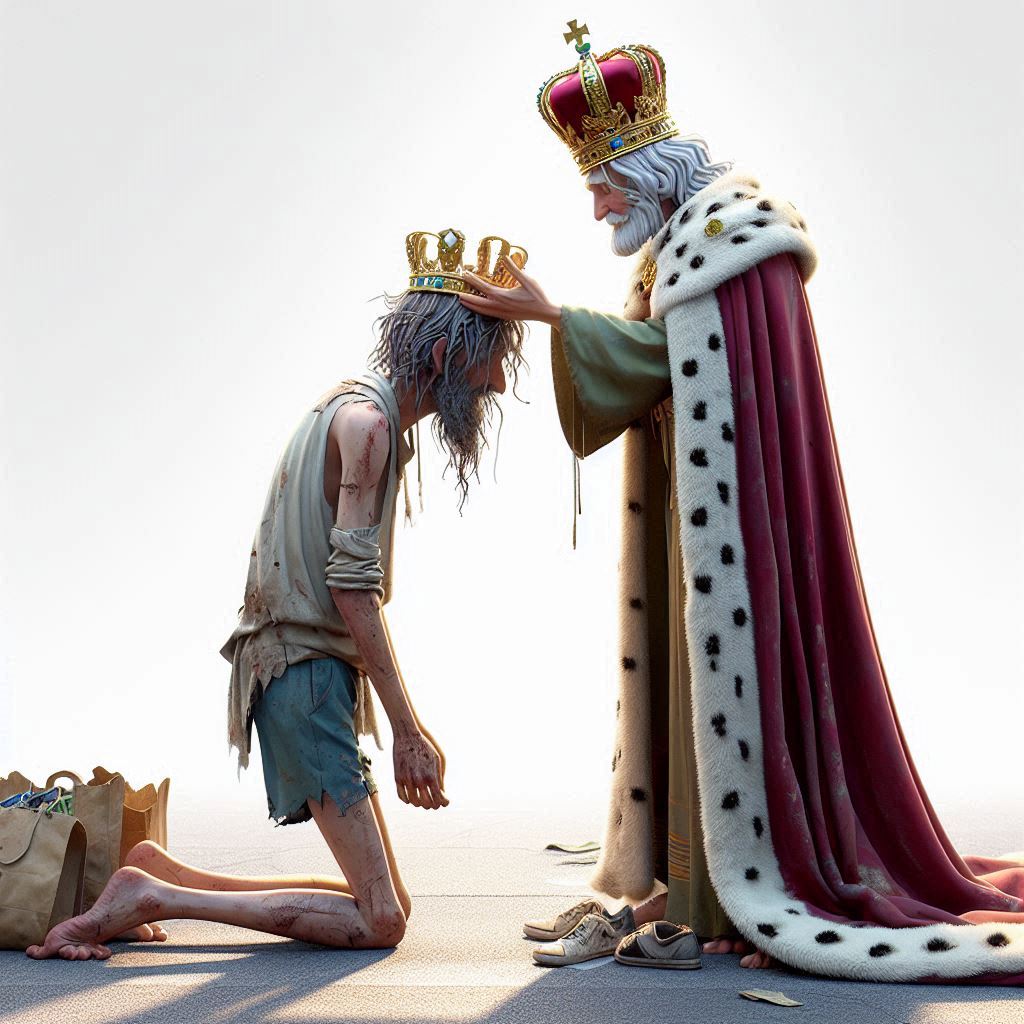
    Imagine a beggar sitting by the roadside, holding out a hand for crumbs. Suddenly, the emperor himself stops and places in his hand the imperial seal, granting him full citizenship and rights.

    That is grace: not a crumb, but a crown; not pity, but adoption.

    Humor and Puzzle of Life
    A philosopher once said, “Grace is like rain falling on the just and unjust alike.”

    A child hearing this replied, “Then why do my shoes always get muddy first?”
    Grace doesn’t prevent our shoes from getting muddy, but it assures us we will arrive home clean and welcomed.

    Biblical Cross-References

    • Paul proclaims,
      “For by grace you have been saved through faith.
      This is not your own doing; it is the gift of God” (Eph. 2:8).
    • James affirms,
      “He gives more grace” (James 4:6). And
    • John testifies of Christ,
      “From His fullness we have all received,
      grace upon grace” (John 1:16).

    Quotes to Meditate On

    “Grace is free only because the Giver Himself has borne the cost.”
    — Dietrich Bonhoeffer.

    “I am what I am by the grace of God.”
    — Apostle Paul (1 Cor. 15:10).


    In Christ,
    every believer is not merely tolerated,
    but richly endowed with God’s favor,
    for grace secures what effort cannot.

  • Appointed as Holy Ones

    Our identity in Christ means that God has appointed every believer as holy.

    Paul makes this clear when he greets the Ephesians, calling them hagiois (ἁγίοις – “holy ones, saints”).

    He does not say “to those who feel holy” or “to those who are perfect,” but to those whom God has set apart in Christ.

    This is an objective truth of faith.

    Unearned Purity

    In the Jewish temple, only the priests could enter the holy place, and the high priest only once a year into the Holy of Holies (Lev. 16:2).

    Holiness seemed limited, guarded by curtains.

    Yet now, through Christ’s death, the curtain has been torn (Matt. 27:51).

    Holiness is no longer restricted to a class of priests—it is the calling of all who believe.

    Peter confirms this when he writes: “You are a chosen people, a royal priesthood, a holy nation” (1 Pet. 2:9).

    Living Temple

    Josephus, the historian, often emphasized the holiness of Jerusalem as a unique city.

    But the apostles declared something more radical:

    holiness is no longer tied to a place but to a person.

    Wherever Christ is present, there holiness dwells.

    Illustration
    A clay lamp in a Roman house may seem common, fragile, and cheap. Yet once lit with fire, it becomes the very vessel of light.

    So too, the believer—ordinary in the world’s eyes—becomes extraordinary once filled with Christ’s Spirit. Holiness is not about the lamp itself, but the flame it carries.

    Humor and Puzzle of Life
    A child once asked, “If God made me holy, why do I still spill my milk?”

    Even saints stumble, but our identity is not canceled by clumsiness.

    Holiness is not the absence of weakness, but the presence of Christ.

    Biblical Cross-References

    • Paul insists,
      “God chose us in Him before the foundation of the world,
      that we should be holy and blameless before Him in love” (Eph. 1:4).
    • The writer of Hebrews exhorts,
      “Without holiness no one will see the Lord” (Heb. 12:14). And
    • Jesus Himself prayed,
      “Sanctify them in the truth;
      Your word is truth” (John 17:17).

    Quotes to Meditate On

    “Holiness does not consist in doing uncommon things,
    but in doing everything with purity of heart.”
    — Teresa of Ávila.

    “It is not great men who change the world,
    but holy men.”
    — D. L. Moody.


    Holiness is not the result of flawless conduct,
    but the mark of God’s seal upon you in Christ

  • Identity’s Blueprint

    A stunning redefinition of identity is now underway.

    In the Roman world, a person’s identity was typically defined by family, citizenship, or trade.

    • A craftsman in Ephesus was known by his guild,
    • a Roman soldier by his legion, and
    • a Jewish man by his tribe.

    However, in an unexpected development, the Apostle Paul writes, “To the saints in Ephesus, faithful in Christ Jesus.”

    He no longer refers to them by profession or ethnicity.

    Through his message, Paul redefines their identity—no longer from the world, but from their union with Christ.

    New Creation

    The Greek word Paul uses here is en Christō (ἐν Χριστῷ – “in Christ”).

    This phrase appears over 80 times in his letters.

    To be “in Christ” is to be united with Him in death and resurrection (Rom. 6:4–5).

    You are not merely following a teacher but sharing His life.

    In contrast, Josephus in his histories often glorified men by ancestry and bloodlines.
    But Paul insists that faith, not pedigree, is the root of belonging.

    Illustration: Consider a branch grafted into an olive tree. Though once wild, it now shares the sap and strength of the cultivated tree (Rom. 11:17). So your life, once outside, is now nourished by Christ Himself.

    A Question for You
    If Rome issues you a passport proving citizenship, yet Christ gives you His Spirit as a seal (Eph. 1:13), which one is more enduring? Rome may fall, emperors may die, but God’s seal abides forever.

    Comedic Mystery

    It is said that in Rome, some citizens boasted of their ancestry all the way back to Aeneas.

    In a world where one’s identity could be an endless genealogy,
    a single word in Christ defines you fully:
    beloved.

    Biblical Cross-References

    • Paul writes,
      “If anyone is in Christ, he is a new creation;
      the old has gone, the new has come” (2 Cor. 5:17).
    • James, the Lord’s brother, adds,
      “He chose to give us birth through the word of truth” (James 1:18).
    • And Peter affirms,
      “You were once not a people,
      but now you are God’s people” (1 Pet. 2:10).
      All testify to one reality: identity flows from Christ.

    Quotes to Meditate On

    “Who am I, O Lord God, and what is my house, that You have brought me this far?” — King David (2 Sam. 7:18).


    “I am not afraid of storms, for I am learning how to sail my ship.” — Louisa May Alcott, reminding us that identity in Christ steadies us amid tempests.


    Your worth is not your past, but your union with Christ.

  • Familiar Face

    At the beginning of life, a child does not yet know his own name or the purpose of his existence.

    He cannot define himself, nor can he explain why he is here.

    Yet instinctively, he seeks the face that is most familiar—the mother who carried him, who nourishes and comforts him.

    Before words are formed, before identity is named, the child cries out for the one he knows is near.

    Recognition comes before self-awareness.

    Belonging Shapes

    As the child grows, his identity is gradually revealed through the embrace of family.

    He learns the name given to him, the heritage he belongs to, and the love that shapes him.

    His true self is not discovered by the voices of strangers, nor by the shifting standards of society, but by the intimate circle of parents, siblings, and kin. Identity is bestowed in love, not built in isolation.

    God’s Mirror

    In the same way, our spiritual journey begins not with ourselves, but with recognizing the One who is near—God who reveals Himself in Christ.

    Only by seeing Him do we begin to understand who we are.

    Like Simon, who first confessed, “You are the Messiah, the Son of the living God,” and then received from Christ his own true name, so we also discover our identity through revelation, not invention.

    Our identity, purpose, and destiny are not self-made
    —they are God-given.
    This truth is why knowing Christ and
    being known by the Father
    precedes all other knowledge.


    Biblical Anchors
    • “Before I formed you in the womb I knew you” (Jeremiah 1:5).
    • “See what great love the Father has lavished on us, that we should be called children of God!” (1 John 3:1).
    • “For whoever wants to save their life will lose it, but whoever loses their life for me will find it” (Matthew 16:25).
    Wisdom from the Church
    • Augustine:
      “You have made us for Yourself,
      and our heart is restless until it rests in You.”
    • Calvin:
      “True wisdom consists in two things:
      the knowledge of God and
      the knowledge of ourselves.”

    The child first recognizes the mother’s face before knowing his own name.

    So also, we recognize Christ before we truly know ourselves.

  • Identity’s Power

    We want to share something important about our true identity and self-worth — yours and mine.

    We hope that the story or article we present will serve as a guide for our lives, reminding us that knowing our identity not only enables us to live but also empowers us to overcome the struggles of life.

    For often we face waves that threaten to swallow and destroy the ‘small boat’ with which we sail across the sometimes fierce ocean.”

    Sweetest Sound

    “In our ministry, we often witness the true joy of a mother who bursts into laughter when her child calls out ‘mama,’ even if the word is spoken imperfectly or in a funny way.”

    Tender Refuge

    “Our deepest joy is seeing children embraced in the arms of their mothers and families that are whole.

    Yet our hearts are torn with grief when we see orphans and children with disabilities rejected and abandoned by their parents.

    These two realities reveal how fragile and vulnerable every little child is without the presence of loving parents.

    As the Scripture says, ‘Though my father and mother forsake me, the Lord will receive me’ (Psalm 27:10).”