Livora Gracely

Writing to remember, sharing to inspire

  • (Key Texts: Matthew 24:12; Romans 1:21–22; Isaiah 5:20; 2 Timothy 3:1–5)

    The Social Ailment

    Modern life often feels like a crowd of people who live side by side but lack real harmony, honest expression, and true purpose.

    In such an environment, genuine joy is hard to find, often replaced by pretense or a mask of indifference.

    Conversations may turn sarcastic or shallow, with little real direction or meaning.

    This situation is troubling, and for many, it feels almost impossible to escape.

    It is like a deep sickness—not of the body but of the heart—that can be even more damaging than a physical pandemic, because it slowly weakens the foundations of human connection and well-being.

    Our word for this session is the Greek apatheia, which means “without feeling,” “numbness,” or “indifference.”

    When a society drifts away from God, people don’t just start to do wrong things—they lose their ability to even recognize what is wrong.

    Their conscience becomes dull, and love, which was once the lifeblood of the community, grows cold.

    Jesus Himself warned us, “Because lawlessness will be increased, the love of many will grow cold” (Matthew 24:12).

    Gladiators of Grace

    In the later years of the Roman Empire, civic duty was replaced with a culture of comfort and apathy. Citizens were kept happy with panem et circenses—”bread and circuses.”

    As long as they had entertainment and food, the moral decay around them was ignored.

    The early Christians, however, fought against this numbness by actively caring for widows, orphans, and the sick.

    They showed that true love is not just entertainment—it is a willing sacrifice.

    Wisdom

    The Apostle Paul wrote about a world that, “although they knew God, they did not honor him as God or give thanks to him… claiming to be wise, they became fools” (Romans 1:21–22).

    The prophet Isaiah spoke out against this kind of blindness, saying, “Woe to those who call evil good and good evil” (Isaiah 5:20).

    Paul also warned Timothy that in the last days, people would be “lovers of self… having the appearance of godliness, but denying its power” (2 Timothy 3:1–5).

    Visual Aid

    Imagine walking into a crowded room where music is blaring, laughter is everywhere, and lights are dazzling.

    But as you look closer, the people are motionless, their faces blank, and their eyes glazed over—as if a layer of frost covers their souls.

    This is what a society numb to love looks like: there’s noise but no warmth, and movement but no true life.

    One Burning Heart

    If society forgets how to love, can a single person still burn with love’s fire?

    Or does one burning heart have more power than a whole city of hearts that have grown cold?

    Quotes
    • Elie Wiesel:
      “The opposite of love is not hate, it’s indifference.”
    • Anonymous:
      “Apathy is the glove into which evil slips its hand.”
    Graveyard’s Glow

    The true danger is not just hatred, but numbness.

    A society without love becomes a spiritual graveyard where souls walk around without life.

    Yet, in Christ, love can be rekindled, hearts can be awakened, and His people can shine as living torches in a darkened world.


  • (Key Texts: Jeremiah 1:5; Ephesians 2:12–13; 1 Peter 2:10; Psalm 27:10)

    The Generations Rejected from the Womb

    The word for this session is the Hebrew me’eh, which means “womb,” “inward parts,” and “compassion.”

    In the Bible, the womb is not just a biological place—it represents the deep seat of God’s mercy and purpose.

    To be rejected from the womb, whether literally or figuratively, attacks our deepest human fear:
    “Am I wanted? Am I loved?”

    Many people today feel they were unwanted even before they were born.

    But God speaks directly to this wound: “Before I formed you in the womb, I knew you” (Jeremiah 1:5).

    Abandoned Innocence

    In the ancient Greco-Roman world, unwanted children were often abandoned at city gates or left in fields.

    This practice was known as expositio.

    While philosophers debated whether it was right or wrong, the practice continued, leaving many babies to die or be taken as slaves.

    Against this harsh reality, the early Church became known for rescuing these abandoned children and raising them as their own.

    It was a living example of God’s adoption through Christ.

    This history reflects a spiritual truth: where the world rejects, God adopts.

    A Promise of Hope

    The Apostle Paul reminded the Ephesians that they were once “separated from Christ… having no hope and without God in the world” (Ephesians 2:12).

    Yet he declared, “But now in Christ Jesus you who once were far off have been brought near by the blood of Christ” (Ephesians 2:13).

    The Apostle Peter also celebrated this reversal, saying, “Once you were not a people, but now you are God’s people” (1 Peter 2:10).

    And the psalmist gave this powerful testimony: “Though my father and mother forsake me, the Lord will take me in” (Psalm 27:10).

    Orphaned Souls

    Imagine a child left at the city gate, wrapped in rags, waiting to die.

    A kind person sees them, gathers the child into their arms, and raises them as their own heir.

    That child, once unwanted, becomes a pillar in the household.

    This is the story of every believer in Christ—we were left to perish, but God called us His sons and daughters.

    Known Love

    If being rejected by other people can wound us so deeply, why do we doubt that God’s acceptance can heal us even more?

    Is it possible that His simple “I knew you” outweighs every “I don’t want you” ever spoken by a person?

    Quotes
    • Pope John Paul II:
      “The greatest evil is to deny the child the light of love.”
    • Max Lucado:
      “Even if you were not planned by your parents,
      you were designed by God.”
    Chosen Forever

    Human rejection does not define God’s divine purpose for us.

    From the moment we were in the womb, God saw, knew, and chose us.

    In Christ,

    • the abandoned are embraced,
    • the forgotten are remembered, and
    • the unwanted are called beloved.
  • Life’s Decline

    (Key Texts: 1 Corinthians 4:15; John 15:16; Ephesians 2:6; Galatians 6:18)

    Our word for this session is the Greek gonéus, which means “parent” or “one who brings forth.”

    The Apostle Paul expressed his sadness to the Corinthians, saying, “For though you have countless guides in Christ, you do not have many fathers” (1 Corinthians 4:15).

    His grief was that many were willing to teach, but few were willing to take on the responsibility of true spiritual parenthood.

    Whether it’s raising a child or discipling a new believer, it demands sacrifice, time, and a willingness to be vulnerable—things our self-centered culture often rejects.

    The Power of Perspective

    In the Roman world, the birthrate among the wealthy began to decline during the first century.

    Historians like Tacitus noted that rich families often avoided having children, choosing a life of comfort and luxury over the duties of raising heirs.

    This decline, some argued, weakened Rome’s moral strength. In the same way, churches today sometimes resist the “inconvenience” of discipling others.

    They prefer well-organized gatherings over messy, real relationships.

    The result is emptiness, not fruitfulness.

    A Source of Hope

    Jesus told His disciples, “You did not choose Me, but I chose you and appointed you that you should go and bear fruit and that your fruit should abide” (John 15:16).

    Bearing fruit is not optional; it is the clear sign of a life connected to Christ.

    Paul echoed this calling when he told Timothy, “What you have heard from me in the presence of many witnesses entrust to faithful men who will be able to teach others also” (2 Timothy 2:2).

    This spiritual lineage, where one generation passes faith to the next, is the very lifeblood of the Church.

    Making the Abstract Real

    A gardener who refuses to plant seeds because he’s afraid of weeds will end up with an empty, barren field.

    In the same way, a believer or a church that refuses to disciple others out of fear of difficulty ends up without spiritual children.

    The refusal to put in the work guarantees an empty result.

    The Calm of Connection

    Why do we think it is safer to avoid love than to risk its pains?

    Could it be that our comfort has become a greater enemy to our faith than any suffering ever was?

    Quotes
    • John A. Shedd:
      “A ship in harbor is safe,
      but that is not what ships are built for.”
    Sacrificial Fruit

    To refuse the call of spiritual parenthood is to deny the very nature of the Gospel, which is about bearing fruit through sacrifice.

    Christ bore us with blood and pain; can we truly claim to follow Him if we refuse to bear others through prayer, patience, and love?

  • Anguish

    This is a tragic story about a father with a physical disability.

    He fought hard to raise his only daughter, who grew up to be a beautiful, smart, and healthy college student.

    On her graduation day, she was chosen to give a touching thank-you speech on behalf of the students. She spoke beautifully about her family’s sacrifices and promised to be a useful person for her country, community, and especially the family who raised them all. Her words were so sincere that they moved the entire room, and she herself cried with emotion.

    Yet, in the midst of the celebration, the father could only stand far away, afraid to get closer.

    He was happy to hear his daughter “knew how to be grateful,” even if only from a distance.
    After the event, the father, misunderstanding the situation, approached his daughter to congratulate her and tell her how proud he was.

    But he was met with a cold and indifferent attitude.

    His daughter acted as if she didn’t know him.

    The father immediately understood that he had been naive—all of her beautiful words were just an act.

    With a sense of shame and a broken heart, he walked away.

    Fearful Witness

    This tragic story reminds us of a deep spiritual truth found in the Bible.

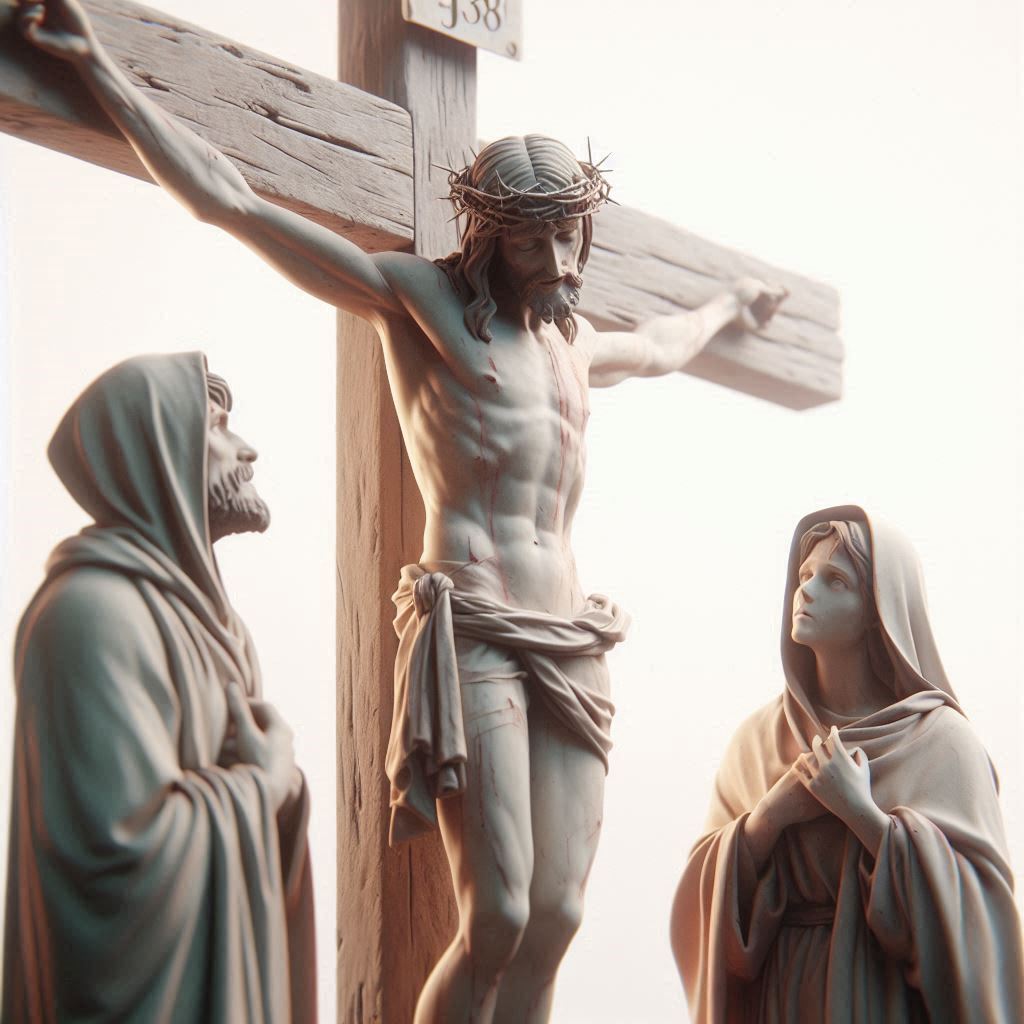
    Many people want to follow God, but they are ashamed to acknowledge the scandalous cross—the ultimate symbol of His sacrifice.

    They want to receive God’s blessings but reject His saving death for them.

    Grave Warning

    Jesus Himself gave a very serious warning.

    In Luke 9:26, He said, “For whoever is ashamed of me and of my words, of him will the Son of Man be ashamed when he comes in his glory and the glory of the Father and of the holy angels.”

    This verse directly relates to the story of the father.

    Just as the daughter was ashamed to acknowledge her disabled father in front of everyone, many Christians are ashamed to acknowledge the crucified Jesus.

    They claim to be Christian from the pulpit or in front of others, but when they are asked to acknowledge His shameful death as the only way to salvation, they refuse.

    They want a powerful and glorious Christ but reject a crucified Christ.

    This point is also strongly made by the Apostle Paul. In 1 Corinthians 1:18, he writes,

    “For the word of the cross is folly to those who are perishing, but to us who are being saved it is the power of God.”

    Paul clearly states that the cross, which the world sees as foolish and shameful, is the very core of our faith.

    Sorrow’s Toll

    The story of the father and his daughter serves as a powerful message for us.

    The rejection of God and His shameful cross will lead to great consequences.

    When we are ashamed of His humiliating death, we are indirectly rejecting His grace.

    It is important for us to reflect: Do we acknowledge Jesus not only as a glorious king but also as a suffering servant?

    Are we willing to acknowledge Him in front of everyone, even if it means identifying with the shameful cross?

    Because in the end, our rejection of Him will cause Him to be ashamed to acknowledge us.

  • Does He care?

    (Key Texts: Exodus 17:7; Psalm 56:8; Isaiah 49:15; Galatians 6:18; Ephesians 2:6)

    Our word for this session is the Hebrew shāmaʿ.

    This word means much more than just “to hear.”

    For God, to hear is to listen and to act.

    When the people of Israel cried out in slavery, the Bible says God “heard” their groaning and came to save them (Exodus 2:24).

    So, to say that God doesn’t hear our prayers is a misunderstanding of who He is.
    Yet, in every generation, people still ask, “Does God really see us? Does He care?”

    Eternal Word

    When the city of Jerusalem was under siege, the historian Josephus wrote about the bitter cries of its people, many of whom cursed heaven for abandoning them.

    But even he admitted their fall was not because God was absent, but because of their own violence and rebellion.

    In a similar way, in the desert, the Israelites tested God at a place they named “Massah and Meribah,” saying, “Is the Lord among us or not?” (Exodus 17:7).

    History shows us the same pattern: when we suffer, it’s easy for our hearts to lose sight of the One who suffers with us.

    Divine Wisdom

    The psalmist reminds us: “You have kept count of my tossings; put my tears in your bottle. Are they not in your book?” (Psalm 56:8).

    The prophet Isaiah gives us a picture of a loving mother, asking: “Can a woman forget her nursing child, that she should have no compassion on the son of her womb? Even these may forget, yet I will not forget you” (Isaiah 49:15).

    And Jesus Himself promised His disciples, “Even the hairs of your head are all numbered” (Luke 12:7).

    This powerful testimony leaves no room to accuse God of being indifferent.

    Illustration

    Imagine a child who sulks and says his mother doesn’t love him because she won’t give him a third cookie.

    He sees her refusal, not her protection; her absence, not her care.

    But the mother smiles, knowing her love is deeper than his simple wish.

    In the same way, God’s silence is sometimes His mercy, and His delay is often the shelter of His wisdom.

    A Gentle Puzzle

    Why do we so quickly confuse silence with absence, and a “no” with a lack of care?

    Could it be that our understanding of love is too small, shaped more by our own desires than by the truth?

    Quotes
    • Albert Camus:
      “In the depth of winter, I finally learned that within me there lay an invincible summer.”
    • Dietrich Bonhoeffer:
      “God does not give us everything we want, but He does fulfill His promises.”
    Hidden Nearness

    To say God does not care is to misread the story He has written in blood and tears.

    He counts every drop of sorrow, and His silence is not abandonment but preparation for a greater revelation.

    For in Christ, He has already raised us up and seated us with Himself (Ephesians 2:6), proving once and for all His nearness.

  • On the cross, Jesus entrusted his mother to his beloved disciple, saying to her,
    “Here is your son,” and to the disciple, “Here is your mother.“

    (Key Texts: Isaiah 53:3–5; Genesis 3:16; John 19:30; Ephesians 2:6)

    Our word for this session is the Hebrew chēbel.

    This one word means both “cord” and “the pain of giving birth.”

    The Bible uses this same word for anguish and even death.

    This shows us that the language of the womb and the language of suffering are deeply connected, and they point us to a great mystery:

    God’s own labor on the cross.

    Retrospect

    An ancient Jewish thinker named Philo once described God as a kind of midwife who helps virtue be born within us.

    Even though his thoughts were not fully complete without Christ, he sensed that God had to be a part of our struggles.

    How much truer is this in the Gospel!

    The Creator who once said that a mother’s pain would increase (Genesis 3:16) chose to enter into that very anguish Himself.

    In Christ, He bore the pain of giving birth to a new creation on the cross.

    Divine Message

    The prophet Isaiah saw a picture of a “Suffering Servant” who was “despised and rejected by men; a man of sorrows, and familiar with grief” (Isaiah 53:3).

    At the cross, Jesus’ cry “It is finished” (John 19:30) was like the final groan of a mother completing her labor.

    From His pierced side flowed blood and water , which are powerful symbols of childbirth.

    It was there that the Church was born.

    It was pain for God, but pure joy for us.

    Hebrews 12:2 confirms this, saying that “for the joy set before Him, He endured the cross, scorning its shame.”

    Clear Analogy

    Imagine a king who puts heavy taxes on his people and lives in luxury, ignoring their suffering.

    He would be seen as unjust and hated.

    But a king who carries the same heavy load as his people and works alongside them in the heat of the day will win their loyalty forever.

    God is the second kind of king.
    In Christ, He chose not just to allow pain, but to feel it, to sweat, to bleed, and to groan until new life came forth.

    Calm Connection

    Why did the Almighty, who could create with a single word, choose instead to save us with such agony?

    Could it be that love is never truly proven by power alone, but by wounds that are willingly carried?

    Quotes
    • Augustine:
      “God had one Son on earth without sin,
      but never one without suffering.”
    • Rebecca Wells:
      “There is a brokenness out of which comes the unbroken,
      a sorrow out of which comes great joy.”
    Divine Labor

    God is not distant from the curse laid on Eve or from the groaning of all creation.

    He Himself entered into the birth pains of history.

    The cross is not just about judgment; it is also about labor, where the cries of God brought forth the Church as His newborn people, now united with Christ in heavenly places (Ephesians 2:6).

  • (Key Texts: Galatians 4:19; Genesis 3:16; John 16:21; Ephesians 2:6)

    The key word for today is the Greek term ōdinō, meaning “to suffer labor pains.”

    The Apostle Paul used this powerful term when he confessed to the Galatians: “My dear children, for whom I am again in the anguish of childbirth until Christ is formed in you” (Galatians 4:19).

    Here, the apostle likens his ministry not to a general, a merchant, or a philosopher, but to a mother in labor.

    This choice of image reveals a deep truth:

    the journey of faith is not just a matter of sterile instruction, but the hard labor of giving life through struggle and hope.

    History’s Glance

    Among Jewish teachers, childbirth was often a metaphor for national suffering.

    Rabbis spoke of the “birth pangs of the Messiah,” a time of great tribulation before God’s kingdom would appear.

    The historian Josephus also described Jerusalem’s final days before its fall in 70 CE with terms that resembled a woman’s groaning in labor.

    Into this context, Paul’s metaphor was deeply familiar—yet it was also radical.

    He wasn’t speaking of Israel’s pain in waiting for the Messiah, but of his own personal pain in forming Christ within the hearts of new Gentile believers.

    Biblical Truths

    Genesis 3:16 set forth Eve’s curse:

    “I will surely multiply your pain in childbearing; in pain you shall bring forth children.”

    Yet Jesus reframed this curse into a promise of joy:

    “When a woman is giving birth, she has sorrow because her hour has come, but when she has delivered the baby, she no longer remembers the anguish, for joy that a human being has been born into the world” (John 16:21).

    Thus, the anguish of Paul’s ministry—and of our own—looks forward to the ultimate joy of lives being reborn in Christ.

    Triumph’s Cry

    A mother endures months of physical strain, swollen feet, and restless nights.

    The hours of labor feel unbearable.

    But when she hears her newborn’s first cry, she forgets the torment, and her tears of pain mingle with tears of laughter.

    The life of faith is like this, too: burdens are not erased, but they are swallowed up in joy when Christ is born anew in a heart.

    Mindful Pieces

    Why must the seed break before it grows, the shell crack before the bird sings, and the womb groan before life emerges?

    Could it be that brokenness is the gateway to all true beginnings?

    Quotes
    • Friedrich Nietzsche:
      “He who has a why to live can bear almost any how.”
    • Robin Lim:
      “Birthing is the most profound initiation to spirituality a woman can have.”

    God’s work in us is not the painless unfolding of ideas but the messy, costly work of life being formed.

    Christ’s life within us is not a doctrine carried in the mind alone, but a child birthed through struggle, tears, and ultimate joy.

  • (Key Texts: 2 Corinthians 1:5; Ephesians 2:6; Galatians 6:18)

    Let’s begin by looking at a powerful Greek word: sympaschō, which means “to suffer together with.”

    The Apostle Paul used this word to remind us that when we suffer for Christ, we are never alone.

    It’s a deep fellowship—a shared experience with Christ Himself and with His body, the Church.

    Paul assured the Corinthians: “For just as the sufferings of Christ overflow to us, so also through Christ our comfort overflows” (2 Corinthians 1:5).

    Notice the perfect balance here: as much as the cup of hardship is filled, so the cup of God’s comfort is filled to match it, overflowing in equal measure.

    Past Echoes

    The ancient historian Josephus wrote about a group of Jewish zealots under Roman rule who willingly accepted imprisonment, torture, and death.

    They believed their suffering brought them closer to their God and their people.

    Even though they didn’t know Christ, their example shows a powerful truth: suffering for a cause greater than yourself creates a bond that goes beyond normal human connection. How much deeper, then, is the fellowship for those who suffer with Christ, who has already suffered for us?

    God’s Word

    Jesus warned His followers in John 15:20, “If they persecuted Me, they will persecute you also.”

    The emphasis of Jesus’s words, ‘If they persecuted Me, they will also persecute you’ (John 15:20), though originally spoken to His disciples, extends to all who believe in His name.

    This truth can be understood within the bond of a family—between a parent and their children.

    Jesus Himself affirmed that every believer has entered the family of God’s kingdom.

    God is not only our Lord but also our Father, and Jesus is our firstborn brother who leads us into sonship.

    Just as children often face challenges simply because of their family name—sharing both honor and hardship—so believers share both the blessings and the trials that come with belonging to God’s household.“

    Yet He also promised in John 16:33, “In the world you will have tribulation. But take heart; I have overcome the world.”

    Peter echoed this in 1 Peter 4:13: “Rejoice insofar as you share Christ’s sufferings, that you may also rejoice and be glad when His glory is revealed.”

    The Bible offers a consistent message: the path of following Jesus is marked by both tears and songs, by both hardship and divine comfort.

    The Calm of Connection

    Why is it that chains couldn’t silence Paul, but freedom often silences us?

    Could it be that comfort without Christ is more suffocating than affliction with Him?

    Quotes
    • Khalil Gibran:
      “Out of suffering have emerged the strongest souls;
      the most massive characters are seared with scars.”
    • Maya Angelou:
      “There is no greater agony than
      bearing an untold story inside you.”

    Suffering is not a curse but a participation, a seat at the same table where Christ both wept and triumphed.

    To be seated with Him in the heavenly places (Ephesians 2:6) also means walking with Him through valleys of sorrow, knowing that joy will be our final companion.

  • A Steady Foundation

    A mother’s faith acts as a steady foundation, a rock in the midst of life’s storms.
    It’s the silent prayer for a sick child, the patient teaching of kindness, and the gentle forgiveness offered after a mistake.

    This constant, unwavering belief provides a sense of security and stability for her children, anchoring them in a world that can often feel chaotic and unpredictable.

    It’s a living example of resilience and trust.

    Quiet Devotion

    Consider the incredible story of Susanna Wesley, a mother who raised ten children to adulthood. Despite facing poverty, illness, and the daily demands of a very large family, Susanna made a powerful commitment.

    Every day, she would set aside an hour for prayer and to teach her children about faith.

    Apron Prayer

    She often created her own “sacred space” by simply pulling her apron over her head, signaling to her children that this was her time with God and they were not to disturb her.

    Out of this faithful dedication came two of history’s most influential figures: John and Charles Wesley. Their work sparked a spiritual movement that changed not only England but the entire world.

    Shaping Worlds

    This powerful example reminds us that a spiritual legacy often starts with quiet acts of sacrifice.

    The late-night prayers, the small moments of weariness, and the simple acts of faithfulness are what shape future leaders.

    These are the hands that rock the cradle and, in turn, can help shape the world.


    “The hand that rocks the cradle is the hand that rules the world.” — William Ross Wallace

    The quote, “The hand that rocks the cradle is the hand that rules the world,” by William Ross Wallace, is a poetic way of saying that mothers, by raising and nurturing their children, have a profound and lasting influence on society and the world.

    The Power of Motherhood

    This quote challenges the traditional view that power lies only with kings, politicians, and military leaders.

    Instead, it argues that the most fundamental form of power belongs to those who shape the next generation.

    The “hand that rocks the cradle” symbolizes a mother’s daily, often unseen, work: teaching values, instilling character, and providing emotional support.

    Shaping the Future

    By influencing the minds and hearts of their children, mothers are effectively shaping the future leaders, thinkers, and citizens of the world.

    The lessons learned in childhood—of kindness, integrity, and resilience—become the foundation for a person’s life.

    Therefore, the long-term impact of a mother’s influence is arguably greater and more powerful than any political or economic decision, as it creates the very people who will one day lead and transform the world.

  • In our ministry, we have the privilege of meeting many expectant mothers and hearing their personal stories.

    We see that pregnancy is a journey filled with both immense joy and significant challenges.

    There are physical changes, like swollen feet and a growing belly, as well as nights of tossing and turning, and new diets to follow.

    On top of that, there are emotional ups and downs and the daily discipline of being careful for the new life growing inside.

    When the time for birth arrives, it can be an overwhelming experience, especially for first-time mothers. And then, the new and demanding responsibility of caring for a newborn begins.

    Guiding Generations

    The Bible gives us a wonderful example of this journey.

    The strong faith of Timothy, a key figure in the New Testament, didn’t just appear out of nowhere.

    It was nurtured by the deep and genuine faith of his grandmother Lois and his mother Eunice.

    They passed on a living faith through their actions and spiritual guidance, like a runner handing a baton to the next in a relay race (2 Timothy 1:5).

    Raising the next generation is about much more than just their physical well-being; it’s about shaping their faith and giving them a strong spiritual foundation.

    Modern Parenting

    Today’s world presents new obstacles.
    While social media can be a source of inspiration, it can also pull us away from what truly matters and blur our values.

    In many developed countries, more young couples are choosing not to have children, wanting to avoid the sacrifices that come with being a parent.

    This isn’t just a matter of declining birth rates; it’s a spiritual issue too.
    We see fewer people willing to become mothers and fathers who are committed to raising the next generation in Christ.

    Mind’s Marathon

    This journey of guiding a new generation isn’t a short sprint; it’s a long race, like a triathlon. It requires strength, discipline, and a long-term commitment.

    Just as athletes train with foresight and perseverance, spiritual parents must prepare diligently, knowing that it can take decades for a new generation to mature in their faith.

    “Children are not a distraction from more important work. They are the most important work.” — C. S. Lewis

    In this quote, C. S. Lewis challenges the common view that prioritizes careers, wealth, or public achievements over the role of being a parent. He suggests that the time and energy spent raising, guiding, and loving a child isn’t wasted; instead, it’s the most valuable investment for the future. By shaping a child’s character, instilling values, and providing emotional support, we aren’t just creating better individuals—we’re also building the foundation for a stronger, more ethical society, making this work the most important due to its lasting and widespread impact.

    Shaping Generations

    The invitation before us is to embrace the hard work and the great joy of spiritual parenthood. By learning from the resilience of faithful mothers and fathers, we can help shape the next generation to be more like Christ.