Livora Gracely

Writing to remember, sharing to inspire

  • Perisseuō (περισσεύω), which means to “abound,” to “overflow,” or to be “more than enough.”

    Paul writes, “Where sin increased, grace abounded (hyperperisseusen) all the more” (Romans 5:20).

    A vessel of God is never meant to hoard; it’s designed to spill over.

    Rivers of living water

    Jesus promised,

    “Whoever believes in me, out of his heart will flow rivers of living water” (John 7:38).

    Notice that he didn’t say trickles, but rivers.

    Grace isn’t meant to be static—it overflows from those who have been filled, cleansing and refreshing others.

    Paul was a perfect example of this when he said,

    “By the grace of God I am what I am… and His grace toward me was not in vain” (1 Corinthians 15:10).

    Grace filled him and then overflowed into tireless service that reached many nations.

    Rich in Spirit

    The early Christians in Jerusalem, despite being poor, overflowed with generosity.

    Luke records, “There was not a needy person among them” (Acts 4:34).

    Grace had touched their possessions, their hearts, and their relationships.

    They were vessels spilling life into one another’s lives.

    Spiritual indwelling

    Picture a fountain in a public square:

    water springs from a hidden source, fills the basin, and then overflows to refresh anyone who passes by.

    That’s the life of a believer.

    The Spirit fills us from within, but the design of the vessel ensures others are touched by what is poured into us.

    Divine sustenance

    A farmer once prayed, “Lord, fill my cup.”

    His young son interrupted,

    “But Daddy, ask Him to make it overflow! The cows are thirsty too!”

    Quotes

    “You can never truly keep a blessing until you share it.” – Corrie ten Boom


    We aren’t meant to be containers of grace, but conduits.

    Emptied, cleansed, filled, and positioned, we finally become rivers that carry Christ’s life outward.

    The Spirit within us doesn’t stop with us—He must flow through us, until the whole earth is watered.


  • A joyful child playing in a bubble-filled bath, embodying the theme of cleansing and purity.

    Katharizō (καθαρίζω), which means to “cleanse,” “purify,” or “make free from defilement.”

    Jesus used it when He said, “Blessed are the pure (katharoi) in heart, for they shall see God” (Matthew 5:8).

    A vessel may be positioned under a stream, but if it’s full of dirt, whatever it receives will be ruined.

    Noble instrument

    Paul writes, “If anyone cleanses (ekkatharē) himself from what is dishonorable, he will be a vessel for honorable use, set apart as holy, useful to the Master, prepared for every good work” (2 Timothy 2:21).

    Here, the message is clear:

    cleansing is not an option—it is what makes us fit to be used.

    The Holy Spirit won’t fill a heart that is content with bitterness, pride, or hidden idols.

    Spiritual purification

    The priests of Israel washed themselves daily before entering the tabernacle for service (Exodus 30:18–21).

    The water wasn’t just about removing dust; it symbolized their readiness to serve.

    In the same way, the early church practiced confession and forgiveness, believing that unconfessed sin clouded the vessel and stopped the Spirit’s flow.

    Filthy facade

    Imagine drinking from a cup that looks golden on the outside but is full of mud on the inside.

    You’d be disgusted!

    In the same way, God wants vessels that are clean on the inside, not just polished on the outside.

    A cracked,
    humble jar that is clean inside is
    more useful to Him than a fancy,
    decorated one that’s full of decay.

    Feeling Grimy

    A child once asked me,

    “If Jesus washes us white as snow, why do we get dirty again?”

    I replied,

    “Because you still like to play in the mud!”

    The boy laughed, but then he quietly said,

    “I think I need another bath.”

    Quotes

    “God does not pour His Spirit
    into a vessel full of pride.”
    – St. Augustine

    “Holiness is not the removal of joy,
    but the cleansing of joy from poison.”
    – Hannah Whitall Smith


    Cleansing isn’t a loss but a preparation.
    The Spirit longs to fill hearts that
    are empty of filth
    so that Christ can shine
    within us
    without anything blocking Him

  • An elderly woman adjusting a lamp in a cozy room, symbolizing the importance of positioning for illumination and grace.

    Tithēmi (τίθημι), which means to “place,” “set,” or “put in position.”

    Jesus said, “No one lights a lamp and then puts (tithēsin) it under a bowl; instead he sets it on its stand, so that those who enter may see the light” (Luke 11:33).

    Position matters—both for a light and for a vessel.

    Seeking fortune

    On the day of Pentecost, the disciples were not scattered but were together in one place (Acts 2:1).

    They had positioned themselves in prayer and unity, and that’s how they received the Spirit’s filling.

    Similarly, the early church devoted themselves to “the apostles’ teaching and to fellowship, to the breaking of bread and to prayer” (Acts 2:42).

    This wasn’t an accident—they placed themselves where grace was flowing.

    Spiritual proximity

    Josephus recorded that many pilgrims would position themselves near the temple courts during festivals, believing that being present in that holy atmosphere would bring a blessing.

    Yet in Christ, God has shifted the temple from stones to our hearts.

    Now, positioning ourselves means drawing near to Christ in faith, not merely standing in sacred courtyards.

    Faithful Alignment

    Picture jars set out under a waterfall.

    The ones placed upright are filled to the brim, while those lying sideways catch only a few drops.

    The difference is not in the waterfall but in the jars’ position.

    In the same way, God’s grace is abundant, but only a soul positioned rightly before Him will be filled.

    Required participation

    I once knew a man who said, “I don’t need to pray; if God wants to bless me, He knows my address!”

    Yet his soul remained dry.

    For although the postman knows your house, you still have to open the door when he knocks.

    Human labyrinth

    What receives the most not because of its size, but because of where it stands?
    The vessel placed under the stream.

    Quotes

    “Grace is everywhere,
    but only the humble stoop to drink.”
    – John Calvin

    “You cannot expect the seed of prayer to grow
    if you never set it in the soil of time.”
    – Susanna Wesley


    Positioning ourselves in humility, prayer,
    fellowship, and obedience is
    like placing jars where the rain falls.
    God never fails to pour.

  • Selective intake

    Katharos (καθαρός), which means clean, pure, or unmixed.

    Paul tells Timothy, “If anyone cleanses (katharē) himself from what is dishonorable, he will be a vessel for honorable use, set apart as holy” (2 Timothy 2:21).

    The problem is that some of us cry out,

    “Fill me only with what I want—my pleasures, my ambitions, my demands.”

    But this kind of selective filling pollutes the vessel. It seeks a mixture instead of true purity.

    Willful conditions

    The people of Israel once said to the prophet Jeremiah,

    “We will not listen to the message you have spoken to us in the name of the Lord! Instead, we will certainly do everything we said we would: burn incense to the Queen of Heaven…” (Jeremiah 44:16–17).

    They wanted to be filled, yes—but only on their own terms.

    Likewise, Jesus challenged the crowds who followed Him only for the bread that would perish (John 6:26–27).

    To demand what you want to be filled with is to make yourself the master over the potter, when in truth, the potter alone decides what is poured.

    Impending doom

    The historian Josephus wrote about how some rebels in Jerusalem rejected every offer of peace unless it perfectly suited their desires.

    Their stubborn demands only sped up their own destruction.

    Similarly, a soul that tells God, “Fill me, but only with this one thing,” is setting itself on a path to ruin.

    Widespread dishonesty

    Imagine a jar that says to the winepourer, “I will hold only milk, nothing else!”

    The pourer offers fine wine, but the jar refuses.

    Even worse, when the jar is filled with milk, it quickly spoils in the sun, creating a foul smell instead of offering refreshment.

    This is the sad end of self-willed filling—it leads to corruption.

    Impossible dish

    I once heard a man in Corinth pray, “Lord, fill me—but only on the weekends, and only with blessings that don’t cause me any trouble!”

    The listeners chuckled because such a prayer is like asking a baker for bread without flour.

    The recipe is impossible!

    Practical maxims

    “God gives where He finds empty hands.”
    – St. Augustine

    “God is never found by the one who prescribes how He must come.”
    – Madame Jeanne Guyon


    A vessel must be pure and ready to be used,
    not demanding and selective.
    The potter knows better than
    the clay what it was designed to hold.

  • Lingering Inertia

    Argē (ἀργή), which means “idle,” “inactive,” or “without movement or fruit.”

    The Apostle James uses this word to give a strong warning:

    “Faith without works is dead (argē)” (James 2:20).

    A person who never moves toward God is like a container that stays dry; it waits for water to come to it, but refuses to be carried to the well.

    Lazy malice

    Jesus told a parable about a servant who buried his talent (money) in the ground.

    His master called him “wicked and slothful” (Matthew 25:26) for his inactivity.

    In the same way, Paul encourages believers not to “grow weary in doing good, for at the proper time we will reap a harvest if we do not give up” (Galatians 6:9).

    A stagnant person is one who wastes their time and opportunities, unwilling to move to where God is pouring out His Spirit.

    Stingy inaction

    The historian Josephus wrote that during the famine before the fall of Jerusalem, some people hoarded their food in secret places, refusing to share or take action.

    Their inaction was just as deadly as a sword.

    This shows us how often stagnation
    —simply doing nothing—
    can be just as dangerous as active rebellion.

    Rigid Posture

    Imagine a bucket left upside down in an open field.

    Rain falls everywhere, but the bucket stays dry because it refuses to be turned upright.

    In the same way, a soul stays dry not because God withholds His grace, but because it refuses to change its position before Him.

    Hollow hope

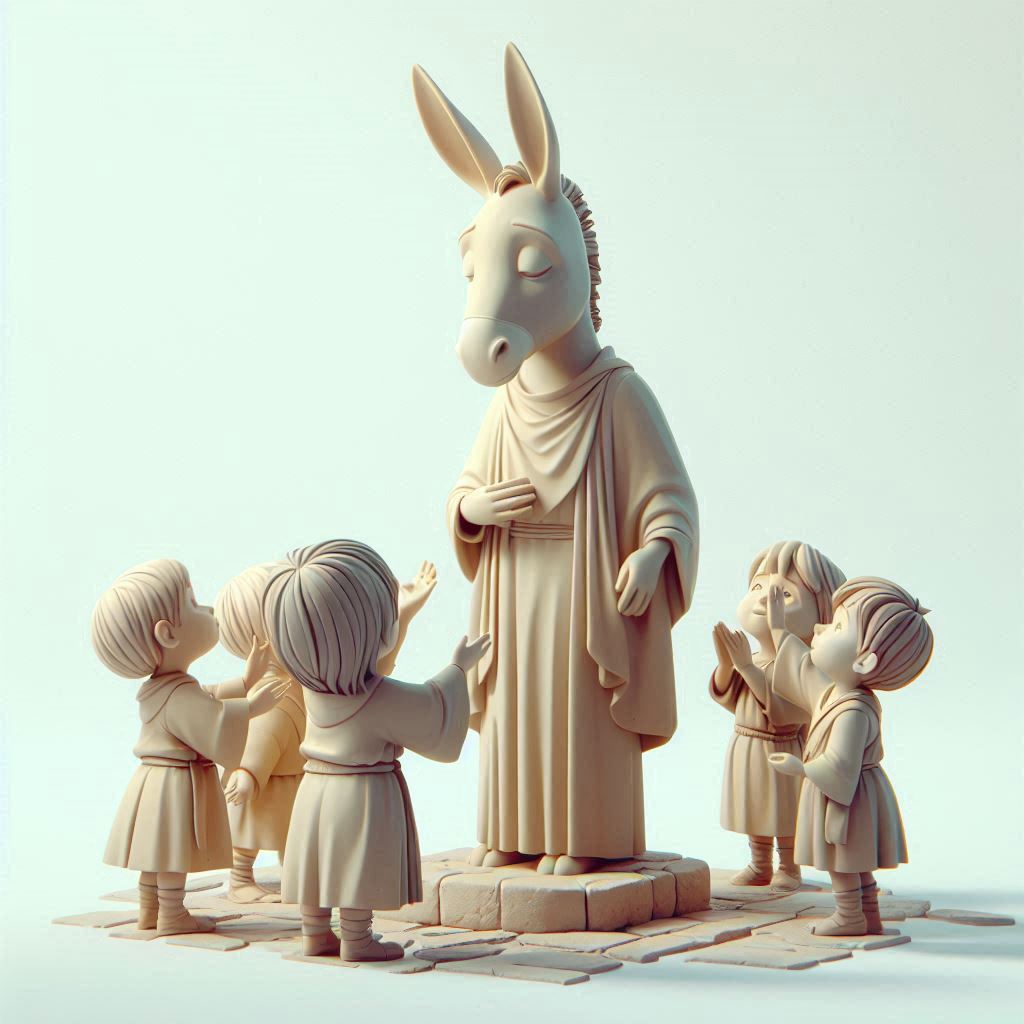
    I once saw a donkey in Antioch that refused to take a single step, even though its owner pulled with all his might.

    The animal just sat there stubbornly, as if saying, “If water wants to come to me, let it walk!”

    The crowd laughed, but I thought to myself,

    “How similar this is to some people who sit in stubborn idleness, expecting grace to chase them while they lift not a finger.”

    Passive Decay

    What can travel miles in stillness but never take a single step?

    A stagnant heart.

    Time carries it toward death, even though it has never moved toward life.

    Profound Insights

    “He who moves not forward, goes backward.”
    – Johann Wolfgang von Goethe

    “You may delay, but time will not.”
    – Mary Astell

    To remain stagnant is to choose dryness,
    even with living streams flowing nearby.
    The call of the Spirit is simple:
    get up,
    move forward,
    and position yourself to receive.

  • Arrogant fools

    Apeitheia (ἀπείθεια), which means “disobedience” or “a stubborn unwillingness to be persuaded.”

    Paul writes, “Just as you who were at one time disobedient (apeithēsate) to God have now received mercy… so they too have now become disobedient in order that they too may now receive mercy” (Romans 11:30–31).

    The greatest tragedy isn’t being empty; it’s stubbornly refusing to be filled when God offers you life.

    Closed minds

    Before the council, Stephen cried out to his accusers,

    “You stiff-necked people, uncircumcised in heart and ears, you always resist the Holy Spirit” (Acts 7:51).

    This stubborn refusal wasn’t new. It was the same attitude Israel had in the wilderness when they hardened their hearts, even though God was providing them with food from heaven (Psalm 95:8–11).

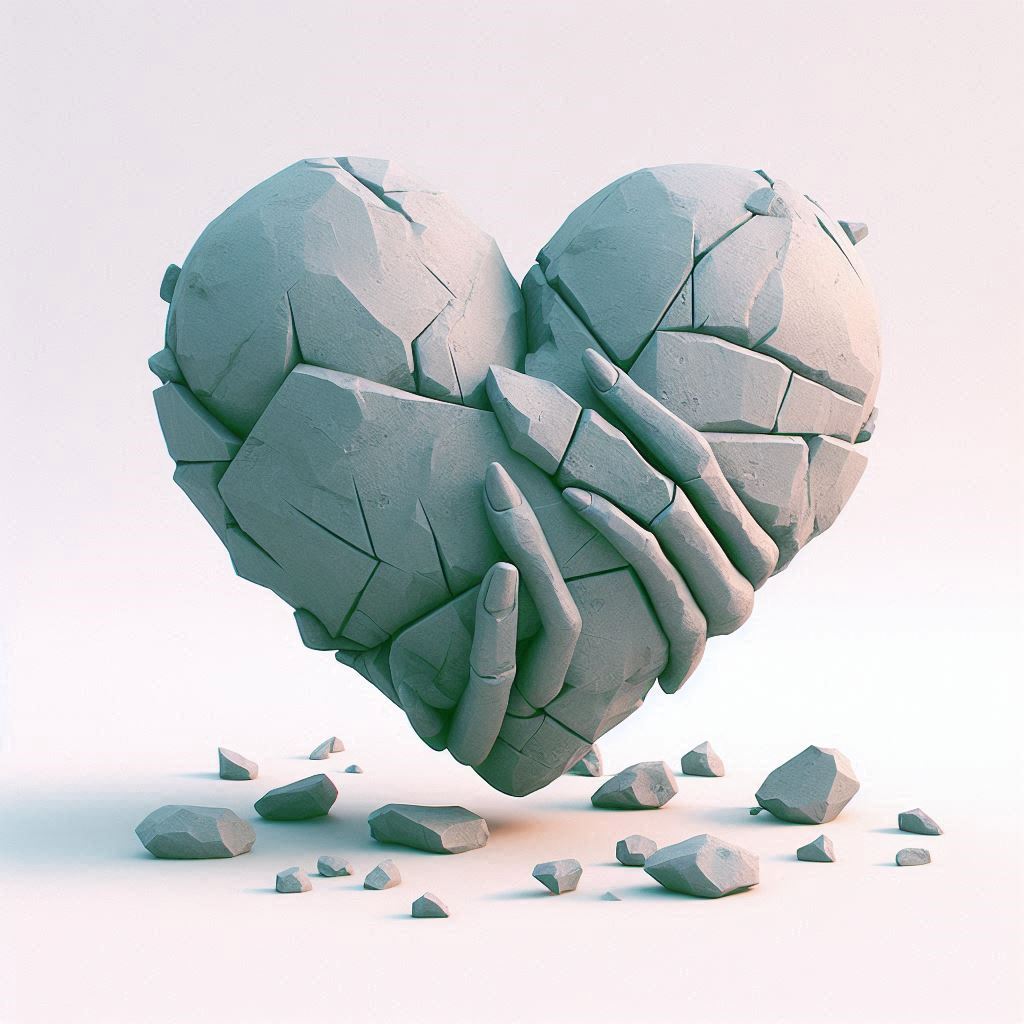
    A heart of stone refuses the gift of the Spirit, choosing its own barrenness instead.

    Rebel soul

    The historian Josephus described how many of our people before the fall of Jerusalem rejected every prophet and teacher God sent, choosing rebellion instead.

    He lamented that even when a terrible famine struck, some would rather die than humble themselves and turn back to God.

    The jar was right in front of them, and the water was near, yet they refused to drink.

    Ridiculous plea

    Imagine a thirsty child being offered a cup of clean, cool water.

    Instead of drinking, he turns away and insists, “No, I want muddy puddle water instead!”

    The parent is heartbroken because the child is choosing death when life is being offered to him.

    This is exactly what happens to a soul that refuses God’s offer to fill it.

    I’m stuffed

    I once met a man in Caesarea who proudly declared, “I need no filling—I am already complete!”

    Yet, when he sneezed, his emptiness echoed so loudly that people around him offered to pour something into him, just to silence the hollow sound!

    This is what happens to those who boast of being self-sufficient—their hollowness always betrays them.

    Hollow pomp

    What is heavier when empty than when full?

    A heart hardened by pride.

    Because emptiness carried with humility is light, but emptiness carried with stubborn refusal becomes a crushing weight.

    Wise counse

    “Hell is the truth seen too late.” – Thomas Hobbes

    “The proud are ever most unready to drink of grace, for they thirst not, though dying.” – Hannah More


    We see here that the real danger isn’t that we are empty,
    but that we deny the very hand offering to fill us.

  • Unfulfilled void

    Kenodoxia (κενοδοξία), which means “vain glory” or “empty pride.”

    It’s the illusion that you are worth something when you are truly empty.

    Paul warns the Philippians, “Do nothing out of selfish ambition or kenodoxia (vain glory), but in humility count others more significant than yourselves” (Philippians 2:3).

    The real danger isn’t just being empty; it’s being content with that emptiness and even being proud of it.

    Blunt reprimand

    Jesus had harsh words for those who “honor Me with their lips, but their hearts are far from Me” (Matthew 15:8).

    These people wear a mask of being full—they follow rituals, use religious words, and put on a good show—but inside, they are completely empty.

    Paul also tells the Galatians, “Let us not become conceited (kenodoxoi), provoking and envying each other” (Galatians 5:26).

    True fullness comes from life in Christ, not from appearances.

    Lethal Contagions

    The historian Josephus wrote about how some leaders in Jerusalem loved to show off their religious offerings, not to honor God, but to get applause from the crowd.

    He called them men “whose religion was but theatre.”

    This is very similar to Jesus’s words about those who “love to stand and pray in the synagogues… to be seen by others” (Matthew 6:5).

    Empty pride is a disease that has affected people in every generation.

    An Illustration

    Imagine a beautiful golden cup sitting on a table at a feast.

    Guests admire how it shines, but when they lift it, they find it’s completely dry.

    There’s no wine, no water—no life.

    Its beauty is a lie because it has failed its purpose.

    In the same way, a person who is full of pride but has no grace is like a cup of mockery.

    Loudmouth braggart

    I once heard a merchant in Antioch bragging, “I sell the finest jars in all of Syria—light as air!”

    And indeed, when you knocked on them, they rang with a hollow sound like a drum.

    His customers just laughed and asked, “So we are supposed to pay a lot of money for the sound of emptiness?”

    Yet, many people do the same thing: they buy applause, titles, and material things, then brag about the noise their emptiness makes.

    The Riddle of Life

    What makes the loudest sound but holds nothing?

    An empty vessel.

    But when that vessel is filled, it becomes quieter, because substance speaks more softly than vanity.

    Words of Wisdom

    “Do not let your happiness depend on something you may lose.” – C. S. Lewis

    “Vanity is the food of pride, but grace is the feast of humility.” – Teresa of Ávila


    We must understand this:

    Emptiness is a condition to be healed, not a crown to be worn.
    When we are proud of our hollowness, we are blinded to the offer of true fullness.

  • Spirit’s Flow

    Plethō (πληθώ), which means to fill, to overflow, or to cause to abound.

    When the Holy Spirit came at Pentecost, the believers were “filled (eplēsthēsan) with the Holy Spirit” (Acts 2:4).

    The whole point of being filled is not just to be full ourselves, but to let that fullness pour out and bless the lives of others.

    A Deeper Look

    Jesus Himself promised that “whoever believes in Me, as Scripture has said, rivers of living water will flow from within them” (John 7:38).

    Notice He said rivers, not just a small pond.

    A vessel filled with grace becomes a fountain.
    The Apostle Paul wrote, “The grace of our Lord was poured out on me abundantly” (1 Timothy 1:14).
    That incredible grace transformed Saul the persecutor into Paul the apostle—a man whose overflowing life blessed entire nations.

    A Historical Comparison

    The historian Josephus wrote about Herod’s impressive aqueducts in Jerusalem, which brought water from far away to serve the people.

    Yet, even these great structures would crack, and their flow would sometimes stop.

    The Holy Spirit’s filling, however, turns every believer into a living aqueduct, carrying life-giving water wherever they go—without cracks, and with no end to the flow.

    An Illustration

    Think of a candle.

    It doesn’t give light by keeping the flame to itself; it shines by burning and sharing its light with everything around it.

    In the same way, when grace fills us, our greatest joy is not in keeping it, but in giving it away.
    A vessel that overflows is a vessel that is truly fulfilling its purpose.

    A Bit of Humor

    Some people are so proud of their full “jar” of grace.
    They exclaim, “Look how full my jar is!”

    Yet they seal the lid tightly so not a single drop can escape.
    They spend all their time guarding their jar, afraid that someone might take a sip.

    But what good is a jar of water that never quenches anyone’s thirst?
    It’s like a singer who never sings or a baker who never bakes—a useless gift.

    The Riddle of Grace

    What becomes smaller the more you keep it, but larger the more you share it?

    The answer is grace.

    Words of Wisdom

    “Grace is given not for hoarding but for pouring.” – John Chrysostom

    “You have not lived today until you have done something for someone who can never repay you.” – Mother Teresa

    The great secret:

    A vessel that overflows never runs dry.

    The more it pours out, the more God fills it.

    This is the amazing and beautiful paradox of grace.

  • Endless Supply

    Our key word today is charis (χάρις), a Greek word that means grace.

    Think of it as an undeserved gift—a gift given freely.

    The Apostle Paul uses this word so often that it becomes a central theme in his letters.

    In Galatians 2:5, he makes it clear that the core of the gospel is salvation by God’s grace, not by our own good deeds.

    As he writes in Ephesians 2:8, “For it is by grace you have been saved, through faith—and this is not from yourselves, it is the gift of God.”

    A Deeper Look

    We are not empty containers; we are chosen vessels meant to hold something incredible.

    Paul describes us as “vessels of mercy” (Romans 9:23).

    God’s grace isn’t just a drop; it’s an ocean He pours into us through Christ.

    Remember when Jesus met the Samaritan woman at the well? She felt empty and broken, but He told her, “The water I give them will become in them a spring of water welling up to eternal life” (John 4:14).

    Her emptiness became the perfect space for His gift.

    A Historical Comparison

    In my research, I learned that Roman society had a system called beneficium, where a wealthy patron would give a gift to a client.

    But these gifts always came with a hidden cost—they created a debt that had to be repaid.

    God’s charis is completely different.

    It can’t be earned, traded, or bought.

    Even the historian Josephus wrote about how people would bribe rulers to get favors.

    The gospel turns that whole system upside down with this simple command: “Freely you have received; freely give” (Matthew 10:8).

    An Illustration

    Imagine a widow in a remote village, with only a small amount of flour left in her jar.

    Each day, she fears it will be the last.

    But when the prophet Elijah visits, her jar of flour never runs out (1 Kings 17:16).

    God’s grace is just like that—an endless supply for those who have nothing.

    It never runs out and is always enough.

    A Bit of Humor

    Some people see grace like a sprinkle of seasoning on a meal they’ve already prepared themselves.

    They think, “I’ll just add a little grace to my own hard work to make it taste better.”

    But grace isn’t a seasoning—it is the entire meal. Without it, there is nothing on the plate at all.

    The Riddle of Grace

    What can you never earn, yet is the most valuable thing you will ever receive?

    The answer is grace.

    The moment you believe you have paid for it, it is no longer grace.

    Words of Wisdom

    “Grace is not given because we have done good works, but so that we may be able to do them.” – Augustine of Hippo

    “God’s mercy is so great that you may sooner drain the sea of its water, or deprive the sun of its light, than exhaust the great mercy of God.” – Catherine of Siena

    Grace and mercy are the true filling for our lives.

    Without them, we are empty.

    With them, we become a spring of eternal life.

  • Hollow Soul

    Keyword: kenos (κενός)

    This word means “empty, void, without substance.”
    Paul used it to warn believers not to run their race “in vain (kenos)” (Galatians 2:2).
    The human heart without God is precisely this: a hollow container.
    Yet the miracle of grace is that God chooses such vessels, not because they are strong, but because they are weak and needy.

    Biblical Foundation

    Paul declares, “We were by nature children of wrath, like the rest of mankind.
    But God, being rich in mercy… made us alive together with Christ” (Ephesians 2:3–5).
    Notice the contrast: wrath and emptiness by nature, but life and fullness by grace.

    The prophet Isaiah had already seen this when he cried, “All we like sheep have gone astray” (Isaiah 53:6).

    Even our best deeds, apart from Him, are “filthy rags” (Isaiah 64:6).

    Historical and Wise Additions

    The historian Flavius Josephus often mocked the pride of leaders in Jerusalem who built splendid monuments while their inner lives were barren.
    He wrote that such men “labored to appear rich in outward form, but were beggars in virtue.”
    How perfectly this echoes Jesus’ own words to the Pharisees:

    “You are like whitewashed tombs, which outwardly appear beautiful, but within are full of dead men’s bones” (Matthew 23:27).

    A Stinging Remark:
    Building a magnificent monument of the self on the barren ground of an empty heart is a futile attempt to cover up the stench within.
    It’s like a golden statue filled with filth.

    A Wise Saying from the East:

    “A full stomach cannot taste the sweetness of honey;
    a heart full of ego cannot taste the mercy of God.” –
    An ancient proverb from the Ming Dynasty, China.

    Everyday Illustration

    Imagine a thirsty traveler carrying a beautifully painted jug.
    He boasts of its artistry, but when he lifts it to his lips, not a drop refreshes him.
    The jug is empty, and so he collapses in the desert.

    In the same way, one may have achievements, education, or wealth, yet if the vessel is empty of Christ, he cannot survive the journey of life.

    Many people spend their lives chasing false glitter, buying titles and status, when all they get is a shiny empty jug.

    Gentle Humor

    In the marketplace of Antioch, I once heard a man advertising:
    “Come buy my empty jars! They are the finest emptiness you will ever own!”

    The crowd laughed, for what fool would pay for emptiness?
    And yet, Theophilus, is that not what many do with their lives—buying status, positions, and pleasures that fill nothing inside?

    The Puzzle of Life

    Here is a riddle for you:
    What is full when it is empty, but empty when it is full?

    Answer:
    The human heart. Empty of self, it is full of God. Full of self, it is empty of Him.

    Quotes

    “You have made us for yourself, O Lord, and our hearts are restless until they rest in you.” –
    Augustine of Hippo

    “The less we have of self, the more room there is for God.” –
    Catherine of Siena

    Emptiness is not our shame, but our starting point.
    The vessel’s worth lies not in its shape, but in the treasure it holds.
    Christ is that treasure.