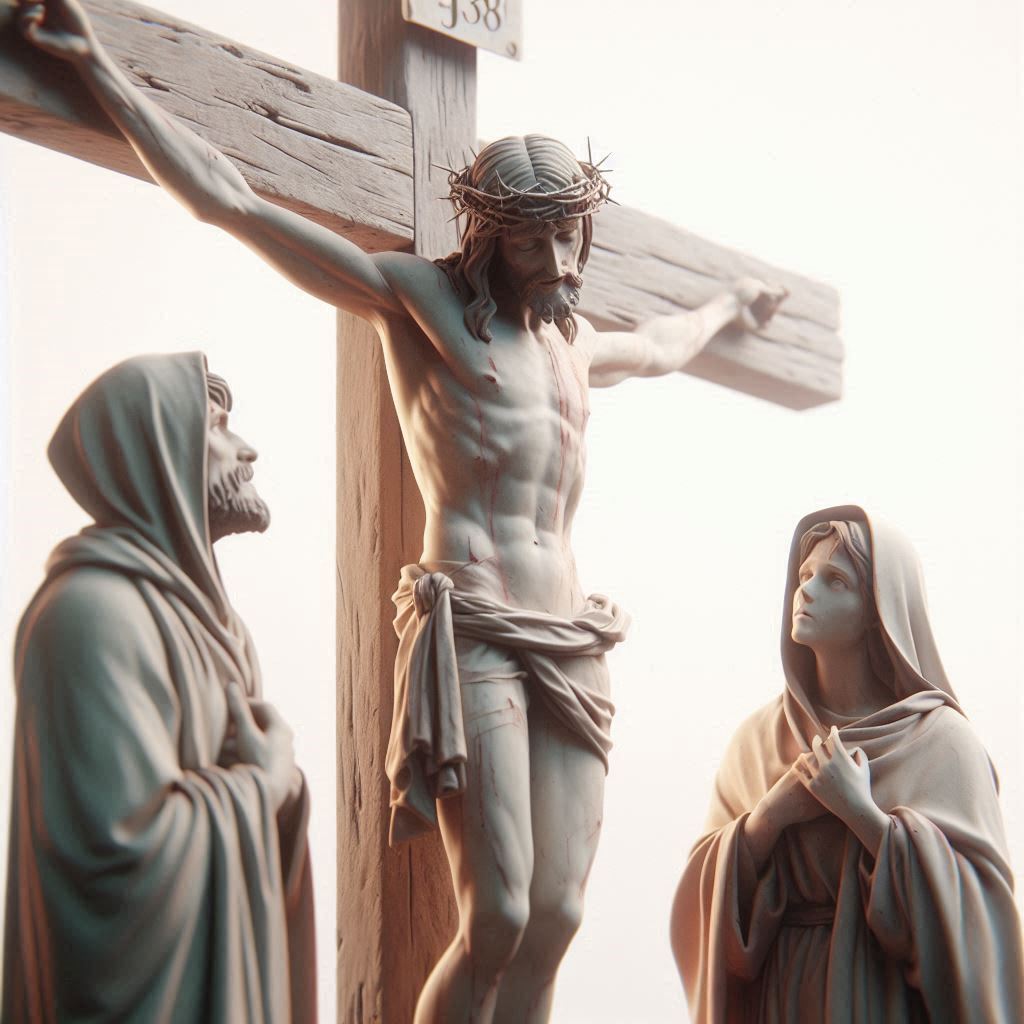
“Here is your son,” and to the disciple, “Here is your mother.“
(Key Texts: Isaiah 53:3–5; Genesis 3:16; John 19:30; Ephesians 2:6)
Our word for this session is the Hebrew chēbel.
This one word means both “cord” and “the pain of giving birth.”
The Bible uses this same word for anguish and even death.
This shows us that the language of the womb and the language of suffering are deeply connected, and they point us to a great mystery:
God’s own labor on the cross.
Retrospect
An ancient Jewish thinker named Philo once described God as a kind of midwife who helps virtue be born within us.
Even though his thoughts were not fully complete without Christ, he sensed that God had to be a part of our struggles.
How much truer is this in the Gospel!
The Creator who once said that a mother’s pain would increase (Genesis 3:16) chose to enter into that very anguish Himself.
In Christ, He bore the pain of giving birth to a new creation on the cross.
Divine Message
The prophet Isaiah saw a picture of a “Suffering Servant” who was “despised and rejected by men; a man of sorrows, and familiar with grief” (Isaiah 53:3).
At the cross, Jesus’ cry “It is finished” (John 19:30) was like the final groan of a mother completing her labor.
From His pierced side flowed blood and water , which are powerful symbols of childbirth.
It was there that the Church was born.
It was pain for God, but pure joy for us.
Hebrews 12:2 confirms this, saying that “for the joy set before Him, He endured the cross, scorning its shame.”
Clear Analogy
Imagine a king who puts heavy taxes on his people and lives in luxury, ignoring their suffering.
He would be seen as unjust and hated.
But a king who carries the same heavy load as his people and works alongside them in the heat of the day will win their loyalty forever.
God is the second kind of king.
In Christ, He chose not just to allow pain, but to feel it, to sweat, to bleed, and to groan until new life came forth.
Calm Connection
Why did the Almighty, who could create with a single word, choose instead to save us with such agony?
Could it be that love is never truly proven by power alone, but by wounds that are willingly carried?
Quotes
- Augustine:
“God had one Son on earth without sin,
but never one without suffering.” - Rebecca Wells:
“There is a brokenness out of which comes the unbroken,
a sorrow out of which comes great joy.”
Divine Labor
God is not distant from the curse laid on Eve or from the groaning of all creation.
He Himself entered into the birth pains of history.
The cross is not just about judgment; it is also about labor, where the cries of God brought forth the Church as His newborn people, now united with Christ in heavenly places (Ephesians 2:6).


Leave a comment