Livora Gracely is a pen name.
This little corner gathers whimsical stories, gentle reflections, and Scripture-inspired writing for readers who still enjoy noticing small things.
Some stories begin with questions.
Others begin with a quiet morning, a cup of tea, an old bench, or a verse that refuses to be forgotten.
The person behind the name simply prefers the words to arrive before the writer.
Writing to remember.
Sharing to inspire.
She used to move chairs six inches. One day, people paid her to move walls.
Hanae learned about architecture long before anyone used the word.
At eight years old, she simply knew that the dining table was in the wrong place.
This was inconvenient because it belonged to her family.
It was more inconvenient because Hanae kept moving it.
Their apartment was small, warm, and permanently negotiating with itself.
A cupboard opened only if one chair was turned sideways.
The window could not open properly unless the tea tray moved.
If her grandmother wanted to pass behind the table, someone had to stand up.
Hanae considered this an engineering problem.
Her mother considered it Tuesday.
One afternoon, Hanae built a miniature neighborhood from matchboxes, old packaging, pencils, and three wooden blocks.
She arranged tiny roads between them.
Then she frowned.
She moved one box.
Then another.
Then the sugar bowl.
Her mother looked over.
“The sugar bowl is not part of your city.”
“It was blocking traffic.”
There were no cars in the model.
Hanae did not see this as relevant.
Years later, at school, the same habit became harder to ignore.
During the annual festival, tables filled the hall, students carried trays, decorations leaned into doorways, and one very ambitious banner attempted to occupy the same space as everyone’s head.
Teachers discussed the problem.
Hanae moved three chairs.
Then a table.
Then she marked a wider path with tape and redirected one stall six feet to the left.
Within ten minutes, people stopped colliding.
Her classmate Yuki stared at her.
“How did you know?”
Hanae shrugged.
“They were walking where the room told them to walk.”
Yuki looked around.
“The room talks?”
“Mostly when people arrange it badly.”
After that, Hanae became the unofficial person people called when something did not fit.
Club booth.
Storage room.
Classroom display.
A tea table at her aunt’s house.
Once, a neighbor asked her to help “fix” a living room.
Hanae moved one lamp and removed a side table.
The neighbor stood silently for several seconds.
“It feels bigger.”
“It isn’t.”
“That seems dishonest.”
Hanae smiled.
“It’s using the truth better.”
By university, she was studying architecture.
Her professors talked about circulation, proportion, light, human scale, thresholds, and negative space.
Hanae listened carefully.
Much of it sounded suspiciously like her grandmother trying to get past the dining table.
She began designing small things.
A reading corner.
A narrow café.
A children’s library where adults could sit without blocking the shelves.
A public garden with benches positioned so strangers could share shade without being forced into conversation.
Her work became noticed.
Not because it was enormous.
Because it was considerate.
Years later, Hanae stood beside a model for a small community library near the water.
An elderly man studied the pathways.
A boy leaned close to the miniature trees.
Far beyond the window, a red torii stood quietly over the water.
The old man pointed at the plan.
“Why is this path wider?”
“So two people can walk slowly.”
“And this bench?”
“Morning sun.”
“And this empty space?”
Hanae paused.
“That one is doing a lot.”
The old man laughed.
The boy did not.
He was studying the model with tremendous seriousness.
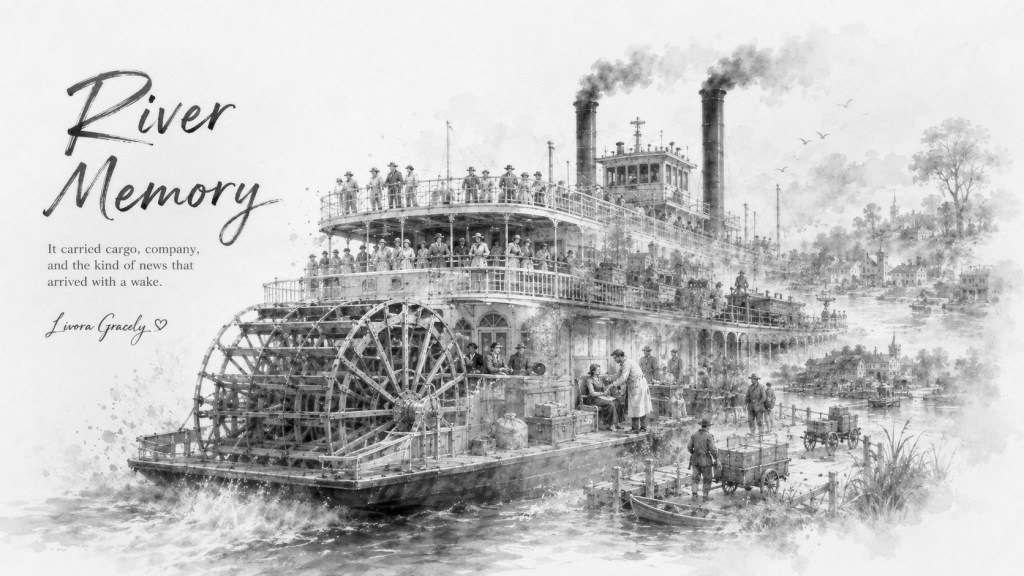
It carried cargo, company, and the kind of news that arrived with a wake.
The river had never asked for a road.
This annoyed several engineers.
They had spent years measuring hills, cutting passes, laying rails, and explaining why civilization worked better when it followed a line.
The river preferred curves.
So did the steamboat.
At seven in the morning, the paddle wheel began turning.
Slowly at first.
Then with enough confidence to disturb every duck within reasonable distance.
On the upper deck, passengers waved from behind polished railings. Below them sat flour, medicine, tools, barrels, mail sacks, two sewing machines, a crate marked GLASS, and another crate that had lost its label but gained a chicken.
Captain Elias did not ask questions before breakfast.
The boat left the town behind.
Then the road disappeared.
That was where its work really began.
It passed farms with no railway station.
Tiny settlements appeared between trees.
A fisherman rowed out with three letters tied inside a biscuit tin.
At the next bend, a woman stood on a muddy landing holding a basket of eggs and a note for her sister forty miles downstream.
The steamboat slowed.
There was no ticket office.
No platform.
No clock.
Only a plank, two deckhands, and the understanding that somebody was waiting.
By noon, the boat had collected six passengers, twenty-four eggs, one broken chair, a feverish child with his mother, and news that the bridge near Mill Creek had finally collapsed.
Everyone discussed the bridge.
The river went around it.
At a village too small for maps, the doctor stepped ashore with his bag.
The feverish child remained aboard.
At another landing, medicine came aboard for someone the captain would never meet.
This was how the river worked.
Things travelled without requiring every place to become important first.
Near sunset, the paddle wheel struck a floating branch.
The whole boat shuddered.
Captain Elias leaned over the rail.
“River complaining?”
The engineer listened.
“No. Just editing the route.”
They continued.
Behind them, the wake spread toward both banks, touching docks, reeds, fishing boats, and little houses set too far from any proper road.
That evening the clerk completed the passenger list.
Forty-three people.
He counted again.
“Captain, we delivered more people than we carried.”
Elias looked at the empty doctor’s seat, the missing medicine crates, and the letters no longer in their sacks.
“Good.”
The clerk waited.
“Good what?”
But the paddle wheel had already started turning again.
By the following week, several riverside families had begun leaving a small lantern near their landing after dark.
He knew the mountain well enough to know when not to impress it.
Temba Norbu distrusted beautiful mornings.
Not all of them.
Only the ones above eight thousand meters.
At Camp Four, the sky was blue, the wind had softened, and Charles Vane was standing outside his tent announcing that this was “exactly the weather we paid for.”
Temba tightened a crampon strap.
“The mountain hasn’t seen your invoice.”
Charles did not laugh.
The cook did.
By two-thirty the next morning, five headlamps were moving upward toward Everest’s summit.
Charles carried bottled oxygen.
So did the other foreign climbers.
Temba did not.
It was not bravado. Sherpa communities had lived at high altitude for generations, and people like Temba were unusually adapted to thin air. But he knew something tourists often misunderstood: adaptation did not make anyone immune to altitude.
The mountain still collected mistakes.
Temba simply spent oxygen differently.
Step.
Breathe.
Look.
Wait.
Above them, the world became mostly snow, rock, darkness, and decisions.
Charles climbed strongly.
Too strongly.
He passed another team near the Balcony and turned back with a grin.
“Good pace.”
Temba looked at his watch.
Then at the plume forming beyond the ridge.
“Too good.”
Charles frowned.
There was almost no wind where they stood.
The stars were still visible.
The summit looked close enough to encourage bad mathematics.
At sunrise they climbed higher.
Behind them, Earth curved away in pale blue distance.
Ahead, clouds were beginning to gather where Charles saw only clear sky.
Temba stopped.
Charles nearly walked into him.
“Why?”
“Wind is turning.”
Charles looked around theatrically.
“What wind?”
Temba pointed toward a faint ribbon of snow lifting from the ridge.
“That one.”
It looked harmless.
That was the problem.
Temba had spent years watching weather announce itself quietly before becoming loud enough for everyone else.
“We turn.”
Charles stared at him.
“The summit is right there.”
“Yes.”
“I paid for the summit.”
Temba pulled his glove tighter.
“The summit didn’t receive payment.”
This time nobody laughed.
Charles became angry enough to produce several expensive words.
He had trained for eighteen months.
He had flown halfway around the world.
He had paid guides, permits, equipment, oxygen, insurance, and an amount of money he preferred not to calculate while standing in snow.
Temba listened.
Then he said, “You can be angry while walking down.”
By the time they reached safer ground, nobody cared how close the summit had been.
They cared about tea.
Three days later, Charles found Temba at Base Camp repairing a torn strap.
For a while he said nothing.
Then:
“Would we have made it?”
Temba kept stitching.
“Maybe.”
Charles waited.
“And back?”
Temba looked toward the mountain.
Above the tents, Everest was shining as if nothing had happened.
“That,” he said, “was the expensive part.”
Charles sat beside him.
No argument.
No invoice.
Just two cups of tea cooling between them and a summit still exactly where they had left it.
Research basis: Temba and Charles are fictional. Sherpa high-altitude adaptation is well documented, including greater efficiency in oxygen use; however, this does not eliminate the dangers of extreme altitude. Ang Rita Sherpa’s real record of ten Everest ascents without bottled oxygen shows how extraordinary—but still human—high-altitude performance can be. PubMed
From the kitchen came the sound of a spoon touching the side of a cup. Someone had turned the television back on. Two people who had been arguing were now sitting at opposite ends of the room.
Technically, there was peace.
Nothing was being thrown.
No voices were raised.
No one had left.
But everyone in the room knew better.
The war had stopped.
Peace had not arrived.
There is a difference.
Jesus once gave an unusual name to the people willing to enter that difference.
He did not say:
Blessed are those who avoid trouble.
He did not say:
Blessed are those who keep everyone quiet.
He said:
“Blessed are the peacemakers, for they will be called children of God.”
Not peace-watchers.
Not peace-wishers.
Peacemakers.
The word assumes something important.
Peace may not yet exist.
Someone may have to make room for it.
Keeping the Room Quiet
There is a kind of peace that requires almost nothing.
Do not mention what happened.
Keep the two people apart.
Change the subject when the conversation becomes uncomfortable.
Invite both of them, but seat them at opposite ends of the table.
Smile.
Serve dessert.
Everyone gets through the evening.
Success.
Except nothing has actually been repaired.
We often become very skilled at maintaining this kind of peace because it is safer than making peace.
A peacekeeper can sometimes protect the silence.
A peacemaker may have to disturb it.
That does not mean creating confrontation for its own sake. Jesus does not bless people who enjoy inserting themselves into everyone else’s disputes.
There is a difference between carrying peace and carrying gossip.
There is also a difference between reconciliation and forcing two wounded people into the same room before either is ready.
Peacemaking requires more than courage.
It requires wisdom.
And sometimes it costs the peacemaker something.
Paul knew that.
The Third Name
Philemon’s letter contains two names that naturally belong to the problem.
Philemon.
Onesimus.
Then Paul puts his own name between them.
That is what we watched happen earlier.
He does not merely send Onesimus back with advice.
He uses his relationship with Philemon.
He attaches himself to Onesimus.
Receive him as you would receive me.
And if there is something owed—
put it on my account.
Paul does not stand at a safe distance shouting instructions toward reconciliation.
He enters the difficulty.
That makes Jesus’ words about peacemakers suddenly less decorative.
“Blessed are the peacemakers” looks beautiful embroidered on a wall.
It becomes considerably more demanding when peace has a bill.
Someone may have to risk being misunderstood.
Someone may have to make the first call.
Someone may have to sit beside the person everyone else has reduced to one mistake.
Someone may have to tell the injured person that forgiveness does not mean pretending the injury was imaginary.
Someone may even have to lose something.
Peace is inexpensive when everyone already agrees. Peacemaking begins when they do not.
Children Resemble Someone
But Jesus adds something curious.
Peacemakers will be called children of God.
Why that name?
Why not simply good people?
Why not wise people?
Why connect peacemaking with family resemblance?
After what we saw in the previous chapter, the answer begins to glow.
God did not remain distant from the problem of estrangement.
He acted.
The reconciliation we receive in Christ did not begin because humanity found a clever route back to God.
God provided the way.
The Father was not persuaded into mercy by a more compassionate Son.
The saving purpose belongs to God Himself.
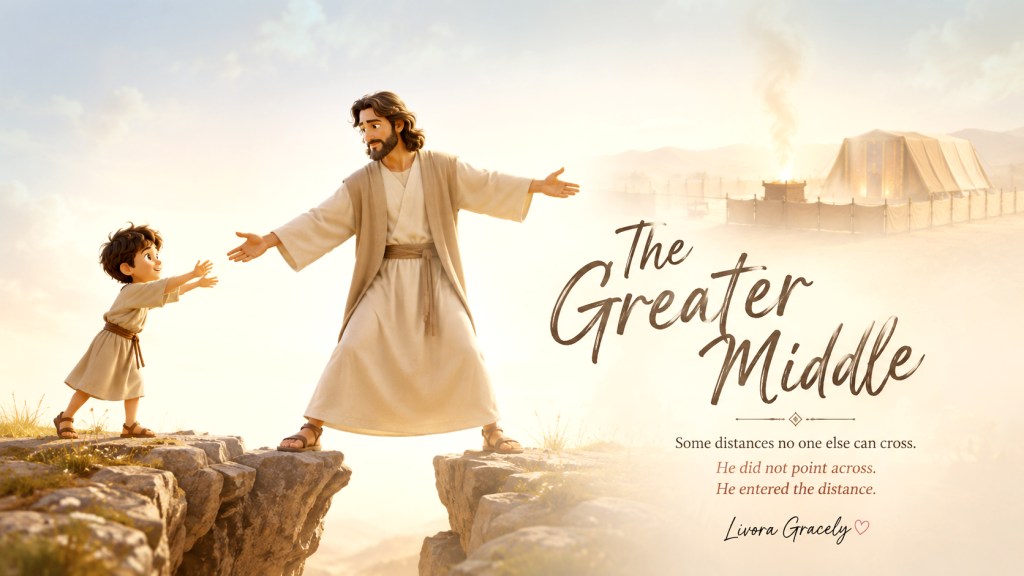
Christ entered the distance we could not cross.
So when Jesus calls peacemakers children of God, there is something wonderfully fitting about the description.
Children sometimes resemble their Father.
Not because they can accomplish what Christ accomplished.
They cannot.
We do not become little mediators of salvation.
We do not reconcile people to God through our sacrifice.
There is one work of Christ that belongs to Christ alone.
But people who have been brought near begin to recognize the family habit.
They know what it looks like when someone refuses to leave distance alone.
The Dangerous Middle
This makes peacemaking less sentimental than it first appears.
The middle can be an uncomfortable place.
Stand with only one side and that side may applaud you.
Stand far away and neither side can blame you.
Stand between them and both may become suspicious.
One may think you are excusing the other.
The other may think you are judging them.
Paul risks something similar in Philemon.
He refuses to make Onesimus disposable.
But he also refuses to solve the problem by pretending Philemon does not matter.
Both men remain inside his appeal.
That is one of the quiet strengths of the letter.
Peacemaking does not require us to declare that nobody was wrong.
Sometimes somebody was wrong.
Sometimes there really is a debt.
Sometimes there really is damage.
The peacemaker’s work is not to make truth disappear.
It is to ask whether truth can be carried toward restoration rather than merely used as a weapon.
Peace built by hiding the truth is fragile. Peace built without mercy is impossible.
Paul somehow keeps both on the table.
Not Every Door
There is another caution.
Not every broken relationship can immediately be restored.
The wise woman of Tekoa already taught us that.
Absalom returned to Jerusalem, yet the relationship with David remained deeply fractured.
A person can open a door without controlling what happens afterward.
Paul could send a letter.
He could appeal.
He could offer his account.
He could not control Philemon’s heart.
Neither can we.
Jesus’ blessing is for peacemakers, not outcome-makers.
That distinction matters.
Sometimes faithfulness means making reconciliation possible while recognizing that another person may still refuse it.
Sometimes safety requires distance.
Sometimes repentance has not happened.
Sometimes trust has to be rebuilt slowly.
Peacemaking is not the power to manufacture a happy ending.
It is the willingness to refuse unnecessary hostility while truth, mercy, wisdom, and responsibility remain in the room.
The result belongs to more hands than ours.
A Family Resemblance
Perhaps this is why Matthew 5:9 belongs so naturally beside the little letter to Philemon.
Jesus gives the name.
Paul gives us something like a living picture.
Not a perfect one.
Not an exact illustration.
But a man standing where it would have been easier not to stand.
There is Philemon.
There is Onesimus.
There is history between them.
And there is Paul saying:
Receive him.
Receive him as you would receive me.
If something is owed, place it here.
For three articles we have been looking at the space between people.
First, a wise woman entered it.
Then Paul entered it.
Then Hebrews took us beyond every human mediator to Christ, who entered the distance humanity could never cross.
Now the camera returns to an ordinary room.
Perhaps there are still two chairs at opposite ends.
Perhaps the coffee has gone cold.
Perhaps neither person knows what to say next.
And somewhere nearby stands a third person.
Not pretending the wound never happened.
Not carrying salvation.
Not playing Christ.
Simply refusing to believe that hostility deserves the final word.
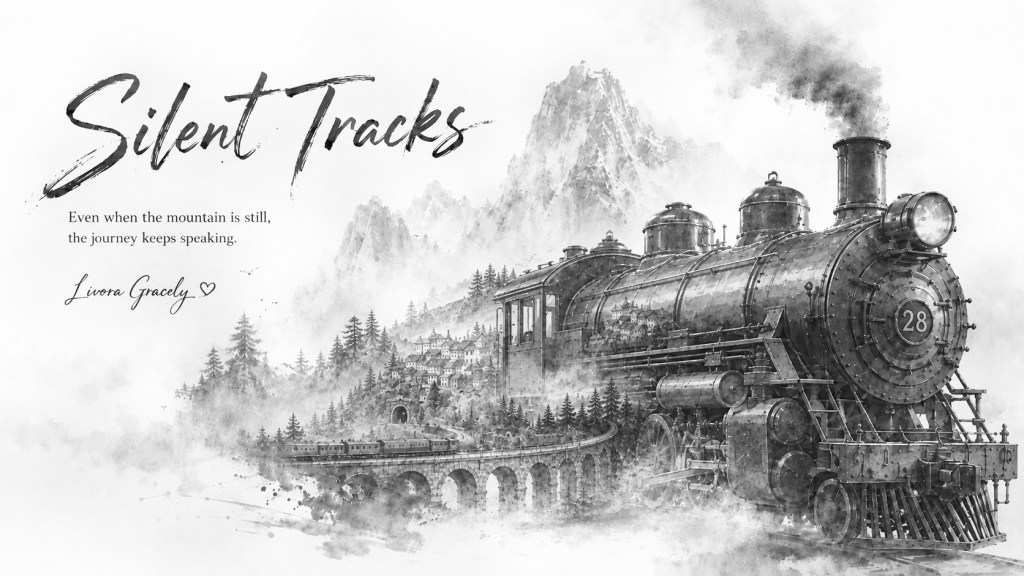
Even when the mountain is still, the journey keeps speaking.
The stationmaster blamed the mountain.
It had been standing in exactly the same place for several thousand years, yet every morning people arrived convinced they needed to be somewhere on the other side of it.
At six-fifteen, Engine 28 answered them.
Steam first.
Then the whistle.
Then enough iron, coal, luggage, letters, milk cans, medicine, newspapers, umbrellas, and impatient people to make the platform reconsider its size.
Mr. Bell, the conductor, carried a pocket watch with the seriousness of a surgeon.
“Two minutes,” he announced.
A woman boarded with three hatboxes.
A baker handed over six baskets of bread.
A farmer loaded two crates of apples and one goat that had not purchased a ticket.
The goat was assigned to freight.
It disagreed loudly.
At six-seventeen, Engine 28 moved.
The village began shrinking behind it.
This was the first strange thing about trains: places that had once required days of dust, tired horses, and several arguments about directions could now arrive before lunch.
The second strange thing was what happened inside.
A letter written beside one fireplace travelled with medicine for a child who had never seen that fireplace.
Fresh bread crossed a valley.
A newspaper crossed three towns before its headline became old.
A grandmother carrying knitted socks sat beside a businessman carrying documents marked URGENT.
Neither asked which cargo mattered more.
At the mountain pass, snow had covered the rails.
The engine slowed.
Mr. Bell checked his watch.
Everyone checked Mr. Bell.
The goat checked nothing.
Workers cleared the track while steam drifted through the pines.
For twenty-three minutes, the fastest thing most passengers had ever known simply waited.
The businessman sighed.
The grandmother opened one of her parcels.
“Sock?”
He looked at her.
“My feet are fine.”
“Then you can hold the yarn.”
By the time the track reopened, carriage three had acquired a knitting committee.
Engine 28 entered the tunnel six minutes late and emerged into sunlight carrying exactly the same passengers—
except the businessman was now responsible for blue wool.
That evening, Mr. Bell recorded the delay carefully.
23 minutes. Snow.
Then, after considering the day, he added another line beneath it.
One sock unfinished.
For years afterward, the railway office kept increasingly accurate records of distance, coal, weather, passengers, and time.
Nobody officially recorded what happened between stations.
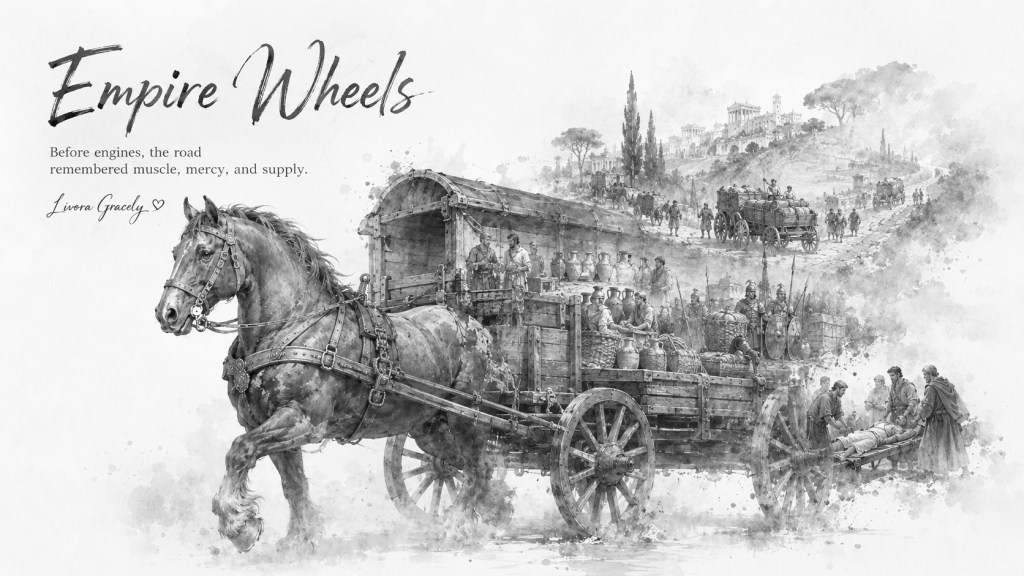
The cart carried almost everything. One corner stayed unclaimed.
At sunrise, Marcus’s wagon belonged to onions.
This was not official.
Nothing involving onions was ever official enough for Marcus.
Twelve baskets went in first, followed by two jars of oil, a sack of flour, three nervous chickens, and a merchant who insisted he was not part of the cargo.
The horse disagreed.
By the second milestone, the wagon had become public transportation.
An old woman climbed aboard because the road was steep. A boy joined because the old woman had figs. His mother followed because the boy had joined.
Marcus looked at the remaining space.
“Still a cart,” he said.
By noon, soldiers stopped him near the eastern road.
They needed grain carried to a camp beyond the hills.
The onions moved left.
The chickens objected.
The merchant became responsible for explaining this to them.
By afternoon, Marcus was returning with an almost empty wagon when someone waved from beside the road.
A traveler had fallen ill.
The flour sacks became a pillow. A folded army blanket became a bed. The old woman, who had somehow remained aboard through every change of purpose, produced water.
Nobody asked whether the wagon was still transporting goods.
The chickens had already stopped caring.
That evening Marcus reached town carrying no onions, no grain, and no merchant.
Only the sick traveler, his worried brother, two empty baskets, one sleeping chicken, and a helmet that apparently belonged to nobody.
The clerk at the gate stared at the wagon.
He had spent several months trying to decide what kind of vehicle Marcus operated.
“Freight?” he asked.
“Sometimes.”
“Passengers?”
“Frequently.”
“Military supply?”
“Apparently.”
“Ambulance?”
Marcus considered the sleeping chicken.
“Today was complicated.”
The clerk opened a fresh line on his tablet.
Marcus drove home before another category could happen.
The next morning, the wagon was loaded again.
Wine jars.
Bundles of cloth.
Bread.
A carpenter carrying one chair for reasons he refused to discuss.
Marcus tied everything down carefully.
Then he moved one basket six inches to the left.
His son noticed.
“There’s still room.”
Marcus nodded.
“For what?”
Marcus picked up the reins.
The road ahead was already filling with people.
“Don’t know yet.”
After that, no matter how full the wagon became, one small corner was always left empty.
For centuries, someone looking at the tabernacle might have thought:
Here is the sanctuary.
Hebrews turns the direction of our eyes upward.
There is a greater sanctuary.
A greater priesthood.
A greater ministry.
And then comes a curious sentence.
If Jesus were on earth, Hebrews says, He would not be a priest in that earthly order, because the priests appointed under the Law were already carrying out that ministry. Bible Gateway
Jesus is not presented as one more priest joining the line.
He belongs to something greater.
The shadow has not become slightly brighter.
The reality to which the shadow pointed has arrived.
And in that true sanctuary stands the One Hebrews calls the mediator of a better covenant. Bible Gateway
Now the word mediator has become much larger.
More Than a Third Person
It would be easy to return immediately to Paul.
Paul stood between Philemon and Onesimus.
Jesus stands between God and humanity.
The comparison seems almost perfect.
It is not.
And that matters.
Philemon is not a picture of God.
Onesimus is not a complete picture of sinful humanity.
Paul is certainly not a smaller version of Christ.
Their story gives us an echo, not an equation.
Because when we reach Christ, something fundamentally changes.
A human mediator normally enters a problem that belongs to two other people.
The wise woman of Tekoa did that.
Paul did that.
But Jesus is not a stranger trying to persuade an unwilling God to become merciful.
He was not standing outside God’s purpose, trying to change God’s mind about humanity.
The rescue begins with God.
The One who provides the way back is the very God from whom humanity has become estranged.
That means the gospel is not the story of a compassionate Son protecting us from a reluctant Father.
Father and Son are not standing on opposite sides of salvation.
God Himself provides the reconciliation.
The Mediator comes because God has opened the way.
That makes this middle unlike any other.
What He Carried
Paul’s words to Philemon remain remarkable:
If something is owed, charge it to me.
There is a reason those words begin to sound different after we enter Hebrews.
Paul was willing to put his account into another man’s problem.
But Hebrews speaks about a High Priest who does not merely bring someone else’s sacrifice.
Christ enters with His own.
Hebrews later describes Him entering the greater and more perfect tabernacle and obtaining redemption through His own blood.
The mediator does not remain safely outside the cost.
He enters it.
This is where our little letter can take us only so far.
Paul can write his name beside Onesimus.
Christ gives Himself.
Paul can ask another man to receive someone.
Christ opens access to God.
Paul can offer to absorb a financial loss.
Christ deals with a separation no human account could settle.
The earlier mediators entered the conversation. Christ entered the cost.
And still, even that sentence does not say enough.
Because Christ is not merely paying something and then stepping away.
Hebrews joins His work as priest, sacrifice, covenant, and mediator into one astonishing reality.
The One standing in the middle is also the One through whom the way is opened.
The Distance
There are distances measured in miles.
There are distances measured in years.
There are distances created by a sentence spoken in anger, a betrayal, an unpaid debt, a door that has remained closed too long.
Those are the distances human mediators sometimes enter.
The woman from Tekoa entered one.
Paul entered another.
But Scripture describes another separation that cannot be solved by finding a wiser woman, a better negotiator, or a more persuasive apostle.
Humanity cannot appoint someone from among itself and say:
Go and make everything right with God.
No letter is strong enough.
No argument is clever enough.
No human goodness reaches far enough.
So the movement comes from the other direction.
The High Priest we needed is given.
The sanctuary we could not build is established by the Lord.
The covenant we could not negotiate is mediated by Christ.
The way we could not create is opened for us.
This is why Hebrews’ picture is so much larger than a person standing halfway between two sides.
Christ does not simply occupy the midpoint.
He makes nearness possible.
The Shadow on the Ground
Imagine standing outside Israel’s tabernacle long ago.
The tent is there.
The priests are moving.
Sacrifices are being offered.
Everything is visible.
Everything seems solid.
Then imagine being told:
You are looking at a shadow.
Not an illusion.
Not something meaningless.
A shadow.
A shadow is real precisely because something else gives it shape.
The earthly sanctuary pointed beyond itself to a greater reality. Hebrews makes that contrast explicit: the earthly ministry corresponds to a copy and shadow, while Christ ministers in the true sanctuary. Bible Gateway
Perhaps that is why the image is so powerful.
A shadow can show you the outline.
But you cannot embrace a shadow.
You wait for the One casting it.
And when Christ comes, Hebrews does not tell us merely that a better religious teacher has arrived.
It tells us that we have a better High Priest.
A better covenant.
A better ministry.
And a Mediator.
Not one standing in a temporary tent made by human hands.
The true sanctuary is now in view.
Across the Distance
Now we can return, for a moment, to that small letter.
Paul is still sitting somewhere with Philemon’s name before him.
Onesimus is still close enough to be called his child and his own heart.
The account is still there.
The appeal is still there.
And Paul’s willingness to stand between those two men remains beautiful.
But now we can see its size properly.
It is a human act of costly mediation.
Nothing less.
But also nothing more.
Paul could not become the peace he was asking two other people to make.
He could not enter Philemon’s heart.
He could not erase Onesimus’s past.
He could not guarantee the future.
He could only go as far as a faithful human mediator could go.
Christ went where no human mediator could follow.
Not into a disagreement between two people.
Into the deepest separation.
Not carrying a clever argument.
Not carrying someone else’s offering.
He entered with Himself.
The woman from Tekoa carried a story.
Paul carried an appeal, his name, and the willingness to carry a cost.
Then the pattern reaches its limit.
Because the final Mediator is not simply another person standing between two sides.
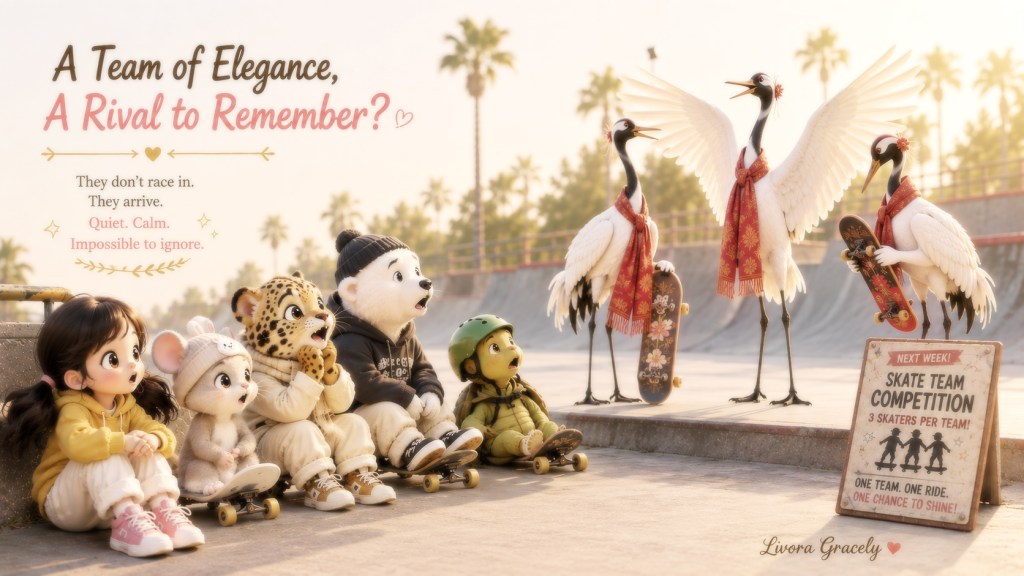
Three white cranes had just walked into the skatepark.
Not rolled in.
Walked.
Slowly.
Elegantly.
Each carried a skateboard as though it were something one might bring to an afternoon appointment.
The girl stopped talking.
The mouse stopped chewing.
The leopard lowered the wheel he had been tightening.
Even the polar bear and the turtle turned to look.
One crane stepped onto the concrete and opened her wings.
They unfolded wider and wider, white feathers catching the afternoon light until, for a moment, she seemed far too magnificent for a place filled with scratched rails and dented ramps.
The leopard stared.
“Are they performing?”
The mouse shook his head.
He had no idea.
The second crane smiled at them and gave a small, graceful nod.
Everyone nodded back.
Even the turtle, although his helmet made the gesture look unusually official.
The third crane seemed less interested in introductions.
She placed her skateboard upright, spun one wheel with the tip of her wing, listened carefully, then checked another.
Spin.
Listen.
Spin.
Listen.
The polar bear leaned toward the girl.
“They’re here for the competition.”
The girl looked at the three boards.
“Maybe.”
That maybe stayed with them.
The cranes did not practice.
They did not inspect the ramps.
They did not ask about the course.
After a few minutes, they simply sat together at the edge of the park, red scarves resting against their white feathers, watching everyone else skate.
That was somehow worse.
The leopard attempted a turn and nearly missed it because he was looking at them.
The mouse tried his favorite rail.
For once, he landed without celebrating.
The turtle rolled past the cranes twice, apparently by accident both times.
The girl finally whispered, “Why aren’t they practicing?”
The polar bear shrugged.
“Maybe they don’t skate.”
Five faces brightened.
A pleasant explanation.
Then a breeze crossed the park.
Beside the cranes, one skateboard began rolling toward the slope.
The third crane reached out.
One foot stopped it.
Without standing, without looking down, she flicked the board upward.
It rose neatly from the concrete, rotated once—
and landed upright against her wing.
Silence.
The mouse slowly removed his bunny hat.
The leopard’s mouth opened.
The turtle blinked.
The polar bear stared at the competition poster.
The crane smiled politely.
Then she sat back down.
No explanation.
No demonstration.
Nothing else.
The five friends looked at one another.
A week suddenly felt much shorter.
Across the park, three red scarves moved gently in the breeze.