Genesis 6:9–10
Noah walked with God. He had three sons: Shem, Ham, and Japheth.
Around the Table
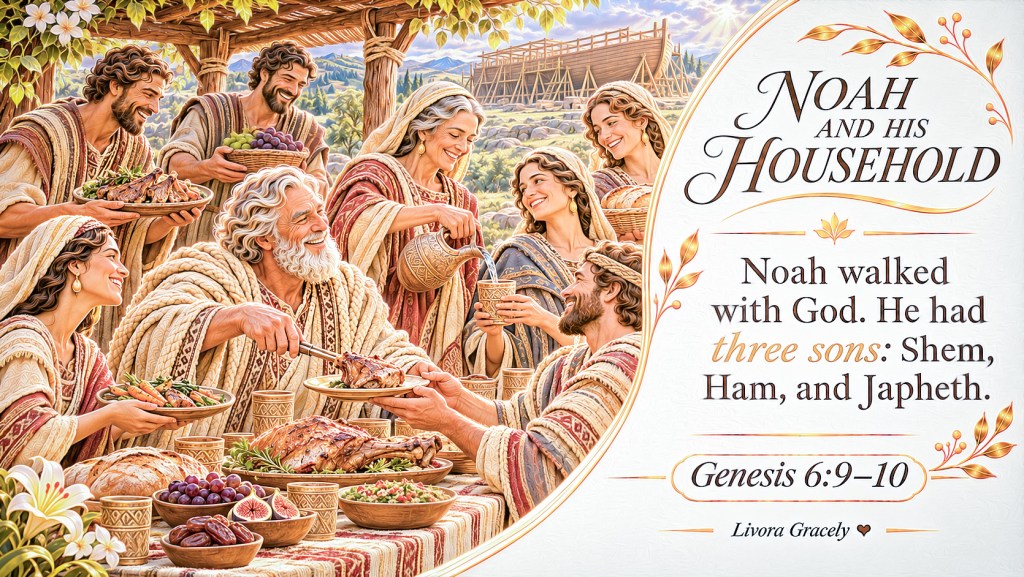
A platter passes from one pair of hands to another. Grapes and figs sit beside loaves of bread, and a woman pours a drink while the family gathers around the table.
Beyond them, on the hillside, a great wooden structure is beginning to take shape.
The poster imagines Noah’s household sharing a meal with the ark in the distance. Genesis does not describe this particular gathering, the food on the table, or the family’s conversation. Its introduction is much shorter: Noah walked with God, and he had three sons.
The names are familiar from the family record that brought the story this far. Now Noah’s own account is about to begin. The next lines will widen the view beyond his household.
A Name from the Family Record
Shem, Ham, and Japheth appear at the end of the generations traced from Adam. Their father, too, first entered the story through his family: Lamech named him Noah and spoke of the comfort he hoped his son would bring amid painful work.
At the beginning of Noah’s account, the three sons are named again. The family line has not disappeared from view, but the attention moves from a sequence of generations to one household and the world around it.
The poster gathers that household close. Later, Genesis will name those who are to enter the ark with Noah: his wife, his sons, and their wives. Here, the short introduction places three names beside their father’s.
Before the instructions for the ark come a few words about the man who will receive them.
Walking with God
Noah is described as righteous and blameless among the people of his time. Genesis also says that he walked with God.
Another name in the family record carried that same description: Enoch walked with God. The account gives each man a different place in the story, but the repeated expression draws attention to a relationship that continues through the generations.
Walking alongside someone can suggest companionship and a shared direction. Genesis does not tell us every detail of Noah’s days or record every choice he made. Its description gives a view of his life as the story begins.
The word “blameless” need not be taken to mean that every moment of Noah’s life was without fault. The passage describes him in relation to his generation and places his life beside the account of a world filled with corruption.
A Story Still Ahead
The ark on the hillside is a glimpse ahead. At this point in the chapter, God has not yet given the building instructions in the narrative. Soon Noah will hear a warning and receive a task that reaches far beyond this imagined meal.
Much later, Hebrews remembers Noah’s faith: when warned about things not yet seen, he acted in reverence and built an ark for his household. The work belongs to the chapters ahead; the introduction begins with the man and his family.
A meal can bring a household around one table. Genesis gathers Noah’s family in a few names, then gives one detail that will travel with him into the story ahead.
Noah walked with God.
Livora Gracely ♥
Sources


Leave a Reply