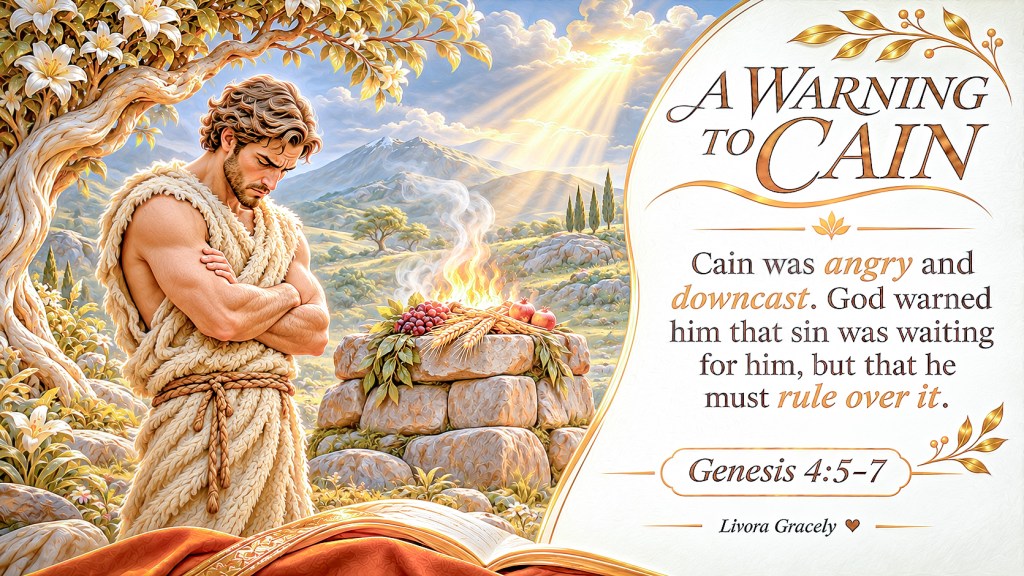
Cain was angry and downcast. God warned him that sin was waiting for him, but that he must rule over it.
A Face Fallen
Cain’s face had fallen. Before the story reached the field, God spoke to him.
Cain and Abel had brought their offerings to the Lord: Cain from the fruits of the soil, Abel from the firstborn of his flock. The Lord looked with favour on Abel and his offering, but not on Cain and his offering. Cain became very angry, and his face was downcast.
The account does not describe exactly how the brothers learned of God’s response. It does, however, let us see Cain’s reaction. His anger is not hidden from the story, and his fallen face is mentioned alongside it.
Then the Lord addresses him. There is a conversation to hear before the next event unfolds.
God Speaks to Cain
God asks Cain why he is angry and why his face is downcast. He speaks to him about doing what is right and being accepted.
The questions draw attention to Cain’s condition. God does not simply leave the angry man to continue without a word. He addresses him and calls him to consider what he will do.
Many of us know the feeling of bringing something we hoped would be welcomed, only to face disappointment. Cain’s situation is his own, and Genesis does not tell us every thought that passed through his mind. Still, his downcast face gives us a human moment to recognise: something has happened, and his response matters.
God’s words are not finished. A warning follows the question.
At the Door
If Cain does not do what is right, God says, sin is crouching at his door. It desires to have him, but he must rule over it.
The image is striking. Sin is described as something lying in wait, close enough to the doorway to demand attention. The verse gives us a picture of danger; it does not tell us that an animal is standing outside Cain’s home.
The warning also addresses Cain as someone who must respond. The image at the door holds the danger near, while the command calls his attention to what he does next. Anger has already appeared in the account, but the attack on Abel has not yet happened. The story pauses between Cain’s reaction and his next action.
What might such a pause mean for a reader today? When anger rises, we can bring it honestly to God, take time before acting, and seek the help of someone we trust. These are reflections for our own lives, not actions Genesis says Cain took. Feeling anger does not mean that harm to another person is inevitable.
Before the Field
The passage does not record Cain’s reply to God’s warning. The next verse moves to Cain and his brother in the field, where Cain attacks and kills Abel.
That tragedy makes the earlier conversation painful to revisit. God had seen Cain’s fallen face, asked about his anger, and warned him about sin. The words stood between the disappointment and the violence that followed.
For a moment, the story lets us remain at that threshold. The field is still ahead; the warning has already been spoken.
Livora Gracely ♥
Sources


Leave a Reply