Livora Gracely

Writing to remember, sharing to inspire

Part 5 — After the Road Divides

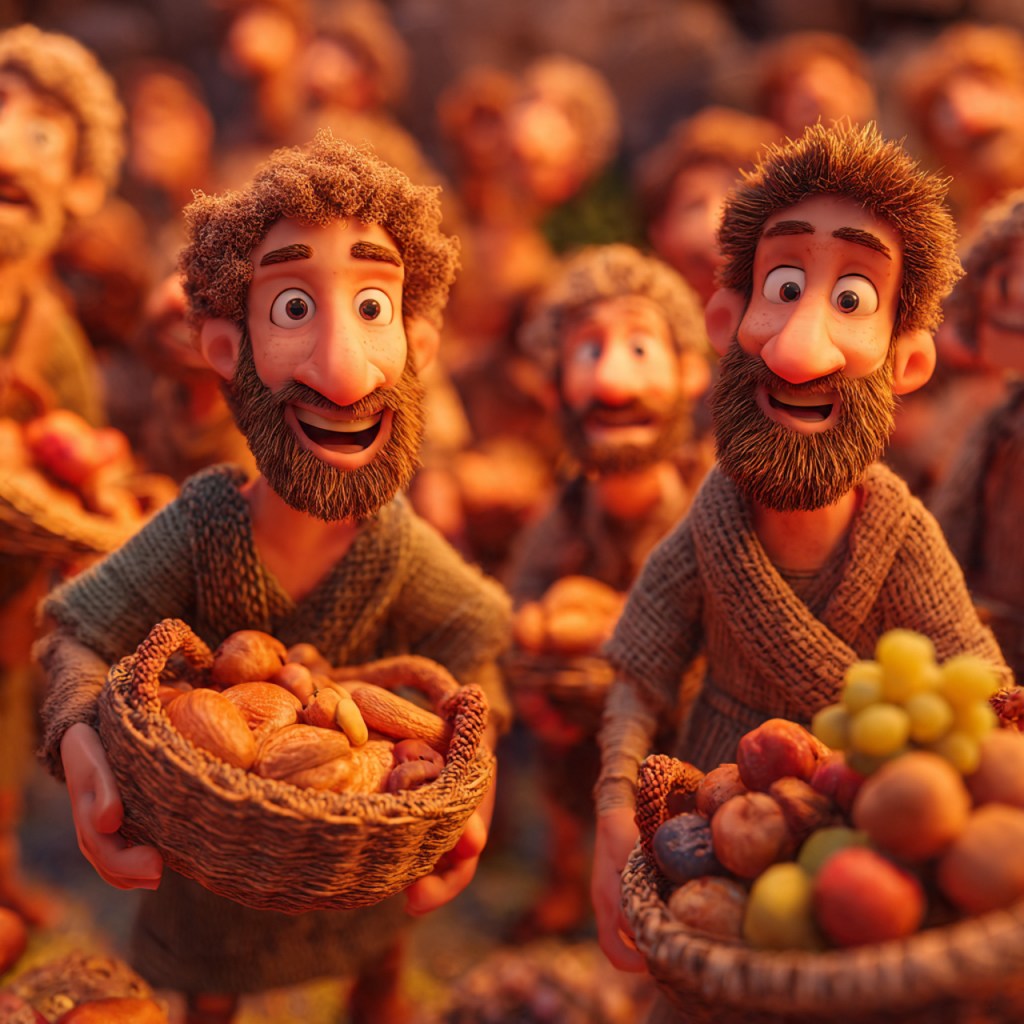
The nine likely reached the village before the light thinned.

From the rise, roofs would have come into view first — uneven lines against the sky. Smoke rising in pale strands. The familiar sound of animals tethered near doorways.

Someone would have seen them from a distance.

Someone would have paused mid-task.

Hands that once withdrew would have reached forward now. Faces that had tightened at their approach would have leaned closer to examine what had changed.

There would have been touching.

There would have been questions.

There would have been the slow unfolding of explanation: it happened on the road… we were walking… it began here…

Relief fills a room quickly.

It pushes outward into laughter and into speech.

Somewhere in another story, a man once walked out of a room forgiven of a debt too large to calculate. The air outside felt different. The future opened. He moved quickly into it.

The memory of weight does not always remain as heavy as the weight itself.

On the open road, the tenth man walked alone.

The bend that had hidden the others now lay ahead of him. He did not hurry toward it. The wind pressed lightly against his garment and then passed on.

His hands were clean.

Dust gathered again at his heels as he walked.

He did not rehearse what he would say when he reached the village. He did not measure how this would be received. The word spoken over him had already settled somewhere deeper than explanation.

He had once called from far away.

Now there was no distance to measure.

The road did not mark him differently from the others. It bore his steps the same way. It received his weight without comment.

The place where he had knelt would soon lose its shape. The faint impressions of his knees would soften, then disappear beneath passing wind.

Nothing on the surface would testify to what had occurred there.

By the time he reached the rise, the sky had begun to change color. Light lowered. Shadows lengthened.

Ahead lay inspection.

Behind lay dust that had settled twice on his hands.

He continued walking.


The Second Direction

They had learned to ask from far away.

Distance kept everyone safe.

On the road back, he closed it.

He fell without measuring space.

Dust gathered in his palms.

It settled there twice.

The road forgot the place.

He did not.

Posted in

6 responses to “The Fork’s Indecision”

  1. Willie Torres Jr. Avatar
    Willie Torres Jr.

    This is beautiful Livora…

    Healing isn’t just what others see, it’s what God settles in your heart. Even when the world doesn’t notice, He does.

    “Your faith has made you whole.” Luke 17:19.

    Liked by 1 person

    1. Livora Gracely Avatar

      Willie, thank you for walking this whole road with me. Your steady reminders of what is settled in the heart have accompanied each turn of the story.

      You’re right — wholeness is not always what others can see. The dust may fade, the village may celebrate, but what is spoken close remains. That quiet settling beneath the surface is the part I hoped would endure.

      Liked by 1 person

  2. SRIKANTH Avatar

    This is beautiful. The prose carries such weight—especially the image of dust settling twice on his hands. And that final stanza with the road forgetting the place while he doesn’t… it lingers.

    Liked by 1 person

    1. Livora Gracely Avatar

      Srikanth, I’m grateful you stayed attentive to the small details all the way through. You’ve consistently noticed what lingers rather than what announces itself.

      The dust settling twice was meant to hold that quiet symmetry — distance once, nearness once. And yes, the road forgetting while he remembers felt important. Some transformations leave no visible trace, yet they remain carried within.

      Like

  3. Vijay Srivastava Avatar

    This closing feels complete not because everything is resolved, but because the inward movement has finished its arc.
    What is especially powerful here is the parallel you introduce: relief received and quickly absorbed into life, versus grace received and allowed to descend deeper. “The memory of weight does not always remain as heavy as the weight itself.” That line widens the story beyond the road.
    And the final contrast is exquisite:
    The road forgot the place.
    He did not.
    The world erases impressions. The soul does not.
    The repetition of dust gathering twice is subtle and symbolic without being declared. What touched him once as distance now touches him as nearness.
    It is restrained, reflective, and quietly profound a meditation more than a narrative.

    Liked by 1 person

    1. Livora Gracely Avatar

      Vijay, thank you for tracing the arc from beginning to end with such clarity. Your reading has followed the inward movement with patience and care.

      The contrast you named — relief absorbed into life, grace allowed to descend — holds the heart of this closing. The road may erase impressions, but interior geography does not reset so easily. What was received in nearness continues to shape the next step.

      Liked by 1 person

Leave a comment