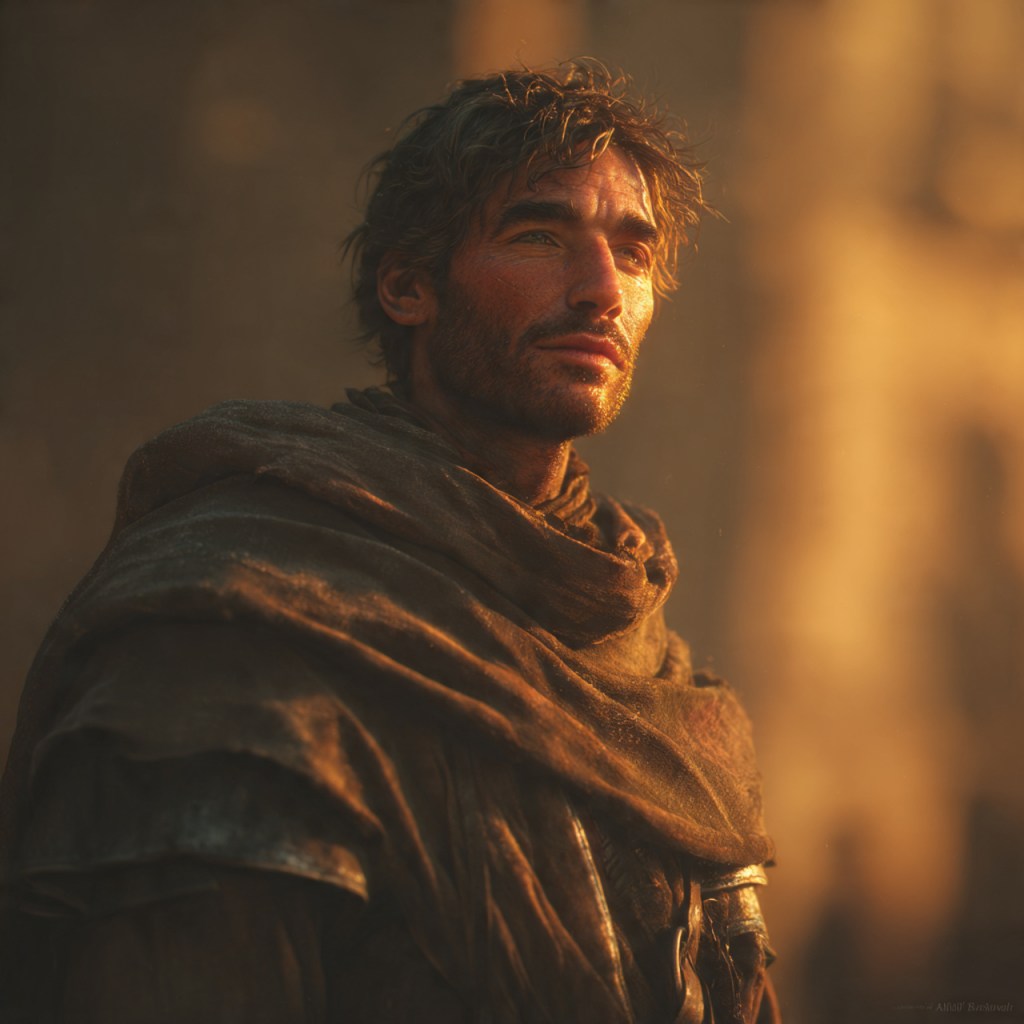
Part 5 — After the Street Forgets
Crowds move on quickly.
The place where he once sat did not remain empty for long. Someone else eventually occupied the space. The rhythm of trade resumed. Questions that once burned cooled into memory.
Cities do not pause for long.
He no longer returned to that stone.
Not because he despised it.
Not because he feared it.
But because he could now see beyond it.
Life after expulsion is rarely dramatic. There is no procession for those removed quietly. No public reckoning. Only adjustment.
He had lived for years dependent on hands he could not see. Now he would live dependent on something less visible but more demanding.
Sight rearranges dependency.
Before, he relied on mercy.
Now, he relied on truth.
Not truth as argument.
Truth as alignment.
Blaise Pascal once wrote, “The heart has its reasons which reason knows nothing of.”
There are recognitions that cannot be reduced to debate. He did not possess theological mastery. He did not carry institutional authority. He carried something more fragile and more costly: a lived encounter he would not deny.
It would have been easier to soften the account.
To adjust the emphasis.
To detach from the source.
To step back into anonymity.
But anonymity now required falsehood.
Clear eyes do not allow a return to former darkness.
He had lost access to certain doors.
He had gained something interior that did not depend on them.
No record tells us how he earned his bread afterward. No detail describes the years that followed. Scripture is quiet about his later days.
Perhaps that silence is intentional.
Not every transformation becomes spectacle.
Some become steadiness.
He once sat in darkness without choice.
Now he walked in light with consequence.
The street forgot him.
But he could no longer forget what he had seen.
The Man Who Stood
At first, he knew the world by sound.
Wind against cloth.
Coins against stone.
Voices passing without faces.
Then light entered.
Not with thunder.
Not with spectacle.
But with edges.
The same street remained.
The same walls.
The same people who once stepped around him.
Only one thing had changed.
He no longer lowered his head when speaking.
Some lives shrink to survive.
Some expand and pay for it.
He did not gain comfort.
He gained contour.
He did not regain belonging.
He gained direction.
There are those who see and remain undisturbed.
There are those who see and cannot remain seated.
By the time the street returned to its ordinary rhythm, one quiet alteration remained.
A man who once begged in darkness
now stood in light—
and did not sit down again.


Leave a comment