Livora Gracely

Writing to remember, sharing to inspire

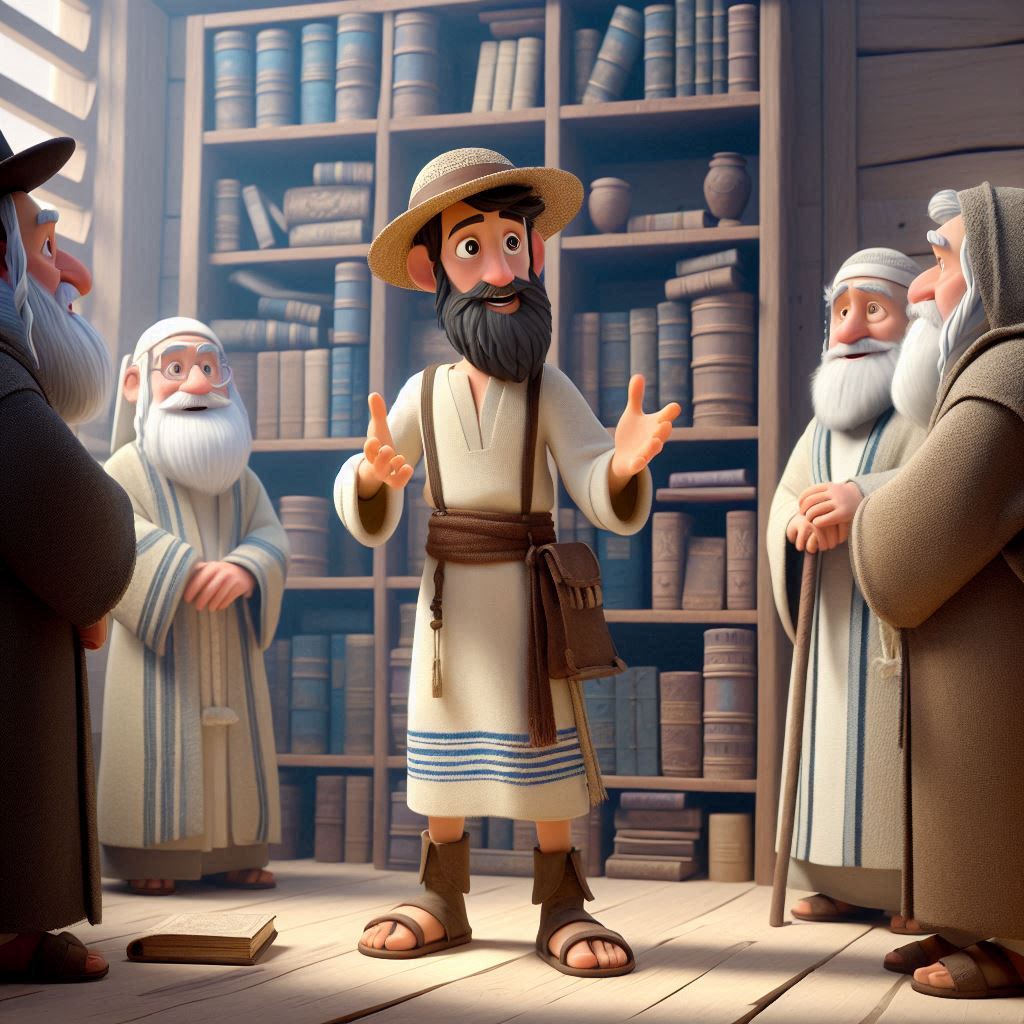
  • There’s something oddly intimate about bare feet. They speak of vulnerability, humility, and nearness. When God told Moses to remove his sandals before the burning bush, it wasn’t simply about ritual cleanliness. It was an invitation — to step closer, to shed the symbols of distance, to meet the Divine not through protection, but exposure. The ground was holy, but so was the moment — where “the God of Abraham” came down to speak a man’s language.

    We often imagine God as distant — seated in the unreachable heavens, cloaked in glory that blinds mortal eyes. Yet Scripture shows a far more surprising picture: a God who draws near. From Sinai’s thunder to Bethlehem’s cradle, the distance kept shrinking. What once required Moses to remove his sandals would one day lead Jesus to kneel and wash the dust off His disciples’ feet.

    In the culture of the ancient Near East, feet carried meaning. They represented both movement and defilement — the dust of one’s journey and the humility of one’s station. Sandals were the thin line between the clean and the unclean, between divine presence and human dust. When Moses removed his sandals, he acknowledged that line. When Jesus washed feet, He erased it.

    The Bible’s stories of sandals and feet may seem trivial at first — domestic, even mundane. But beneath them runs a profound theological current. These small gestures reveal God’s evolving relationship with humanity: from a consuming fire that demands reverence, to a Servant-King who bends low to cleanse and restore. The God who once said, “Do not come near,” now says, “Abide in Me.”

    Every encounter with God seems to carry a subtle message about proximity. How close dare we come? How close does God choose to come? From the desert sands of Exodus to the upper room of John’s Gospel, the journey of the faithful is not just one of obedience — it’s one of nearness. Each act of removing sandals, of washing feet, or of returning home barefoot from rebellion, becomes a step toward intimacy.

    And perhaps that is the grand irony of holiness — that what once created distance, now builds connection. The same God who told Moses to take off his shoes later wrapped a towel around His waist. The Holy became human. The distant became touchable. The One who dwelled beyond the heavens knelt before fishermen, holding their dusty feet in divine hands.


  • The story of divine fear has always been misunderstood. To the world, it sounds like restraint; to heaven, it is release. It loosens the chains of pride, untangles the knots of self, and steadies trembling hearts to walk through fire. Holy fear doesn’t make saints smaller — it makes them stable.

    The midwives in Egypt discovered that reverence could save generations. Peter found that awe could outshout accusation. Solomon realized that wisdom begins not with curiosity, but with surrender. The psalmist sang that the gaze of God rests not on the fearless, but on the faithful. Each of them cashed in on the same unseen currency: a fear that paid dividends in favor, not panic.

    Perhaps we’ve spent too long trying to unlearn fear, when all along we were meant to redirect it. The wrong kind cripples; the right kind crowns. To fear the Lord is to live in alignment with what is eternal — to be unshaken when kingdoms shift, unbent when truth bends elsewhere.

    In an age that trades reverence for relevance, holy fear may be the last act of rebellion. It refuses to worship self or success. It keeps hearts soft in hard times. And its reward is not applause, but peace — the quiet assurance that heaven’s eyes have not turned away.

    So let the fearless boast, and the faithless fade. The dividends of holy fear are still being paid — in courage, in clarity, in the quiet strength of those who bow low enough for heaven to lift them. For the eyes of the Lord are still upon those who fear Him, and His blessing still finds them, even in the darkest hour.

  • Malachi 3:16–17
    Matthew 10:28
    Revelation 14:7

    Intro
    History repeats, but it also refines. Each generation faces its Pharaoh, its council, its seductive call to forget. And yet, every era also births a remnant — those who still tremble rightly. The fear of God doesn’t expire with ancient scrolls; it matures with time. In the end, it may be the only fear left standing when all others fade.

    Truth and History
    Malachi spoke of a book of remembrance — names written not for power or performance, but for those who feared the Lord and thought upon His name. From Egypt to Acts, from prophets to apostles, this thread runs unbroken. When society grows louder, divine reverence grows rarer — but also brighter. In the final vision of Revelation, the same call echoes across eternity: “Fear God, and give Him glory.” This isn’t an outdated command; it’s the anthem of those who endure.

    Quotes
    “Those who have a why to live can bear almost any how.” — Friedrich Nietzsche
    “Do not be afraid of being slow, be afraid only of standing still.” — Chinese Proverb

    Conclusion
    The fear of the Lord is not the opposite of love — it is love’s gravity. It keeps faith from floating into fantasy. It makes holiness human again. When all worldly fears collapse — of failure, rejection, or loss — holy fear remains as the steady pulse of devotion. The saints of old didn’t survive because they were fearless; they survived because they feared rightly.

    Modern Challenge
    Our modern culture prizes confidence without conscience, boldness without boundaries. Even in the church, “fear” feels outdated — something to outgrow. But the dividend of godly fear is exactly what this age lacks: discernment, humility, and courage born of reverence. If the church forgets to tremble, it will forget how to trust. Yet those who still bow will stand tallest when the shaking comes. The end-time question is not “Who’s the bravest?” but “Who still fears rightly?”

  • Psalm 33:18
    2 Chronicles 16:9
    Luke 1:50

    Intro
    There’s something profoundly comforting about being seen — not watched, but known. The psalmist paints a tender picture: the eyes of the Lord rest on those who fear Him. Not with suspicion, but with affection. In a world obsessed with visibility, God offers something far deeper: divine attention. The holy fear that men misunderstand is, to heaven, a beacon.

    Truth and History
    Throughout Scripture, those who feared God never vanished from His sight. Noah, building under mockery; David, hiding in caves; Mary, trembling before an angel’s announcement — all shared one thread: reverent trust. Psalm 33:18 was likely sung in times of national insecurity, when Israel needed assurance that divine eyes still saw beyond despair. This wasn’t poetic optimism; it was proven history. Time and again, the “fearful faithful” became the carriers of hope, watched and guarded by God Himself.

    Quotes
    “To be loved deeply gives you strength. To be loved unconditionally gives you courage.” — Lao Tzu
    “Nothing in life is to be feared, it is only to be understood.” — Marie Curie

    Conclusion
    The fear of God doesn’t drive us away from His gaze — it draws us into it. It’s not a shrinking back but a leaning in. Reverence opens the eyes of heaven toward us, and when His eyes meet ours, peace returns to the heart. The gaze of grace is the dividend of awe.

    Modern Challenge
    We live in an age that measures worth by how many eyes see us. Followers, views, applause — the more the better. Yet the eyes that truly matter are not on social screens but in sacred silence. Many fear being unseen by people; few care about being unseen by God. To recover holy fear, we must trade spotlight for presence — to live as those fully known, not merely noticed. For the eyes of the Lord still search, not for fame, but for faith.

  • Ecclesiastes 12:13
    Proverbs 9:10
    Psalm 111:10

    Intro
    Solomon had everything humanity dreams of — palaces of cedar, treasures from distant lands, and a mind sharper than any of his age. Yet, after a lifetime of searching, his grand conclusion sounded strangely simple: “Fear God and keep His commandments.” It was as if the wisest man in history came full circle to the very lesson his father had whispered long ago. The book that began with questions ends with quiet reverence.

    Truth and History
    Ecclesiastes is not a confession of despair but a mirror for the restless soul. Solomon’s experiments — pleasure, intellect, power — were not theoretical; they were historical. He tasted everything the world offered and found it vapor. In the end, the only constant he could name was the fear of the Lord. It was not dread, but direction. It framed meaning around mystery and turned fleeting moments into eternal purpose. History has proved him right: civilizations rise and fall, but those who walk in reverence endure.

    Quotes
    “The beginning of wisdom is the most genuine fear of God.” — Socrates
    “The future belongs to those who believe in the beauty of their dreams.” — Eleanor Roosevelt

    Conclusion
    Solomon’s words are not an old man’s regret — they are a map back to sanity. He realized that wisdom divorced from reverence becomes vanity in disguise. The fear of God grounds brilliance in humility. Without it, even kings lose their compass. Reverence, not reason alone, is what steadies the human heart.

    Modern Challenge
    Today, intellect often tries to replace awe. Knowledge expands, but wonder shrinks. We build towers of logic, yet forget to look up. The result is a clever world with no compass — educated, but empty. The dividend of holy fear remains the same: wisdom that lasts. To recover it, we must learn again to tremble before mystery, not just master information. For all our progress, Solomon still whispers through time: reverence is relevance.

  • Acts 4:19–20
    Proverbs 29:25
    Psalm 118:6

    Intro
    The courtyard was charged with tension. The council that once condemned Jesus now faced His followers — fishermen turned firebrands. Threats filled the air: “Do not speak in this name again.” The same men who had watched their Lord die now stood accused of keeping His message alive. Peter and John could have bowed to reason, to safety, to survival. But their answer was the sound of spiritual defiance: “We cannot help speaking about what we have seen and heard.”

    Truth and History
    This moment in Acts 4 was not an impulsive act of zeal but the fruit of holy fear. Peter, once the man who denied Jesus, had been transformed by the awe of resurrection. The fear of God had burned out the fear of man. For centuries, the early believers lived under threat — of prison, exile, and execution — yet they spoke with joy, not despair. Their boldness was not born of pride but of presence. They had been with Jesus, and that awareness made human threats feel small.

    Quotes
    “To be a Christian means to forgive the inexcusable because God has forgiven the inexcusable in you.” — C. S. Lewis
    “Nothing strengthens authority so much as silence.” — Leonardo da Vinci

    Conclusion
    Peter and John’s stand was not rebellion for its own sake — it was allegiance to a higher court. They feared no loss, for their treasure was eternal. Their voices, echoing through the book of Acts, remind us that fear, when rightly placed, becomes fuel. The reverence that bows before God will never bow before men.

    Modern Challenge
    Our age rewards silence dressed as wisdom. It praises neutrality as maturity. Yet the gospel cannot be shared by those who fear disapproval more than disobedience. The church today faces a subtler council — algorithms, public opinion, the court of popular culture. The dividend of fearing God is still courage, but courage now demands speech. The time has come again to say with Peter: “We cannot help but speak.”

  • Exodus 1:17
    Exodus 1:20–21
    Psalm 33:18

    Intro
    The story begins in the cries of childbirth and the shadow of tyranny. Pharaoh’s decree was clear: every Hebrew boy must die. But between his command and its execution stood two women — Shiphrah and Puah — midwives who knew the weight of fear but chose its holier form. They trembled, not at Pharaoh’s throne, but before God’s presence. And that single decision rewrote history.

    Truth and History
    Shiphrah and Puah were not warriors or prophets; they were everyday women in an empire of cruelty. Yet their courage exposes a divine paradox: those who fear God most are those who fear man least. When the order came to kill newborn boys, they quietly defied the empire. Their rebellion was not loud but loyal — loyal to a higher King. Scripture records that because they feared God, He blessed them with families of their own. In the backdrop of slavery and bloodshed, heaven planted new homes, new hope, new generations.

    Quotes
    “Faith is taking the first step even when you don’t see the whole staircase.” — Martin Luther King Jr.
    “Courage is grace under pressure.” — Ernest Hemingway

    Conclusion
    The midwives remind us that obedience is rarely glamorous. It happens in the hidden corners of duty — in the delivery rooms of faith where no one claps, but heaven watches. Their fear of God became a shelter for life itself. When kingdoms crumble and commands conflict, reverence becomes rebellion of the purest kind.

    Modern Challenge
    Today’s world doesn’t ask us to kill infants, but it tempts us to abort truth. We are pressured to sanitize Scripture, to soften conviction, to please Pharaohs with polished sermons. The dividends of holy fear seem too costly — until we remember that it is the only fear that births life. The church must recover what the midwives knew: the fear of God doesn’t shrink us; it makes us dangerous in the best way.

  • Exodus 1.
    Acts 4:19–20.
    Ecclesiastes 12:13.
    Psalm 33:18

    There’s a kind of fear that doesn’t paralyze — it awakens. It isn’t the trembling that makes you hide, but the reverence that makes you stand taller. The fear of God has never been about terror, but about alignment. It is the awareness that Someone greater is watching, not to crush, but to crown those who walk wisely.

    When Israel lived in Egypt, they forgot what holy fear looked like. The memory of Joseph — and the God who favored him — faded into the sands of time. A new Pharaoh arose, one who knew nothing of covenant, only control. Israel’s pain began not just with oppression, but with amnesia. Forgetting the fear of God, they learned to fear men instead.

    History has a cruel rhythm when reverence fades. The church, too, drifts toward comfort when awe becomes optional. We trade conviction for convenience, reverence for relevance, and before we know it, our worship becomes applause, not surrender. Yet, tucked quietly in Exodus is a story of two midwives who refused to bow to Pharaoh’s cruelty. They feared God more than kings — and heaven noticed.

    That same defiant reverence echoed again in the book of Acts. When Peter and John were forbidden to preach in the name of Jesus, their reply cut through centuries of timid religion: “We must obey God rather than men.” Fear didn’t silence them — it sanctified them. True reverence always produces courage.

    The Bible never promised that fearing God would make life easier; it promised it would make life fruitful. To fear Him rightly is to be trusted with blessing — not because He rewards trembling, but because He blesses trust. The midwives of Egypt were given families of their own. The apostles, though beaten, were given boldness. The dividends of holy fear are not comfort but calling.

    So perhaps the question isn’t whether we fear God, but what kind of fear we live by. The fear of loss leads to compromise, but the fear of the Lord leads to life. In an age obsessed with being fearless, heaven still honors those who tremble — not in panic, but in awe.

  • Genesis 49-50 Hebrew 11:20-31 John 20:17

    A will is meant to be read after death. But in the kingdom of God, it is read by the Living. The voice that declared “It is finished” did not sign off in silence — it continues to whisper through Scripture, through broken bread, through the hearts of those who dare to believe they are chosen.

    Jacob spoke his blessings before he died, but Jesus spoke His after He rose. The patriarch’s words shaped tribes; the Savior’s words shaped eternity. One sealed a family’s future in Canaan; the other opened heaven’s inheritance for every nation.

    Through the centuries, men built temples, wrote laws, and fought wars to preserve what had already been freely given — a will of grace written in eternal ink. Yet the truth remains beautifully simple: the covenant that began with Abraham, survived Moses, and culminated in Christ, was never about control; it was always about communion.

    Joseph forgave his brothers, Jesus restored His disciples, and now God welcomes prodigals with the same patient love. The will of heaven has never changed hands — only opened wider.

    So, if fear still lingers, remember this: grace does not expire when we fail; it expands. What was promised to Abraham was not land, but belonging. What was fulfilled in Christ was not law, but love.

    In the end, the inheritance is not something we receive someday — it is Someone we walk with now.
    And the signature at the bottom of your story? It’s still written in blood.

  • Supporting Verses:
    Luke 22:20 — “This cup is the new covenant in my blood, which is poured out for you.”
    Hebrews 9:15 — “For this reason Christ is the mediator of a new covenant, that those who are called may receive the promised eternal inheritance.”
    John 20:17 — “Go to my brothers and tell them, ‘I am ascending to my Father and your Father, to my God and your God.’”

    Introduction
    Every covenant in the ancient world required a seal — something visible, binding, and costly. Ink fades, wax melts, but blood endures. The new covenant, the true will of God, was not notarized in heaven’s office but signed on a hill called Golgotha. There, the Son of God became both testator and sacrifice — the one who writes the will and the one who dies to activate it.

    When Jesus told Mary Magdalene to tell the disciples, “I ascend to my Father and your Father,” He was declaring the inheritance now open. It was not a metaphor; it was a legal, spiritual reality. Heaven’s estate had been released to humanity. The estranged were now heirs. The debtors became sons.

    Truth / Historical Foundation
    In Roman law, a testament took effect only upon the death of the one who made it. The writer of Hebrews uses this very logic: Christ’s death validated the covenant, and His resurrection secured its eternal execution. Unlike earthly wills that depend on heirs surviving, this one depends on a risen Lord — the only executor who never dies. Through Him, every promise made to Abraham found completion, every shadow of the Torah found light.

    The phrase “in My blood” carried scandalous intimacy for first-century Jews. Blood was life, and life belonged to God alone. So when Jesus offered His blood as covenantal seal, He wasn’t abolishing holiness — He was transferring it to all who would drink from that cup.

    Integrated Reflection
    Dietrich Bonhoeffer once said that “When Christ calls a man, He bids him come and die.” But in dying with Him, we inherit what He lives to give. And as Julian of Norwich whispered centuries earlier, “The greatest honor we can give Almighty God is to live gladly because of the knowledge of His love.” Their voices harmonize across time — reminding us that grace is not a theory; it’s an inheritance, already opened and waiting to be lived.

    Conclusion
    The cross was not the end of a will but its reading aloud. Every nail pronounced, “This is yours.” Every drop of blood signed, “It is done.” Through that covenant, our names were written into eternity’s record — not as guests, but as family. The will of God is not for our destruction, but for our adoption.

    Modern Challenge
    Many believers still live like orphans holding unopened letters — aware of the promise, but unsure it applies to them. The challenge today is to open the envelope. To believe that the ink of mercy still flows, that grace doesn’t need permission to reach us. The will cannot die, because its author lives forever.