
Livora Gracely

Writing to remember, sharing to inspire

  • I Am Sending You to Pharaoh

    Exodus 3:10
    Isaiah 6:8
    John 20:21

    The voice from the burning bush did not stop at comfort — it moved toward commission. “So now, go. I am sending you to Pharaoh.” This was not a polite invitation; it was a divine summons. God’s compassion always leads to calling. He doesn’t merely soothe our fears — He sends us into the very places that terrify us most.

    The story of Moses marks one of the most significant turning points in salvation history. A man who once fled Egypt in fear is now commanded to return and confront its most powerful ruler. This is divine irony at its sharpest — the fugitive becomes the liberator. Historically, Pharaoh was considered a god on earth, an embodiment of absolute power. For Moses, standing before him wasn’t just political defiance — it was a theological showdown: Who truly reigns, Pharaoh or Yahweh?

    Every time God sends someone, He reveals part of His own heart. The prophets stood in this same tradition — Isaiah, Jeremiah, Amos — all reluctant, all flawed, yet all chosen. And the pattern culminates in Christ Himself: “As the Father has sent Me, I am sending you.” The sending of Moses was a prototype of the Great Commission. What began with a shepherd facing Pharaoh ends with disciples facing the world.

    Oswald Chambers once observed, “God doesn’t call the equipped; He equips the called.” That’s the story of Moses in a sentence. And Elisabeth Elliot beautifully expanded the same truth: “God will not protect you from anything that makes you more like Jesus.” Their insights bridge centuries, reminding us that divine assignments are rarely comfortable but always transformative.

    The message is clear — calling is never about competence; it’s about obedience. God doesn’t wait until we feel brave enough to send us; often, the call itself creates the courage. Every step Moses took toward Pharaoh was a declaration of faith that God’s presence was greater than Egypt’s power.

    Yet today, many hearts hesitate at the edge of their own Egypts. Fear of rejection, failure, or ridicule keeps modern believers from stepping into their mission fields. We prefer the safety of the wilderness to the risk of confrontation. But if Moses had stayed with the sheep, Israel would have stayed in chains.

    The world still waits for those who will hear God’s “Go.” Pharaohs still exist — not in palaces, but in systems, addictions, injustices, and fears that enslave. The question remains: will we answer the call, or will we keep circling the desert of hesitation? Every generation needs its Moses — and perhaps, this time, that’s us.

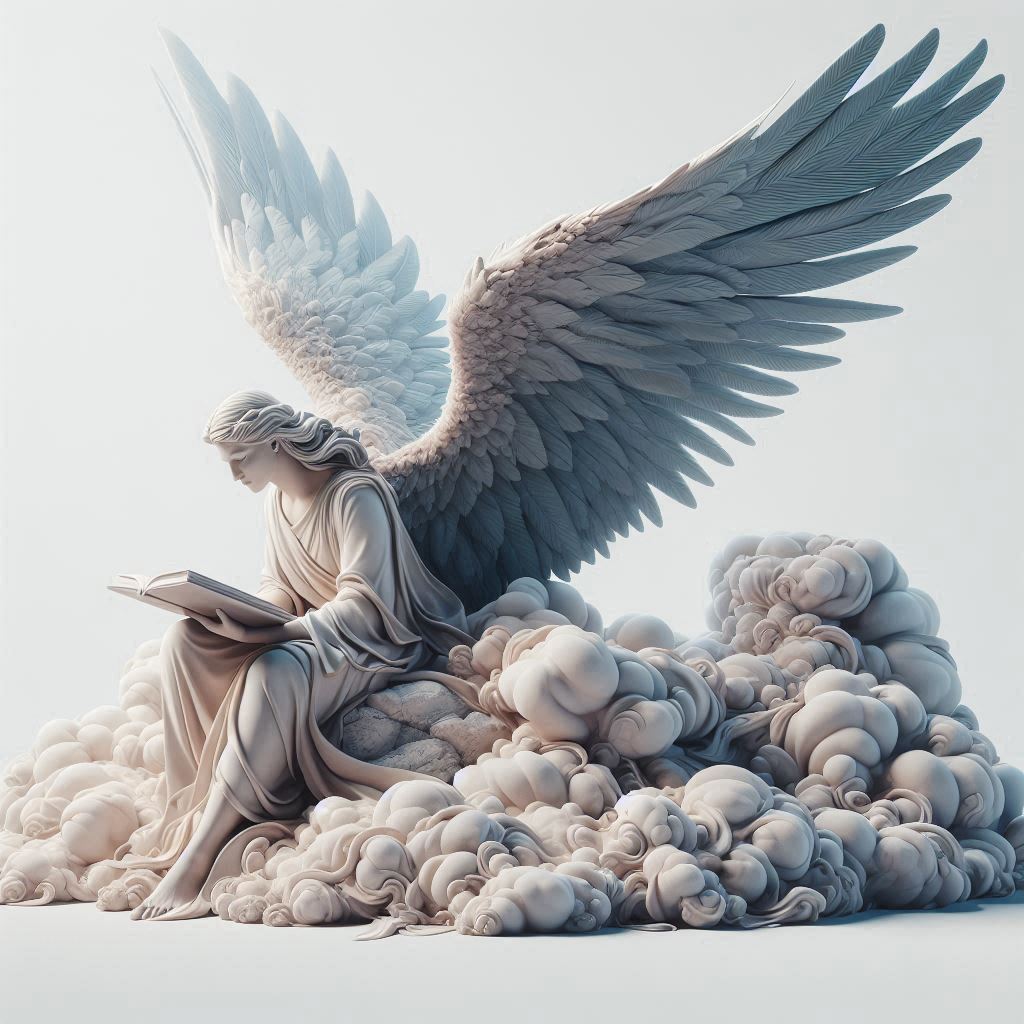
  • I Have Come Down to Deliver Them

    Exodus 3:8
    Philippians 2:6–8
    Luke 19:10

    The words “I have come down” echo through the centuries like thunder rolling across the wilderness. They reveal not just divine awareness but divine descent — a God who doesn’t rescue from afar. To come down means to enter the chaos personally, to step into the suffering that breaks His heart. This is the turning point in the entire Exodus story: Heaven touches earth not through fire and judgment first, but through nearness.

    In ancient Near Eastern belief, gods stayed in temples, demanding offerings while remaining detached. But Yahweh overturned that image entirely. He descended into the story. The text of Exodus doesn’t describe a mere metaphor — it marks a moment of invasion, when eternity bent down toward time. Every act of deliverance that followed — the plagues, the Passover, the parted sea — flowed from this single act of divine condescension.

    Centuries later, this same God once again “came down,” not in flame, but in flesh. The apostle Paul captures it perfectly: “Though He was in very nature God, He did not consider equality with God something to be grasped, but made Himself nothing.” The pattern is identical — the God who descended into Egypt now descends into Bethlehem. Both missions had the same goal: freedom. The first from Pharaoh’s tyranny, the second from sin’s dominion.

    Dietrich Bonhoeffer once reflected, “God’s coming is not only a matter of glad tidings but first of all terrible news for everyone who has a conscience.” Deliverance always disrupts the comfortable. And Madeleine L’Engle added her own quiet wisdom: “The incarnation is a daring act of love that refuses to remain distant.” Both voices pierce through time, reminding us that God’s descent is never polite — it is revolutionary.

    When God comes down, everything changes. The geography of despair shifts; the oppressor’s grip loosens; hope takes on flesh. In Egypt, His descent meant the end of slavery. In the world, it meant the defeat of death. The God who comes down never leaves the world as He found it.

    Yet in our modern faith, we often live as though God has gone back up and stayed there — as if the skies closed after Christ’s ascension. We reduce deliverance to memory, not experience. But every generation is meant to rediscover this truth: God still comes down — through His Spirit, through His people, through every act of justice and mercy that bears His name.

    So perhaps the question isn’t whether God will come down again, but whether we will make room for Him to do so. The bush still burns in every place where compassion and courage meet. The Deliverer still descends where hearts are willing to host Him.

  • I Have Seen Their Suffering

    Exodus 3:7
    Genesis 15:13–14
    John 11:35

    The first divine statement to Moses shatters every notion of a distant deity: “I have surely seen the affliction of My people.” Before any miracle, before any plague, before any command — came empathy. God didn’t just notice their suffering; He felt it. In those words lies the essence of His covenant heart — a God who sees, hears, and remembers.

    Historically, Israel’s slavery in Egypt was no myth. The archaeological and cultural evidence of Semitic laborers under Pharaoh’s reign affirms the narrative’s historical foundation. But beyond the bricks and whips was a promise — one given to Abraham centuries earlier. God had already said that his descendants would be strangers in a foreign land, enslaved for four hundred years, yet He would bring them out with great possessions. The Exodus was not an emergency rescue — it was the fulfillment of divine foresight.

    The sight of human suffering has always stirred the heart of God. He saw Hagar weeping in the wilderness, He saw Leah unloved, He saw Hannah praying in bitterness of soul. And now, in Egypt, He saw a nation crying beneath the weight of oppression. Centuries later, that same compassion wept at Lazarus’s tomb — “Jesus wept.” The tears of God have never dried.

    C.S. Lewis once wrote, “God whispers to us in our pleasures, speaks in our conscience, but shouts in our pains.” Those cries in Egypt were heaven’s alarm clock, and God responded not with silence, but with movement. Corrie ten Boom echoed this truth from her own dark prison cell: “There is no pit so deep that God’s love is not deeper still.” Both voices remind us that divine compassion is never passive; it digs through despair to reach its people.

    To see is to begin redemption. Before God acts, He observes; before He delivers, He identifies. His gaze is never empty — it carries intention. When He said, “I have seen,” it meant liberation was already in motion. The eyes of God are not for surveillance, but for salvation.

    Yet today, in a world loud with injustice and silent with empathy, many have stopped believing that God still sees. We scroll past suffering, we rationalize pain, we grow numb to cries that echo through our cities and screens. Perhaps that’s the real challenge of our generation — not that God has stopped seeing, but that His people have stopped feeling.

    If we would once again see as God sees — the weary, the displaced, the forgotten — maybe deliverance would begin again in our time. Compassion has always been the first step of divine intervention. And the ground of mercy is still holy.

  • The God Who Came Down

    It all began with a burning bush that refused to burn out. A shepherd, once a prince, stood trembling before a flame that spoke his name. “Moses, Moses.” The desert was silent, but Heaven was not. What seemed like an ordinary moment of solitude became the stage for a divine interruption — a God who refused to remain distant.

    There is something scandalously intimate about the story of Exodus 3. The Almighty, Creator of galaxies and guardian of eternity, stooped down to meet a fugitive in the wilderness. He didn’t send a messenger. He came Himself. The God who made the mountains met a man who felt like dust. And that encounter changed history — for Israel, for Moses, and for us.

    This is not the tale of a God watching from the clouds, but of a God walking into the mess. He saw. He heard. He came down. And in doing so, He revealed His unchanging nature — one who steps into the pain of His people rather than standing aloof. Every word spoken to Moses was both an act of comfort and a declaration of war — against oppression, against despair, against unbelief.

    When we read Exodus 3, we don’t just hear about a calling; we hear the heartbeat of redemption. God’s words were more than instructions — they were prophecy fulfilled. Four hundred years earlier, He had whispered to Abraham that his descendants would be enslaved, yet He Himself would deliver them. In Moses’ trembling obedience, that promise began to unfold.

    Fast forward to the New Testament, and the same God once again “came down.” This time, not through fire, but through flesh. “The Word became flesh and made His dwelling among us.” The same divine pattern: from Heaven to earth, from glory to dust, from distance to embrace.

    And today, that same voice still calls — not from a bush, but from within our burning hearts. The ground we stand on may be ordinary, but when God steps in, it becomes holy. The question is not whether He still comes down — He does — but whether we are still willing to take off our sandals and listen.

  • From a burning bush to a basin of water, Scripture tells the long story of a God drawing nearer. Each scene is a descent — holy fire becoming human touch. Moses had to remove his sandals because the ground was sacred. Centuries later, the same God removed His glory and knelt to wash feet caked with dust. What once required distance now invites intimacy. The Holy One has become the Neighbor.

    Every step along that path reveals the same truth from a different angle. The bush burned but was not consumed — holiness without harm. The woman wept at Jesus’ feet — worship without worthiness. John bowed in the river — greatness without ego. The prodigal was clothed again — forgiveness without condition. The disciples were washed — leadership without pride. One thread runs through them all: nearness made possible by grace.

    The paradox of divine holiness is not that God lowers His standards, but that He lifts us into His presence through humility. Bare feet in Exodus spoke of reverence; washed feet in the Gospels speak of restoration. Between those two moments stands a God who refused to remain untouchable. His story is the story of approach — of dust meeting divinity and not being destroyed.

    As Madeleine L’Engle once wrote, “We draw people to Christ not by loudly discrediting what they believe, but by showing them a light that is so lovely that they want with all their hearts to know the source of it.” That light is still burning — not on a mountain, but in a towel, a table, a cross. And in the same spirit, Brennan Manning reminded us, “The gospel is absurd and the mercy of God scandalous.” Indeed it is — because holiness dared to come too close, and love refused to keep its distance.

    Maybe the miracle of faith is not learning to reach higher, but learning to kneel lower. The same God who once commanded, “Take off your sandals,” now says, “Walk with Me.”
    The ground beneath us is still holy — not because of where we stand, but because of who stands with us.

    And so we end where Moses began: barefoot, humbled, seen.
    Only now, the fire no longer burns before us — it burns within us.

  • John 13:4–8
    Philippians 2:5–7
    1 Peter 5:5

    It was the night before betrayal. The room was heavy with unspoken fear, the air thick with expectation. Then Jesus — the Teacher, the Master, the One they had called Lord — rose from supper, laid aside His robe, and wrapped a towel around His waist. The sound of water pouring into a basin filled the silence. One by one, He began to wash the disciples’ feet. The same God who told Moses to remove his sandals was now kneeling to cleanse the dust of fishermen. The Holy had not descended this time in flame, but in humility.

    The disciples were stunned. Peter, ever impulsive, resisted: “You shall never wash my feet!” But Jesus answered, “Unless I wash you, you have no part with Me.” What began as an act of service became a revelation of salvation. The One who needed no cleansing became the cleanser. This was not symbolic theater — it was theology in motion. The Creator washing creation, holiness stooping to touch humanity’s dirt. What Moses once feared to approach, love now freely touched.

    This event is grounded not in poetic imagination but in the tangible customs of the era. Foot washing was the duty of the lowest servant in a household. No rabbi would perform it, and certainly not for his students. Yet the Gospel accounts record it with vivid detail — the basin, the towel, the dialogue — as eyewitnesses stunned by a love they could barely describe. Even Roman records describe similar practices among early Christians, where foot washing became a sacred ritual of humility, echoing this very night.

    Simone Weil once reflected, “Humility is the refusal to exist outside of God.” Her words capture the quiet miracle of that room — the Lord of all choosing dependence, not dominance. And Thomas Merton wrote, “Pride makes us artificial; humility makes us real.” In that basin, Jesus made reality visible: greatness is not measured by who serves you, but by whom you choose to serve.

    The towel became His throne, the basin His pulpit. He didn’t just model humility — He transferred it. The washing of feet was an ordination of sorts, passing the ministry of self-emptying love to His disciples. After the water was poured and the towel folded, He said, “I have set you an example, that you should do as I have done for you.” The King’s final lesson was not about power, but posture.

    Today, leadership often looks upward — chasing influence, visibility, applause. But the kingdom of God still turns ladders upside down. We lead by lowering ourselves, cleanse by touching what others avoid, and represent Christ not by lofty titles but by quiet towels. The challenge for our generation is clear: will we protect our status, or pour the water? The Church becomes most like Christ not when she stands tall, but when she kneels low.

  • Luke 15:22–24
    Isaiah 61:10
    Romans 8:15

    The prodigal son’s story begins in rebellion and ends in embrace. He left home with pride and returned with nothing — not even shoes. In the ancient world, that detail was not decorative. Bare feet marked shame, servitude, and loss of identity. A slave walked unshod; a son wore sandals. So when the father commanded, “Bring the best robe, put a ring on his finger, and sandals on his feet,” it was more than hospitality. It was resurrection.

    The parable Jesus told wasn’t a sentimental tale — it was scandalous mercy. His audience, steeped in notions of honor and purity, would have expected punishment. Instead, the father ran. That single act shattered decorum; patriarchs didn’t run. Yet love outran dignity. The son’s confession was met not with lecture but restoration. Sandals, robe, and ring — each item restored what sin had stripped away: worth, belonging, and authority.

    The beauty of this story lies not only in its emotional pull but in its historical precision. In the first-century Greco-Roman world, footwear was a powerful social marker. Slaves went barefoot, laborers wore crude sandals, while the free and noble were distinguished by fine leather shoes. Jesus’ listeners knew instantly what the father’s command meant — it was not just forgiveness, it was reinstatement. The prodigal did not return as a servant but as a son once more.

    Reflecting on divine mercy, Henri Nouwen wrote in The Return of the Prodigal Son, “The true center of the story is not the waste of the younger son, but the lavish compassion of the father.” Similarly, Mother Teresa said, “We have forgotten that we belong to each other.” Their insights merge here — the Father’s heart beats not for justice delayed, but for communion restored. The sandals slipped onto the son’s feet became a covenant of togetherness renewed.

    What makes this parable astonishing is not only what it reveals about God, but what it expects from us. The father’s joy was costly — he bore the humiliation of the chase, the risk of rejection, and the weight of misunderstanding. Yet he ran anyway. Love’s dignity is found not in standing tall but in bending low. Every step of the prodigal’s return was matched by the father’s sprint of grace.

    Our modern world has learned to celebrate independence but forgotten homecoming. We glorify leaving but rarely honor returning. Repentance sounds archaic; reconciliation, inconvenient. Yet every soul, no matter how far it roams, carries the echo of that gate — where a Father waits with open arms, a robe of righteousness, and a pair of sandals that say, You still belong. If we could recover even a glimpse of that grace, churches would become families again, and prodigals would finally dare to come home.

  • John 1:26–27
    Matthew 3:11
    Luke 3:16

    In the wilderness, among reeds and river water, a prophet stood preaching repentance. His name was John — the voice crying out in the desert. Crowds gathered, soldiers trembled, and even priests came asking who he was. But his answer startled everyone: “I am not the Christ. I baptize with water, but among you stands one you do not know. I am not worthy to untie the strap of His sandal.” In a world hungry for status, John found greatness in surrender.

    That statement carried cultural weight. In Jewish custom, the untying of a sandal was the task of the lowest servant — often mentioned in the context of redemption laws (as in Ruth or Deuteronomy). By declaring himself unworthy even for that task, John wasn’t exaggerating humility; he was revealing revelation. He had seen the Holy draw near and realized that proximity to the Messiah demanded awe, not ambition. The one whose hands plunged thousands into the Jordan declared himself unfit even to touch the feet of the One coming after him.

    Historically, John’s ministry is one of the most attested facts in early Christianity. Flavius Josephus, a first-century historian, mentions him as a real figure whose influence reached across Judea. His call for repentance was not mystical poetry but moral urgency. And yet, when fame came, he stepped aside — willingly diminishing so that another might rise. His message wasn’t about himself, but about preparation. Every splash of baptismal water pointed toward a fire that would cleanse deeper than any river could.

    Elizabeth Elliot once wrote, “It is always possible to be thankful for what is given rather than resentful over what is withheld — one attitude leads to worship, the other to bitterness.” Her reflection mirrors John’s heart — a man content with decrease. G.K. Chesterton, with his signature wit, observed, “Angels can fly because they take themselves lightly.” Both voices converge on this truth: humility is not weakness but weightlessness — the freedom to let go of self so God can fill the space.

    John’s untied sandal became a symbol of perspective. He knew his place and his purpose — not to be the Light, but to bear witness to it. In that knowing, he found joy. When Jesus finally appeared at the Jordan, John’s words — “He must increase, I must decrease” — became the purest echo of worship ever uttered by mortal lips. The greatest prophet bowed before the Lamb.

    Today, in a world obsessed with recognition, the spirit of John feels like a lost art. We crave platforms, not deserts; applause, not anonymity. Yet the kingdom still advances through those who are willing to untie sandals rather than seek crowns. The challenge is not to shine brighter, but to reflect more faithfully. When our hearts echo John’s humility, perhaps the world will see Christ more clearly — and our own names, blessedly, a little less.

  • Luke 7:44–47
    John 13:14–15
    1 Samuel 25:41

    In the culture of ancient Israel, hospitality was sacred law. A guest was not merely welcomed; they were honored. The host’s duty was to provide water for washing dusty feet, oil to refresh the face, and a kiss of peace. To fail in these customs was not a small oversight — it was a silent insult. So when Simon the Pharisee invited Jesus to dine but withheld these courtesies, it was more than social forgetfulness. It revealed blindness — he saw a teacher, not the Lord.

    Into that scene walked a woman the city despised. She said nothing. She simply wept, letting her tears wash Jesus’ feet, wiping them with her hair. Simon’s table turned into a courtroom of silent judgment, but Jesus’ response was pure grace: a gentle rebuke wrapped in revelation. “Do you see this woman?” He asked — not what she was, but who. Her love became the sermon Simon failed to preach.

    This story is not allegory; it breathes with the realism of first-century custom. Archaeological findings and Jewish writings, such as the Mishnah, describe how washing a guest’s feet was a sign of humility and respect — typically done by servants or the youngest member of the household. Simon’s omission was deliberate distance. And in that gap of pride, grace rushed in through the hands of a sinner.

    As Teresa of Ávila once said, “Christ has no body now but yours, no feet but yours.” Her words echo this woman’s act of love — her hands became Christ’s own form of worship. And in the same spirit, Dietrich Bonhoeffer reminded us, “Grace is costly because it calls us to follow — it is grace because it calls us to follow Jesus Christ.” The tears and the towel were her discipleship long before words of doctrine existed.

    From that dinner, we learn that holiness is not aloof; it bends low. Jesus’ gentle correction of Simon was not to humiliate, but to awaken him — to show that honor without love is hollow. The Pharisee knew law, but the woman knew grace. Her act said what Simon’s theology could not: God’s presence does not stand upon ritual, but upon recognition.

    In our world today, spiritual hospitality has grown scarce. Churches open doors yet close hearts. We debate who deserves forgiveness instead of weeping at Jesus’ feet ourselves. The challenge is simple but severe — are we Simon or the woman? Until we learn again to pour out tears of gratitude, we will keep missing the Guest who sits at our table, waiting to be seen.

  • Exodus 3:5
    Acts 7:33
    Joshua 5:15

    When Moses turned aside to see a bush that burned but was not consumed, he did not know he was stepping onto history’s holiest ground. Then came the command — “Take off your sandals, for the place where you are standing is holy ground.” In that one gesture, heaven and earth met in trembling recognition. Moses, a fugitive shepherd, was being called into divine service, yet before receiving a mission, he had to learn posture — reverence before revelation.

    The burning bush story is no myth or moral fable. It stands at the root of Israel’s history, defining the moment when God interrupted the silence of exile. Archaeologists may argue about Sinai’s exact location, but the encounter itself bears marks of historic and spiritual reality — one that reshaped Moses from wanderer to deliverer. The desert’s dry wind, the unconsumed flame, the trembling man — every detail echoes ancient covenantal encounters found throughout Scripture, affirming the God who sees, speaks, and sends.

    In one of her reflections on divine encounter, Catherine of Siena once wrote, “When God touches the soul, He leaves it burning, not destroyed.” Her words capture what Moses must have felt — a consuming call that purified without annihilating. Likewise, C.S. Lewis mused, “He who has God and everything else has no more than he who has God only.” Both voices remind us that holy ground is less about geography and more about surrender. It is not where you stand, but how you stand that makes it sacred.

    Moses’ sandals were not merely leather straps — they symbolized everything human, dusty, and defiled. To remove them was to acknowledge that divine nearness requires exposure. And yet, paradoxically, it is in our bare vulnerability that we become fit to serve. God was not demanding distance, but inviting depth. The burning bush was both a warning and a welcome.

    Today, that sense of sacred awe has nearly vanished. We rush into worship, multitask through prayers, and treat the holy as casual. We have traded reverence for relevance. Perhaps it’s time we learn again to “remove our sandals” — to pause, to recognize the fire that does not consume but still burns. If we dare to rediscover that posture, we might find that God is not distant after all, but waiting — right there, on the ground beneath our restless feet.