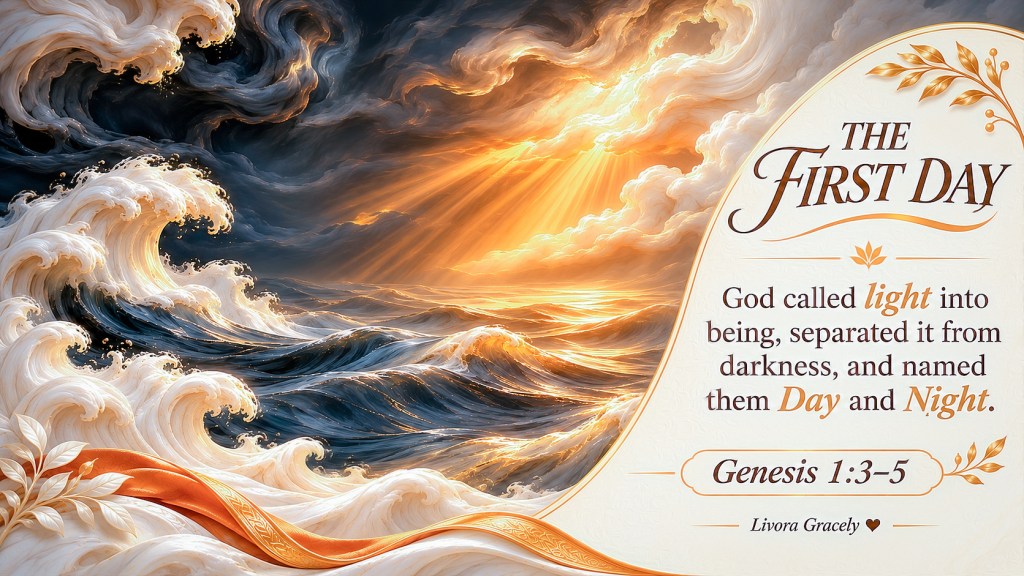
God called light into being, separated it from darkness, and named them Day and Night.
Before the Light
We know the difference between day and night. We open a curtain in the morning, turn on a lamp after sunset, and make plans around the hours between. But Genesis takes us back to the beginning of its story, before either had been given a name.
The heavens and the earth are introduced, and the earth is described as formless and empty. Darkness lies over the surface of the deep, and the Spirit of God hovers over the waters.
There are no people in this scene to open a curtain or light a lamp. The story invites us to pause before the familiar world appears: before the dry land, before the trees, before the creatures that will inhabit the earth. For now, the opening lines hold our attention on darkness and water—and on the Spirit of God over the waters.
And There Was Light
Then God speaks: “Let there be light.” And there is light.
The account does not take us through a long search for a flame or a waiting period before the words are answered. God speaks, and light is there. In a few words, the scene changes.
We are often accustomed to noticing light by what it falls upon: a cup on the breakfast table, a path outside the window, the face of someone we love. Here, Genesis asks us first to attend to light itself. The story has not yet brought us to the trees or the people who will live beneath them.
God sees the light and calls it good. That observation is part of the story too. The light has appeared, and God looks upon what has come to be.
Day and Night
God separates the light from the darkness. Then He gives each a name: the light He calls Day, and the darkness He calls Night.
The names are so familiar that they can pass almost unnoticed. A day gives way to night; night gives way to morning. We use those words to tell one another when to come home, when to meet, and when to begin again.
In Genesis, their naming belongs to this first movement of creation. The account does not say that darkness is given no name or place. God names both, and the first day is marked by evening and morning.
There is a detail worth keeping in mind as the story continues. Light appears on the first day, but the greater and lesser lights in the sky are introduced later, on the fourth. Genesis gives us that order without explaining the source of the first day’s light. We can let the detail remain a question as we read on.
The First Evening and Morning
The account of the first day is brief: God speaks, light appears, and God sees that it is good. Light is separated from darkness, and both receive their names. Then comes the refrain that will return through the days ahead: evening and morning.
There is still much to come in the story—sky and seas, dry land and trees, creatures and humankind. But for a moment, we can stay here, at the beginning, with two names we have known all our lives.
Before the story names the lights in the sky, it gives us day and night.
Livora Gracely ♥
Sources


Leave a Reply