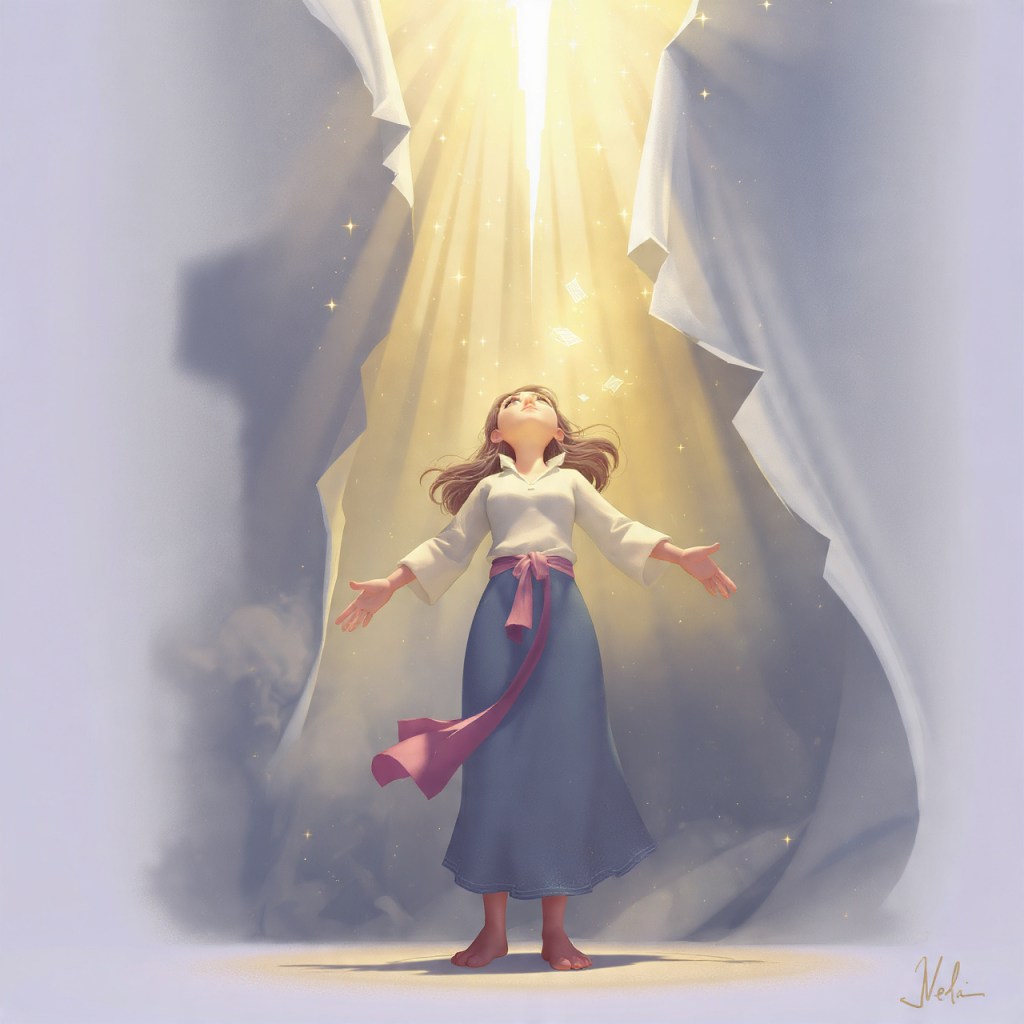
The Cry That Split the Darkness
Luke 23:45
Psalm 22:1
Matthew 27:50
There are moments when the world feels unbearably silent — when our prayers hit the ceiling and return unanswered, when sorrow sits heavily on the chest, when God seems further away than ever. Even people of faith whisper the same ancient fear: What if I am facing this alone? But the story of Christ’s suffering shows us something extraordinary. The One who would save the world also stepped into a loneliness so deep that it split the fabric of heaven. Christmas began with a cry in a manger, but salvation was sealed with a cry from a cross — a cry that shattered the darkness for all of us.
Scripture records that as Jesus hung on the cross, the sun itself failed — darkness filled the land. The curtain of the temple tore in two, an unmistakable symbol that the barrier between God and humanity was gone. This was not poetry; it happened within the watchful structure of Rome’s execution system, with soldiers, bystanders, and religious authorities present. The tearing of the veil has strong historical resonance: the temple veil was a thick, handwoven barrier that symbolically separated humanity from God’s holy presence. Its sudden tearing — from top to bottom — pointed to divine action, not human interference.
But perhaps the most intimate historical detail is Jesus’ own cry: “My God, My God, why have You forsaken Me?” He was quoting Psalm 22, a psalm of both anguish and ultimate hope. In that moment, Christ entered the deepest human fear — abandonment. He stepped into the silence we feel when God seems far away. He bore the weight of that distance so that we would never have to stand in it alone again.
This is not myth. The Gospels record it independently. Early Christian witnesses preached it in hostile environments. Even secular historians acknowledge the crucifixion as a historical event with undeniable impact. The cry from the cross is not fiction — it is the turning point of human history, the moment loneliness met its match.
Dietrich Bonhoeffer once reflected that “Only a suffering God can help.” His insight was forged under tyranny, yet it speaks directly to the heart of the cross: God does not save from a distance. He saves by entering the very suffering that terrifies us. And Elisabeth Elliot later captured the same truth from another angle, writing, “Of one thing I am perfectly sure: God’s story never ends with ashes.” Her reminder aligns with the tearing of the temple veil — a visual proclamation that what looked like an ending was actually a beginning.
Together, their reflections reveal a God who meets humanity not in its strength, but in its agony — and transforms it from the inside.
The cry of Jesus was not a surrender to despair but the announcement that He had taken upon Himself the full weight of our isolation, doubt, and fear. His final words — “It is finished” — were not defeat but declaration. The barrier is gone. The distance is closed. The darkness is broken open. Because He entered the deepest loneliness, we are never left alone in ours.
Yet today, many believers live as though the veil were still intact — praying with hesitation, approaching God with fear, carrying guilt as though access to Him must be earned. Our modern distractions amplify the old lie that God is distant. Trauma, disappointment, and busyness create internal veils thicker than the temple’s.
To reclaim what Christ accomplished, we must approach Him not as a spectator but as a participant in His finished work. It means practicing honest prayer — the kind that brings both tears and truth to the surface. It means letting Scripture remind us that access to God is a gift, not a performance. And it means entering community that gently pulls us out of our private darkness and back into shared light. Because the cry that split the darkness was not for Him — it was for us.


Leave a comment