Clash or Crown?
- “Make every effort to keep the unity of the Spirit through the bond of peace. There is one body and one Spirit…” (Ephesians 4:3–4)
- “But now in Christ Jesus you who once were far away have been brought near by the blood of Christ.” (Ephesians 2:13)
- “His purpose was to create in himself one new humanity out of the two, thus making peace.” (Ephesians 2:15)
Introduction
Feuds are never merely about building walls; they are about spying over those walls, waiting for a chance to strike. Rivalries dream of downfall, set traps for defeat, and celebrate the ruin of their enemies. They bring no peace—only restless vigilance, as each side plots the destruction of the other.
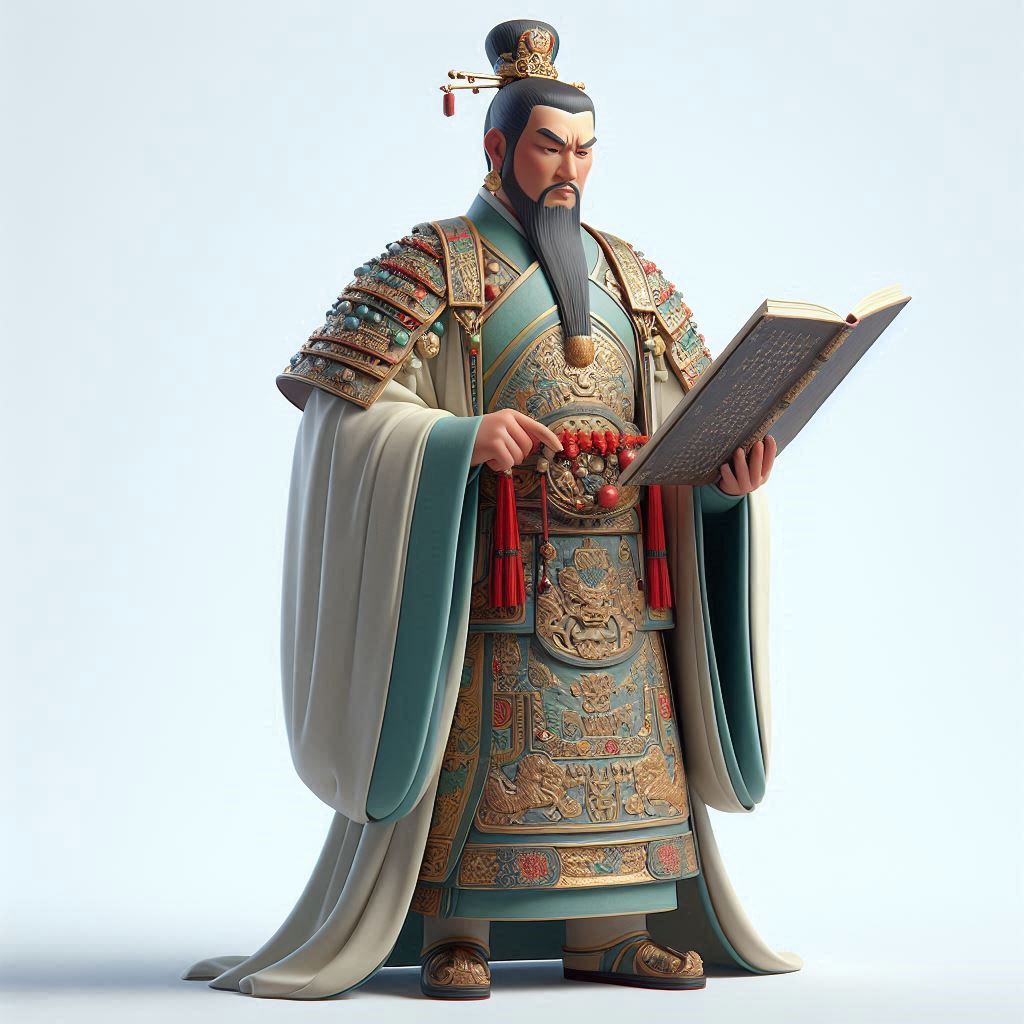
Long before the First Emperor of China, Qin Shi Huang (259–210 BCE), rose to unify the land, ancient China was a mosaic of small warring states. The Seven Warring States—Qin, Chu, Qi, Yan, Han, Zhao, and Wei—were locked in endless battles. The weak lived in fear, surrounded by stronger neighbors, while the powerful devoured weaker kingdoms with ruthless ambition. Qin Shi Huang distinguished himself by breaking this cycle of feuds: through military brilliance, political strategy, and relentless determination, he forged the first unified Chinese empire. He standardized writing, weights, measures, and even the width of cart axles—laying the groundwork for centuries of order.
Yet even such human achievement could not silence the deeper feud: the hostility between peoples, and even more, the rivalry of humanity against God. Jews versus Gentiles seemed like a battle of privilege and exclusion. Humanity versus its Creator was an even greater conflict—unequal, unwinnable, and yet tragically real.
Into this history of enmity comes the voice of the Apostle Paul, proclaiming a radical reversal: “But now in Christ Jesus…” (Eph. 2:13). On the cross, Jesus dismantled the walls, broke the hostility, and offered peace—not by negotiation, but by sacrifice. The Jew and the Gentile are called to become “one new humanity” (Eph. 2:15), reconciled not just to one another, but to God Himself.
Historical Anchor
The Warring States remind us that humanity’s instinct is division. Kingdoms rose and fell by consuming one another. Qin Shi Huang’s triumph, while remarkable, only shows how fragile peace is when it rests on swords and decrees. True reconciliation, Paul declares, cannot be forged by emperors, kings, or generals. It is the work of the crucified Christ, who tore down walls that even empires could not break.
Two Famous Quotes
- Winston Churchill : “Those who are at war with others are not at peace with themselves.”
- Mother Teresa : “If we have no peace, it is because we have forgotten that we belong to each other.”
Conclusion
From ancient kingdoms to modern conflicts, rivalry always breeds ruin. The Apostle Paul’s words remind us that peace is not the absence of war, but the presence of Christ who unites what was once divided. Where emperors sought glory, God seeks reconciliation.
Present Challenge
Today, walls are no longer only of stone or empire; they are of culture, ideology, race, religion, and pride. We live in a time where unity is preached but rarely practiced, where feuds thrive online and in nations alike. What must be done? We must return to the cross as the only place where lasting peace begins. Reconciliation is not a human project but a divine gift. Our challenge is not to rebuild old walls of exclusion but to live as witnesses of the one body, one Spirit, and one hope to which we are called.


Leave a comment