Livora Gracely

Writing to remember, sharing to inspire

  • PART 2 — The Weight Beneath the Soil

    What begins at the edge rarely stays light for long.

    By afternoon the heat presses harder against the stone walls of Gerasa. The father walks with his daughter wrapped in a thin linen cloth, her warmth rising through the fabric into his chest. Her head rests against his shoulder, too still. Each step stirs the dust again. It follows them as if unwilling to let go.

    The road toward the lakeshore slopes gently, but the weight he carries shifts with every breath she takes. Her fever has not broken. Her lips part slightly, dry.

    Old men once told stories about this land.

    They spoke of Basan.
    Of Og.
    Of iron beds too large for ordinary bodies.

    When foundations were dug for newer houses, strange bones were sometimes uncovered—long, thick, unsettling. Whether the stories were true hardly mattered. The soil of this region has always carried memory. Layers of conquest. Layers of gods. Layers of fear.

    This was once territory wrestled from giants, so the stories say. Later it became territory shaped by Rome—its roads straight, its symbols unmistakable. Now merchants argue beneath carved pillars while children chase one another between shrines.

    The father does not analyze history. He feels it.

    He feels it in the way some neighbors glance at him as he passes.
    In the way Jewish travelers usually avoid staying long.
    In the way this land is always described as “other.”

    “Faith is not a leap in the dark; it is a step into the light,” wrote Martin Luther King Jr.

    Light feels distant in the noon glare. But he keeps walking.

    At the edge of the lakeshore, a small crowd has gathered. The air smells of water and animals. The father hears fragments of speech—Greek, Aramaic, confusion layered over curiosity.

    And then he sees Him.
    A man with road dust on his sandals, water darkening the hem of his robe.
    Not elevated. Not guarded. Simply standing among them, as if the boundary between territories were thinner than everyone assumed.

    Her breathing stutters.

    For a moment, hesitation rises like heat from the ground. What if this is foolish? What if crossing toward Him means crossing away from something else—safety, belonging, the familiar rhythm of sickness that at least requires no explanation?

    “The future belongs to those who believe in the beauty of their dreams,” wrote Eleanor Roosevelt.

    He does not dream of greatness. He dreams of cool skin under his palm.

    He kneels.

    The dust marks his knees. The child’s weight shifts as he lowers her carefully. The teacher turns—not hurried, not startled. Just present.

    In lands once marked by giants and gods of stone, a father lays his daughter down on ordinary earth.

    The soil that once held stories of power now receives a smaller offering: trust.

    Some decisions are not heroic.
    They are simply the refusal to remain still.

    Scriptural Anchors
    Deuteronomy 3:1–11
    Numbers 32:1–5
    Mark 5:19
  • PART 3 — The Cost of Being Seen

    If crossing the edge required courage, remaining after the crossing required something heavier.

    By evening the fever is gone.

    Not slowly. Not gradually. Gone.

    The girl who lay limp against her father’s chest now runs ahead of him through the narrow street, her sandals slapping stone, her laughter too loud for the hour. Her skin is cool beneath his hand. He checks twice, then a third time, as if heat might return out of habit.

    Dust lifts beneath her feet and settles again.

    The crowd had thinned after it happened. Some watched with narrowed eyes. Some leaned closer. A few stepped back, as though proximity might demand response.

    He thanked the Teacher. The words came out awkward, half-formed. The Teacher only nodded and turned toward another voice calling from the side.

    It is strange how quickly wonder becomes inconvenience.

    The next morning at the market, the father feels it before he hears it. A pause in conversation. A glance held too long. A murmur cut short when he approaches the grain table.

    “Two thousand pigs,” someone says behind him.

    Another voice, quieter: “We were better before.”

    He pretends not to notice. His daughter stands beside him, examining figs with serious concentration. She hums under her breath, unaware of the arithmetic being calculated around her.

    “People are more comfortable with old problems than with new possibilities,” wrote Václav Havel.

    Possibility has weight. It rearranges things.

    A man who once screamed among the tombs now walks clothed through the city, speaking too openly about mercy. The loss of livestock still stings. Commerce disrupted. Routine unsettled.

    When healing enters a place, it does not ask permission from existing systems.

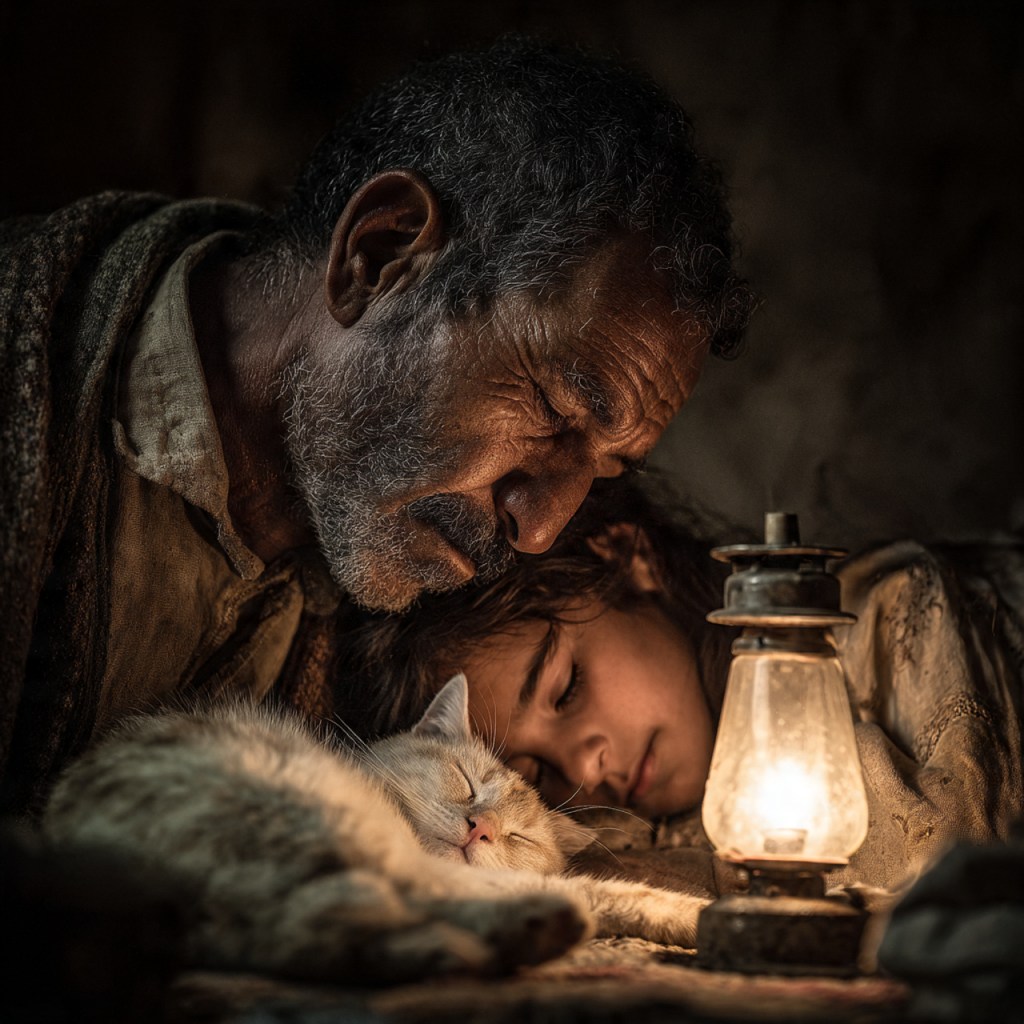
    At dusk, the father sits outside his home. The stone wall that was warm in the morning now releases the day’s stored heat slowly into the cooling air. His daughter leans against him, drawing circles again in the dust.

    He can still hear the murmur from earlier.

    “Better the sickness we understand.”

    He does not know who said it first. He only knows it lingered.

    “We are not necessarily doubting that God will do the best for us,” wrote C.S. Lewis. “We are wondering how painful the best will turn out to be.”

    He looks at his daughter’s steady breathing.

    Healing has changed nothing—and everything.

    She is alive. Whole. Running.

    But he senses the shift. He is now the man whose child was healed. The man who crossed. The man who knelt.

    Belonging feels thinner.

    From the hillside beyond the city, wind carries the faint echo of goats and distant voices. Somewhere beyond the tombs, the Teacher has already moved on.

    Restoration is not always welcomed.

    Sometimes it exposes what people preferred to manage quietly.

    The dust gathers again along the threshold of his door.

    He brushes it away with his foot.

    It returns.

    Scriptural Anchors
    Mark 5:14–17
    Mark 5:20
    Isaiah 43:19

  • PART 4 — After the Leaving

    Three days later, the dust has settled.
    Yet not every miracle protects the quiet that follows.

    Three days after the Teacher departs, Gerasa feels altered—not emptied, but rearranged. The market resumes its rhythm. Fish are gutted beside the lake. Bronze rings against wood. Pigs return to pens farther inland, counted carefully this time.

    Still, something does not settle.

    The wind off the water carries a faint brine that mixes with dust along the road. Children run past the tomb-side hills without stopping. The man once known for chains now walks upright through the square, speaking to whoever will listen. Some pause. Others quicken their pace.

    Memory moves unevenly through a city.

    The father stands at the doorway of his house as dusk gathers. The stone beneath his palm is cooling. His daughter sits near his feet, drawing patterns in the dust again—circles within circles, then a line that breaks them open.

    “Abba,” she says without looking up, “why did He leave?”

    He takes longer to answer than the question requires.

    He could say that travelers never stay.
    He could say that borders demand movement.
    He could say that teachers return to their own people.

    Instead, he watches the dust lift and settle in the last light.

    “He had other roads,” he says quietly.

    She presses her finger deeper into the earth.

    “Will He come back?”

    The pause stretches.

    “I don’t know.”

    The honesty surprises him more than it does her.

    “We must learn to reawaken and keep ourselves awake,” wrote Henry David Thoreau, “not by mechanical aids, but by an infinite expectation of the dawn.”

    Expectation feels different here. It is smaller. Less triumphant. More like tending embers than watching sunrise.

    Inside the house, a clay lamp flickers. The air smells faintly of oil and baked grain. Outside, footsteps pass. Conversations thin as night advances.

    The man who had been freed among the tombs continues telling his story across the region. Word spreads through Decapolis—not as doctrine, not as institution, but as testimony. One life interrupting another. No synagogue built in His name. No scroll preserved with signatures.

    Only memory.

    “He who binds to himself a joy,” wrote William Blake, “does the winged life destroy; but he who kisses the joy as it flies lives in eternity’s sunrise.”

    Joy flew through Gerasa. It did not linger.

    The father steps outside fully now. The dust is cooler beneath his bare feet. He lifts his daughter and sets her on the low stone wall again, the same wall where the rumor first reached him.

    She rests her head against his shoulder. Her hair smells faintly of dust and evening air.

    “We will remember,” he says, not loudly, not as vow—simply as orientation.

    Across the hills, the tombs remain carved into stone. The lake continues its patient rhythm. Rome remains Rome. Markets remain markets.

    But somewhere between dust and water, between fear and gratitude, a family breathes differently than before.

    Some changes are not recorded.

    Some faiths are never institutional.

    Some edges remain edges—yet carry quiet light long after the footsteps have faded.

    Scriptural Anchors
    Mark 5:18–20
    Luke 8:38–39
    Psalm 30:5

  • PART 5 — What the Dust Keeps

    Years pass the way wind passes over stone—quietly, persistently, without asking permission.

    The girl grows taller than the low wall outside their house. The harbor shifts with new merchants. Rome tightens and loosens its grip in cycles that feel large from afar and ordinary from within. Statues weather. Markets rebuild. Dust continues its patient work on everything exposed.

    Inside the house, in a small wooden box near the hearth, several stones remain.

    They are not remarkable. Not polished. Not carved with symbols. Just fragments gathered from the ground near the lakeshore on the day her fever broke. The father kept them without explanation. He never displayed them publicly. He never told the story in the square.

    He simply kept them.

    One evening, long after she has become a woman with her own household rhythms, she opens the box while helping him move his things. The room smells of dry grain and old oil. Light falls thinly through the doorway.

    “Why these?” she asks, holding one between her fingers.

    The stone leaves a faint trace of dust along her skin.

    He sits slowly. Age has settled into his knees the way dust settles into cracks in stone. For a moment he does not answer. The memory does not arrive as spectacle. It arrives as temperature—cool skin under his palm, steady breathing where heat once raged.

    “Because that was the day we crossed,” he says.

    Not into another country.

    Into another way of seeing.

    “The meaning of life is to find your gift,” wrote Pablo Picasso, “the purpose of life is to give it away.”

    He had no grand gift. No platform. No title. Only a daughter restored and a posture altered.

    In Decapolis, no large assembly rose in His name. No letter was addressed to Gerasa. The region remained known for trade routes and contested loyalties. History favored louder cities.

    But quiet testimonies traveled through kitchens, along wells, between neighbors who trusted one another enough to listen. The man once bound among tombs continued speaking. Some believed. Some did not. The city endured.

    The father had once feared what healing would cost. It cost him certainty. It cost him invisibility. It cost him the ease of blending in.

    It gave him something else.

    Not prominence.

    Not protection.

    Attention.

    The dust outside the house rises again as wind moves through the street. It settles on statues, on market stalls, on rooftops, on the low wall where he once stood uncertain.

    He closes the wooden box gently.

    The stone walls of Gerasa still stand. The lake still carries boats across its surface. The tombs still open into shadowed chambers carved long before his lifetime.

    Edges remain edges.

    But sometimes the edge becomes the place where memory is guarded most carefully.

    He watches his daughter step into the evening light, the small stone still in her hand.

    What crossed their threshold did not build a monument.

    It altered a household.

    And sometimes that is where history rests.


    Small Stones Speak

    Dust on the doorway.
    Warm stone cooling at dusk.
    A child running barefoot.

    Murmurs behind market stalls.
    Wind moving through tombs.
    Footsteps fading toward water.
    Hands brushing powder from cloth.

    A box beneath the hearth.
    Small stones, unremarkable.
    Memory held without inscription.
    Light staying after departure.


    Scriptural Anchors
    Mark 7:31–37
    Isaiah 2:3
    2 Corinthians 4:7

  • PART 1 — The Report That Entered the Room

    The wine is steady in his hand.

    Nehemiah stands in the inner court of Susa, waiting for the king’s signal. The goblet catches light from the high windows. The floor is cool stone. Incense hangs faintly in the air.

    Behind him, in a corridor not meant for lingering, voices murmur.

    Travelers from Judah.

    Dust still clings to their garments.

    One of them is his brother.

    “The wall of Jerusalem is broken,” Hanani says quietly. “Its gates have been burned with fire.”

    The words do not echo.

    They settle.

    Nehemiah does not drop the cup. He does not stagger. He completes his duty. The king drinks. The chamber clears.

    Only then does he sit down.

    And weep.

    Not as a defeated exile.

    As a trusted official with a secure future.

    Something has entered the room—and it refuses to leave.

    Wendell Berry once wrote, “It may be that when we no longer know what to do, we have come to our real work.” Nehemiah does not yet know what to do.

    He only knows he cannot return to normal.

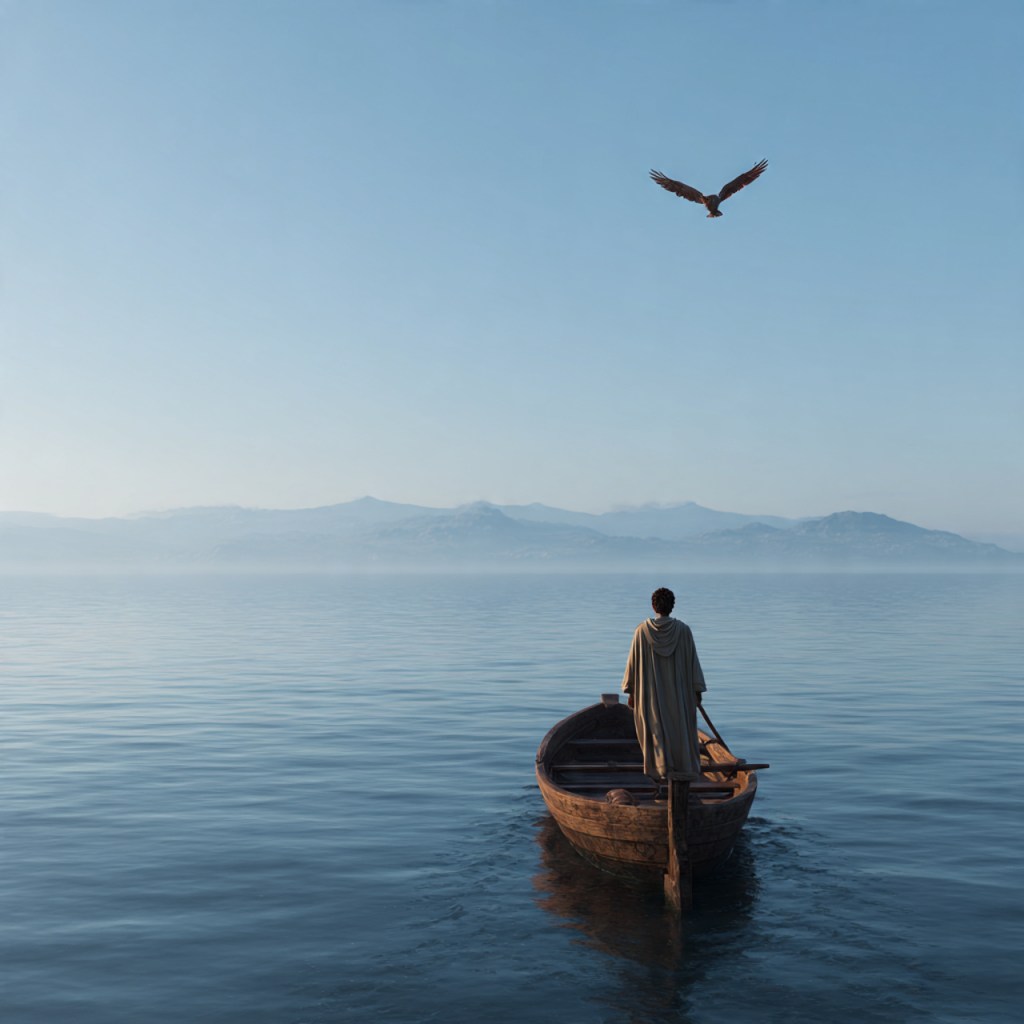
    Years later, on the eastern shore of the Sea of Galilee, a boat presses against unfamiliar ground.

    The air smells different there. Fewer psalms. More livestock. More Rome.

    This is the region called Dekapolis—ten cities shaped more by empire than covenant.

    Jesus steps out first.

    Before He can speak, a man runs toward Him from the tombs.

    Skin scarred.

    Chains broken.

    Voice fractured.

    Most had learned to live around him.

    Children were warned to stay away. Merchants took longer routes. The town adjusted to the presence of ruin.

    Jesus does not adjust.

    The man shouts.

    The disciples freeze.

    And somewhere behind stone half-cleared in Jerusalem, a young father listens to news of rebuilding. He has seen the gaps in the wall. He has seen how easily enemies enter at night.

    He does not know yet that he will carry stone.

    He only knows something unsettled him when he heard.

    Disturbance is rarely loud.

    It does not always arrive as command.

    Sometimes it comes as an image that will not release you.

    A wall breached.

    A man undone.

    A city exposed.

    Most people feel it briefly—and move on.

    But in both stories, someone allows the disturbance to remain.

    Nehemiah sits in fasting.

    Jesus stands before a man no one else would approach.

    Restoration does not begin with strategy.

    It begins when someone refuses to look away.

    Scriptural Anchors
    Nehemiah 1:3–4
    Mark 5:1–5
    Luke 8:22–26

  • PART 2 — The Moment Comfort Became a Choice

    The king notices.

    In a court trained to conceal weakness, sorrow is dangerous. Servants learn to master their faces. A cupbearer does not tremble in the presence of power.

    Yet Nehemiah’s grief has crossed into visibility.

    “Why is your face sad?” the king asks. “You are not ill.”

    Nehemiah writes it plainly:

    “I was very much afraid.”

    Not spiritually stirred.
    Not poetically moved.

    Afraid.

    His throat tightens. The silence in the chamber stretches. Persian kings do not reward disloyalty. A sad face can be interpreted as complaint. Complaint can be interpreted as rebellion.

    He could retreat now.

    He could apologize.
    Blame fatigue.
    Blame the journeying relatives.

    Instead, he speaks.

    “The city of my ancestors lies in ruins, and its gates have been destroyed by fire.”

    The words leave him.

    There is no retrieving them.

    Comfort has just become a decision—and he has stepped away from it.

    The king pauses.

    Then asks the question that changes history:

    “What is it you want?”

    Before timber is requested, Nehemiah prays. A sentence whispered between heartbeats. A silent alignment before public action.

    Faith is rarely loud at its turning point.

    It is a breath taken before speaking.

    Across the lake, another decision unfolds.

    Jesus says to His disciples, “Let us go over to the other side.”

    The other side.

    Not Galilee. Not familiar ground. But Gentile territory—unclean by custom, unpredictable by reputation.

    The boat pushes away from shore. Wood creaks. Nets shift underfoot. The horizon opens wider than comfort prefers.
    Salt spray stings their faces.

    Midway across, wind rises.

    Water crashes against the hull. The disciples panic. Fishermen who know storms now feel outmatched.

    They wake Him.

    “Master, we are perishing!”

    Following Him has carried them into danger, not away from it.

    Obedience does not always calm the sea first.

    Sometimes it reveals what we trust.

    Back in Jerusalem, the young father hears Nehemiah’s plan. Rebuild the wall. Close the breaches. Restore the gates.

    It sounds impossible.

    It sounds necessary.

    That night he tells his daughter they may have to work longer. She asks why the wall matters so much.

    He searches for words.

    “Because if we leave it broken,” he says quietly, “we remain exposed.”

    Comfort would have been easier.

    So would silence.

    But exposure, once seen clearly, demands response.

    C.S. Lewis once observed that our desires are often not too strong, but too weak—we settle for mud pies because we cannot imagine the sea. Comfort offers mud pies.

    Calling offers deep water.

    The difference between safety and obedience is rarely dramatic at first.

    It is a sentence spoken in fear.
    A boat untied from shore.
    A father choosing to build instead of merely complain.

    The unrest that entered the room now becomes direction.

    It becomes direction.

    And once direction is chosen, comfort is no longer neutral.

    It becomes something we must either cling to—

    or release.

    Scriptural Anchors
    Nehemiah 2:2–5
    Luke 8:22–25
    Proverbs 29:25

  • PART 3 — Building Under Threat

    Nehemiah does not announce his plan immediately.

    He walks the wall at night.

    Torchlight flickers against broken stone. Rubble lies in uneven heaps where gates once stood. Charred beams collapse under his hand. In some places, the breach is wide enough for an army to enter without slowing.

    He says nothing yet.

    Some burdens must be seen in silence before they are spoken aloud.

    When the rebuilding begins, enthusiasm carries the first days. Families take sections near their homes. Stone is lifted. Mortar mixed. Gaps slowly narrow.

    Then the voices start.

    Sanballat laughs.
    Tobiah mocks.

    “What are these feeble Jews doing?”
    “If even a fox climbs on it, their wall will fall!”

    Mockery is lighter than swords—but it cuts deeper.

    Soon it is not only ridicule. There are rumors of attack. Plots whispered in nearby villages. Threats of ambush.

    Nehemiah responds with prayer—and guards.

    From that point forward, they build with one hand and hold a weapon in the other. Workers sleep in their clothes. Trumpets stand ready in case of assault. The rhythm of construction is no longer steady—it is tense.

    The young father now works with dust in his lungs and calluses splitting open. His daughter brings him water at midday. She asks why the men carry spears while setting stones.
    At night he lies awake, muscles knotted, listening for sounds that may never come.

    “Because rebuilding invites resistance,” he answers.

    She does not yet understand how true that is.

    Restoration unsettles those who have adjusted to ruin.

    Half the workers stand guard while the others labor. Fatigue settles in. There are days when progress feels slower than opposition.

    Still, the wall rises.

    Fifty-two days later, it stands.

    Enemies fall silent.

    But silence is not the same as surrender.

    Years later, Nehemiah returns to find compromise creeping back in. The Sabbath neglected. Corruption tolerated. Old habits resurfacing like cracks beneath plaster.

    Stone is easier to repair than desire.

    Across the water in Dekapolis, the healed man stands clothed and steady. His mind is clear. His body still.

    And the townspeople are afraid.

    They plead with Jesus to leave.

    Deliverance has disrupted their equilibrium. The loss of pigs weighs heavier in their minds than the restoration of a man.

    Jesus steps back into the boat.

    The healed man begs to follow Him.

    Instead, he is sent home.

    Home—to those who chained him.
    Home—to those who watched him break stones with his bare hands.
    Home—to those who may never fully trust him again.

    Obedience here does not look triumphant.

    It looks costly.

    Dietrich Bonhoeffer wrote, “When Christ calls a man, He bids him come and die.” Not always a physical death—but the death of ease, applause, and predictable outcomes.

    Nehemiah built for a people who would struggle again.

    The healed man testified in a city that had asked Jesus to leave.

    Faithfulness does not guarantee permanence.

    It guarantees participation.

    The father drives another stone into place. Sweat runs into his eyes. The wall grows higher—but so does the awareness that vigilance will never be optional.

    Restoration is not fragile because it is weak.

    It is fragile because human hearts are.

    And yet—

    they keep building.

    And he keeps telling his story.

    Not because the outcome is certain.

    But because obedience, once chosen, does not measure itself by applause.

    It measures itself by motion.

    Scriptural Anchors
    Nehemiah 4:16–18
    Nehemiah 6:15–16
    Mark 5:17–20

  • PART 4 — When Stone Was Not Enough

    The wall stands.

    Gates are hung. Watchmen assigned. The breaches that once yawned open now hold firm.

    It would be easy to celebrate the height of the stone.

    Instead, Nehemiah gathers the people.

    Not to inspect the wall.

    To open the Book.

    They assemble at the Water Gate. Morning light spreads slowly across the square. A wooden platform has been built so that the scroll can be seen. When Ezra stands and unrolls the parchment, the sound is soft but unmistakable—the dry whisper of something ancient unfolding.

    And he begins to read.

    From early morning until midday, the people stand.

    No trumpet compels them. No guard enforces their presence. They remain because they asked to hear.

    The father lifts his daughter onto his shoulders so she can see above the crowd. At first she shifts her weight impatiently. The reading continues. The Levites move among the people, explaining what is read, making the meaning clear.

    Gradually, stillness deepens.

    Simone Weil once wrote that attention is the rarest and purest form of generosity. That morning, generosity takes the form of listening.

    As the words settle, something breaks open.

    Across the square, shoulders begin to tremble.

    They weep.

    Not because the wall failed.

    Because the Word revealed distance.

    They recognize how easily survival had replaced devotion. How rebuilding could secure borders yet leave allegiance thin. Tears fall on stone still dusty from labor.

    The father’s chest tightens. His daughter feels the movement beneath her and leans forward.

    “Abba?”

    He does not answer immediately.

    How does one explain that the sorrow is not despair—but clarity?

    Nehemiah and Ezra step forward.

    “This day is holy. Do not grieve… the joy of the Lord is your strength.”

    Joy does not cancel conviction.

    It steadies it.

    They are told to eat rich food. To drink something sweet. To send portions to those who have nothing prepared. Conviction turns outward into generosity. Sorrow becomes shared table.

    Stone had closed the gaps.

    Now covenant must close the drift.

    Across the lake, the man in Dekapolis stands before his own people. He tells them what God has done for him. Some listen with curiosity. Others with suspicion.

    There is no platform.

    No scroll.

    Only a life that once ran naked among tombs, now clothed and steady.

    Before apostles preach in synagogues across nations, a restored man becomes a herald in Gentile streets.

    Walls and worship.
    Mind and mission.
    Structure and surrender.

    God does not restore halfway.

    But restoration always moves deeper than what can be measured in stone.

    The wall enclosed the city.

    The Word entered the heart.

    And for a moment—clear, luminous, and costly—they remembered who they were.

    Scriptural Anchors
    Nehemiah 8:1–6
    Nehemiah 8:8–10
    Luke 8:38–39

  • PART 5 — After the Applause Fades

    The booths are dismantled.

    Branches that once cast gentle shade are carried away. Courtyards return to stone. Markets reopen. Gates swing at their usual hours.

    The wall still stands.

    The father notices the change first.

    Not collapse.

    Cooling.

    The gatherings are smaller now. The urgency of listening softens into routine. Bread is purchased more often than shared. The memory of tears at the Water Gate begins to blur at the edges.

    Security has settled in.

    And security is subtle.

    Months later, Nehemiah leaves Jerusalem for a time. When he returns, he finds familiar fractures forming again. Sabbath neglected. Sacred space compromised. Old compromises resurfacing with quiet persistence.

    Stone endured.

    Hearts required tending.

    Restoration, it turns out, is not a single achievement.

    It is maintenance of devotion.

    In Dekapolis, the healed man continues speaking. He walks streets that once feared him. He tells neighbors what God has done. Some nod politely. Some avoid him. Some doubt.

    He keeps telling it.

    Not because response is guaranteed.

    Because truth, once experienced, demands witness.

    The father sits outside his house at dusk. His daughter, older now, watches the watchmen along the wall.

    “Will we build the booths again?” she asks.

    He pauses.

    He remembers the tears. The reading. The taste of bread shared freely. The way joy steadied sorrow.

    “If we remember,” he says quietly.

    Not certainty.

    Commitment.

    Nehemiah rebuilt more than once.

    The man in Dekapolis testified in a city that once begged Jesus to leave.

    Jesus Himself walked toward a cross knowing that even resurrection would not remove human frailty overnight.

    Perhaps the deeper fear is not leaving comfort.

    Perhaps it is this:

    Will we remain faithful when renewal must be renewed?

    When obedience must be chosen again?

    When what was restored begins to thin?

    Annie Dillard once wrote, “How we spend our days is, of course, how we spend our lives.” Restoration is not a day.

    It is a pattern.

    The wall stands in the fading light.

    Somewhere beyond the lake, a once-tormented man speaks again of mercy.

    And in Jerusalem, a father watches the gates close at night, knowing that stone protects—

    but memory must be guarded too.

    The safest place is not the palace.

    It is the posture that keeps rebuilding,

    even when rebuilding must begin again.


    Scriptural Anchors
    Nehemiah 13:15–17
    Mark 5:19–20
    1 Corinthians 15:58

  • PART 1 — The Sound After the Wall

    Morning light falls differently on a finished wall.

    Stone that once lay scattered now casts long, steady lines across the street. Gates that had been charred open and silent now swing with measured weight. Footsteps echo again where wind once moved freely. The city feels enclosed—not imprisoned, but held.

    There is relief in the air, but it is not loud.

    Workers stand back to look. Children trace the edges of stone with curious fingers. Dust still clings to sleeves, but it no longer speaks of collapse. It carries warmth—the kind earned slowly through shared labor.

    Fifty-two days.

    The wall stands, and the nations notice.

    It would be easy to linger here. To measure height. To recount speed. To admire coordination. Achievement has a way of inviting applause, and applause can quietly begin to shape identity.

    William James once observed that the greatest use of life is to spend it on something that will outlast it. The wall would outlast the hands that built it. It would stand through seasons and storms. But Nehemiah sensed something quieter: outlasting is not the same as enduring inwardly. Stone may secure borders; it cannot secure the heart.

    So he does something unexpected.

    He does not preserve the moment as monument.

    He gathers the people again.

    Not to inspect the wall.

    To open the Book.

    Before timber was requested from a king, prayer had been lifted in private. Before stone was aligned, petitions were aligned. Nehemiah belonged to that current of exiles who understood that survival without remembrance eventually thins.

    The wall was nearly complete. Watchmen would soon be assigned. Gates organized. Systems stabilized.

    But a city can be rebuilt and still forget why it exists.

    Momentum is fragile. Relief cools quickly. What begins as gratitude can settle into habit if not tended.

    So he redirects the warmth.

    The people gather at the Water Gate—not for applause, but for listening. The same hands that lifted beams now hang open. The same bodies that bore weight now stand in stillness.

    Stone held back enemies.

    But only truth can hold a people together.

    Scriptural Anchors
    Nehemiah 6:15–16
    Nehemiah 8:1–3
    Jeremiah 29:7