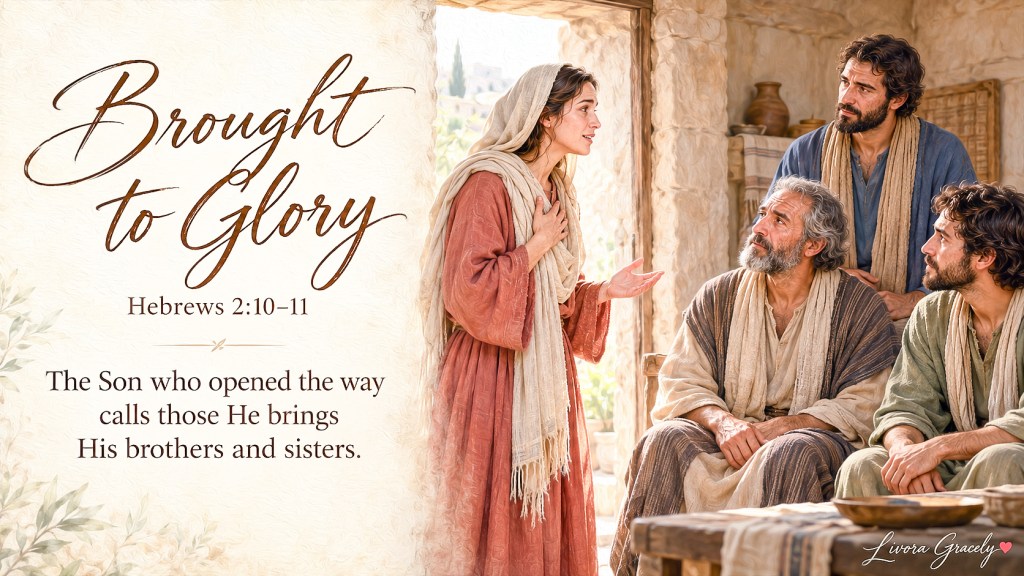
Hebrews 2:10–11
The Son who opened the way calls those He brings His brothers and sisters.
“Go instead to my brothers.”
The risen Jesus gave Mary Magdalene a message to carry. She had stood outside the tomb weeping; now she was being sent to His disciples. He spoke of ascending to His Father and their Father, His God and their God.¹
The message was for people He called His brothers.
Hebrews explains the depth beneath that name. God is bringing many sons and daughters to glory through Jesus, the pioneer of their salvation. The One who has passed through death into honour acknowledges a family He is bringing with Him.²
Bringing Many
The movement begins with God. He is bringing people to glory. Everything exists through Him and for Him, and the salvation described here belongs within His purpose.
This continues the wonder of Psalm 8: human beings are remembered by their Creator and crowned with honour.³ Hebrews has acknowledged how far their present condition seems from that calling. They suffer, lose what they love, and die. Yet Jesus is already crowned.
Now the letter shows what His glory means for others. His victory opens a future for many sons and daughters. The promise has not ended with one solitary figure receiving the honour humanity could never secure.
The phrase also gives salvation a destination. Forgiveness brings people into a life directed toward the glory God intends for them. They are being gathered into His family, with the Son as their saving leader.
The God who gives this promise is also the One acting to fulfil it. His people are not left to turn their frailty into glory by determination alone. Their future depends upon His purpose and the Son through whom He carries it forward.
This is why the writer calls the path through suffering fitting. The Creator’s purpose is being accomplished through the Son who entered the condition of those He saves. The suffering belongs within that work; the destination remains glory.
The Pioneer
A pioneer opens a way for others to follow. Here the word carries the weight of leadership and the beginning of salvation. Jesus does more than describe a destination to people who must somehow reach it by themselves.
He undertakes the work that makes their arrival possible.
The preceding verse has named His death on behalf of others. The following verses will explain His sharing in flesh and blood, His victory over the power of death, and His priestly work concerning sin. His leadership reaches into the very things that hold people captive.
Isaiah speaks of the suffering servant whose life is poured out and whose work brings righteousness to many.⁴ His suffering bears fruit in the lives of others. That prophetic witness helps us hear the purpose within the journey Hebrews describes.
Later, Hebrews speaks of a new and living way into God’s presence, opened through Jesus’ offered life. Those who belong to Him are invited to draw near.⁵
The pioneer has made access possible. His people follow in trust because their approach rests upon what He has accomplished. The way is open through Him, and He remains the One who leads.
Through Suffering
Why, then, does Hebrews say He was made perfect through suffering?
The letter describes Jesus as without sin. The perfection in view concerns the completion of His saving course. He carried obedience into the actual conditions of human life and through the suffering of death.
Hebrews later says that, although He was a Son, He learned obedience through what He suffered and became the source of eternal salvation.⁶ His obedience was lived in prayers, tears, submission, and costly faithfulness.
These experiences were real. The Son’s human life was no appearance put on for spectators. He endured the path through which He would become the fully accomplished pioneer of His people’s salvation.
His suffering needed no correction of wrongdoing in Himself. It fulfilled the work undertaken for those who needed cleansing and rescue.
That distinction matters for the people He leads. They receive salvation through His obedience; their own pain cannot purchase it. His completed work gives them a foundation when obedience becomes costly and the promised glory remains beyond their sight.
They follow a Saviour who has endured human trial and brought His saving mission to completion.
His Own Family
Hebrews then places two parties together: the One who makes people holy and those who are made holy.
The word “both” brings them close while preserving the direction of the gift. Jesus sanctifies; His people receive the holiness He gives. Later, the letter grounds their sanctification in the offering of His body. Their place with God rests upon His sacrifice.
They belong together. The underlying expression, “all from one,” has been understood in relation to a common Father or their shared humanity. The surrounding language makes the family bond unmistakable: children brought to glory, a Son who shares their condition, and people He calls brothers and sisters.
“So” carries the consequence. Because of this bond, Jesus is not ashamed to acknowledge them. His glory does not make Him disown those He has come to sanctify.
The next verse gives that acknowledgement a voice through Psalm 22, where God’s name is declared among brothers and sisters in the gathered assembly.⁷ The pioneer stands in an openly recognised relationship with His people.
Mary had been given such an acknowledgement to carry. She went to the disciples and announced that she had seen the Lord. Then she told them what He had said.
The risen Lord had called them His brothers.
Scripture References
- John 20:11–18; opening and closing scenes.
- Hebrews 2:5–18; main passage 2:10–11 and immediate context throughout.
- Psalm 8:4–6.
- Isaiah 53:10–12.
- Hebrews 10:10–22.
- Hebrews 4:15; 5:7–9.
- Psalm 22:22; quoted in Hebrews 2:12.


Leave a Reply