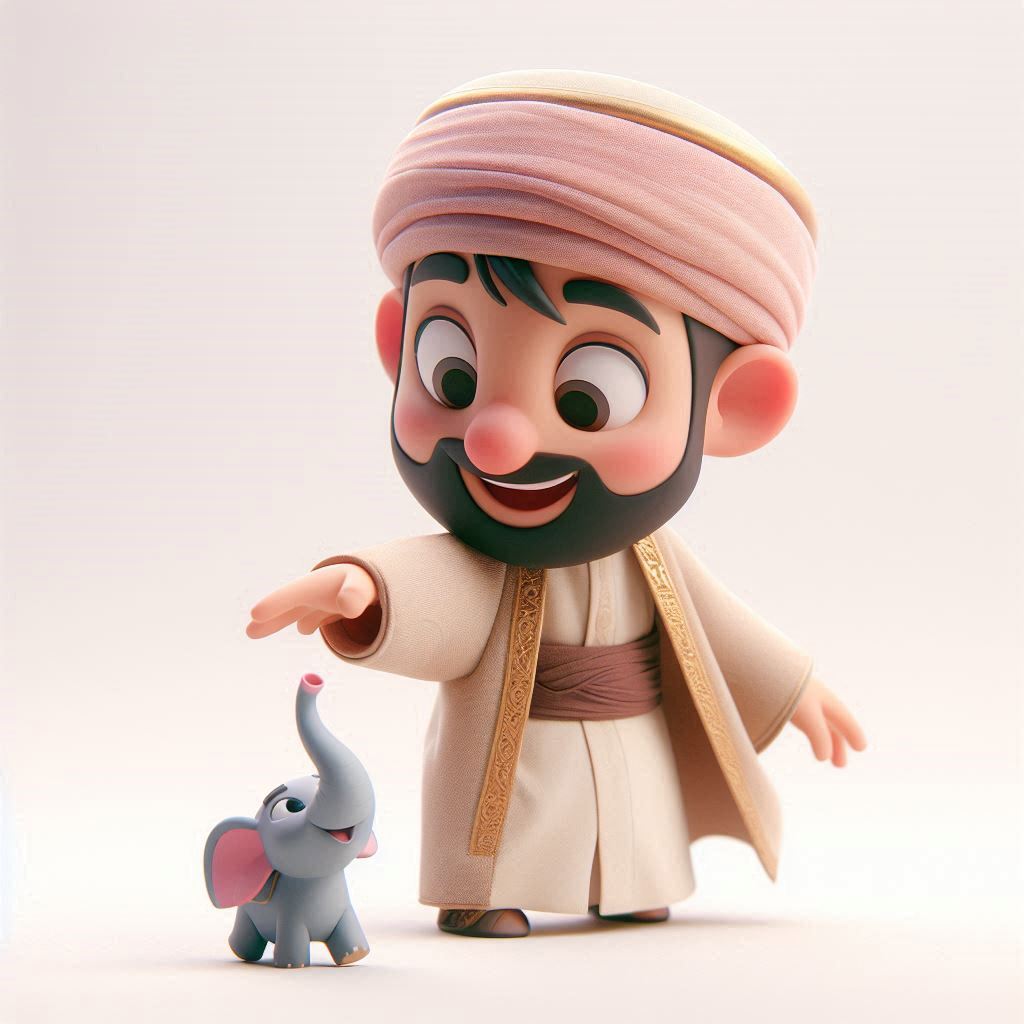
Stories that laugh at kings, puzzles that humble the wise, and questions that dance beyond easy answers—these are the treasures of Clever Folklore.
They were not carved on stone nor bound in books at first. Instead, they traveled by tongue and memory, whispered at night markets, retold in coffeehouses, and carried across deserts and seas.
Within these pages lie riddles that echo the wit of Abu Nawas and countless nameless tricksters of the past. Each question is simple, yet its answer hides like a jewel beneath common sand. To solve them is to share in the humor and wisdom of generations who found delight not in gold, but in cleverness.
Come, reader. Test your mind, smile at your failures, and laugh when the truth is finally revealed. For in folklore, wit is the crown, and laughter is the true inheritance.
Abu Nawas and the King’s Shadow
One hot afternoon, the King summoned Abu Nawas.
“Abu,” he said, “you claim to be clever. Prove it. Tell me how heavy my royal shadow is!”
The courtiers laughed—surely this was impossible.
Abu Nawas bowed. “O King, your shadow weighs exactly the same as you.”
“How dare you!” the King barked. “Explain!”
Abu smiled. “Your Majesty, a shadow cannot exist without your body. If you step away, the shadow vanishes. Therefore, your shadow borrows your weight—it is inseparable from you.”
The King burst out laughing. “Abu, you make the impossible sound simple. You’ve tricked me again.”
Moral: Wisdom turns burdens into laughter.
Abu Nawas and the Bag of Nothing
A wealthy merchant once mocked Abu Nawas:
“You always speak of treasures of the mind. Show me this treasure! I will give you a bag, fill it with the most precious thing you own.”
Abu took the bag, sealed it, and returned it empty.
The merchant shook it. “This is nothing!”
“Indeed,” Abu replied, “and yet nothing cannot be stolen, cannot rot, cannot be taxed. It is the only treasure no one can take from me. I give you what kings and beggars both lack—contentment with nothing.”
The crowd clapped, and the merchant flushed red.
Moral: Sometimes the greatest gift is emptiness itself.
Abu Nawas and the Silent Song
One night, the Sultan asked Abu Nawas to entertain him with a song.
“But,” the Sultan added, “it must be the most beautiful song I have never heard before.”
Abu Nawas bowed, closed his eyes, and stood in silence.
Minutes passed. The Sultan grew impatient. “Where is the song?”
Abu finally opened his eyes. “Majesty, did you not hear? I sang with silence—the song no one has ever heard, yet it enters the heart of everyone. If you desire beauty, sometimes silence is louder than sound.”
The Sultan smiled softly, touched by the truth in his words.
Moral: Silence itself can be the deepest music.
Epilogue to Clever Folklore
As these riddles come to an end, their laughter still lingers. The jest may be small, yet it carries the weight of wisdom. The trick may seem simple, yet it turns the mind upon itself.
Clever Folklore is not merely to amuse, but to remind us: wit is a lamp, and humor its flame. Together, they light the corners of thought we might never have visited.
If you have smiled, you have shared in the jest.
If you have paused to ponder, you have touched the cleverness.
And if you leave still thinking, then the riddles have done their work.
May every question that teases you be both a spark of laughter and a spark of insight—for that is the true art of folklore: to be funny, to be clever, and to make us think.


Leave a comment