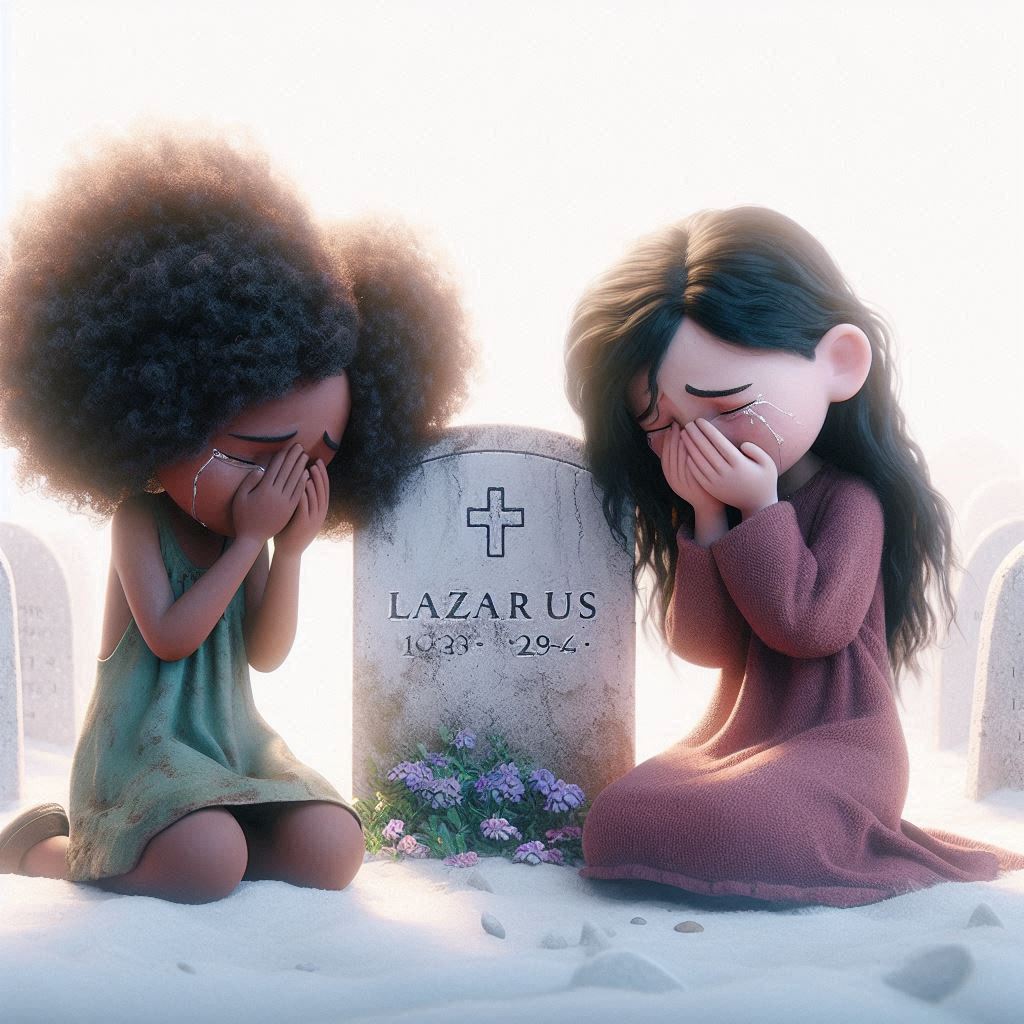
Lazarus Raised for the Sake of His Family
The family of Lazarus was overwhelmed with grief.
When their brother died, Mary and Martha were heartbroken.
They felt like it was too late when Jesus finally arrived, four days after Lazarus was buried.
Their hope was gone, their faith was shaken, and their sorrow was immense.
Yet, Jesus turned this impossible situation into a powerful testimony:
He raised Lazarus from the dead.
This miracle wasn’t just a victory over death; it was the restoration of a family nearly destroyed by loss.
A Historical Truth
The raising of Lazarus is one of the most well-documented miracles in the Gospel of John.
It happened in Bethany, a town near Jerusalem, so it couldn’t be easily dismissed as a legend.
John names the family members—Lazarus, Mary, and Martha—which are details that a fictional story wouldn’t need.
Furthermore, this miracle directly led to the religious leaders’ plot to kill Jesus, showing just how real and powerful the event was.
The Value of Family
As the poet Rabindranath Tagore wrote,
“Death is not extinguishing the light; it is only putting out the lamp because the dawn has come.”
When we keep our loved ones in our hearts, as Elizabeth Barrett Browning reminds us,
“to live in hearts we leave behind is not to die.”
Conclusion
The resurrection of Lazarus was more than a show of God’s power.
It was about restoring a grieving family.
Jesus showed that His mission wasn’t just about abstract ideas; it was about the real-life healing of families broken by death.
The Modern Challenge
Today, death often feels final.
Medical science can extend life but can’t conquer the grave.
Families still feel the pain of loss and many live without the hope of being reunited with their loved ones.
What’s often missing is the belief that Jesus truly has power over life and death.
The challenge for us is to remember that the resurrection is not just a story but a living hope that can restore grieving families.
As believers, we must walk with those who are hurting and show them that
Jesus is still “the resurrection and the life.”


Leave a comment