Livora Gracely

Writing to remember, sharing to inspire

  • Enduring Power

    Key Verses
    Acts 19:15 — “One day the evil spirit answered them, ‘Jesus I know, and Paul I know about, but who are you?’”
    Luke 10:19 — “I have given you authority to trample on snakes and scorpions and to overcome all the power of the enemy; nothing will harm you.”
    John 15:5 — “I am the vine; you are the branches. If you remain in me and I in you, you will bear much fruit; apart from me you can do nothing.”


    Introduction — Authentic Authority
    True power in God’s kingdom is always bound to its Source..
    Jesus and Paul were recognized in the spiritual realm because their lives resonated with the living Christ. By contrast, the sons of Sceva, though imitating the same acts, were powerless—lacking true connection. A magnet without contact to its central force loses strength; likewise, authority without Christ is an empty echo. Enduring power flows not from borrowed words or rituals but from abiding union with the Vine.


    Historical Grounding
    This incident occurred in Ephesus, a city steeped in sorcery and magical practices. Ancient scrolls, spells, and rituals promised control over unseen forces. Luke, the careful historian, recorded how even those bound by these arts witnessed the superior authority of Christ through Paul’s ministry. Archaeological findings in Ephesus confirm the prevalence of occult practices in that region. Yet none of these incantations could rival the power of a man fully connected to the risen Lord. History testifies: authentic authority belongs to Christ and flows only through those who dwell in Him.


    Notable Quotes
    “Wherever God rules over a human heart as King, there is the kingdom of God established.” — Charles Spurgeon

    “Don’t pray for a lighter load, but for a stronger back.” — Corrie ten Boom


    Conclusion — Summary Truth
    True spiritual authority cannot be manufactured. It is the overflow of life rooted in Christ. The demons themselves recognized Paul’s authority, yet dismissed the imitators who lacked resonance with the Divine Magnet. The lesson is clear: authority is not mystical trickery, nor religious posturing, but the fruit of abiding in the Vine.


    Contemporary Challenge
    Today, many still seek spiritual power—through charisma, ritual, or personal effort—yet find little enduring strength. The danger lies in attempting to act in Christ’s name without being truly rooted in Him. Our challenge is not to grasp at power but to remain in the Source. Only then will our witness be undeniable, our authority unshakable, and our endurance certain. Without abiding, even the loudest voice falls silent before the enemy.


  • Holy Resonance

    Key Verses
    Ephesians 3:8 — “Although I am less than the least of all the Lord’s people, this grace was given me: to preach to the Gentiles the boundless riches of Christ.”
    Ephesians 2:8–9 — “For it is by grace you have been saved, through faith—and this is not from yourselves, it is the gift of God—not by works, so that no one can boast.”
    2 Corinthians 4:7 — “But we have this treasure in jars of clay to show that this all-surpassing power is from God and not from us.”


    Introduction — Resonant Grace
    Holiness is not born from human striving but from the resonance of God’s Spirit within a yielded heart. Just as a tuning fork vibrates when it meets the right frequency, the soul responds when touched by Christ. Paul’s humility in Ephesians 3:8 reminds us that the riches of Christ are not earned but freely given. To claim holiness as personal achievement is folly, for transformation comes not through effort but through resonance with His power.


    Historical Grounding
    In the Greco-Roman world, pride was the measure of greatness. Philosophers boasted in wisdom, Pharisees in law-keeping, and Romans in military strength. Yet Paul—once a Pharisee of Pharisees—called himself “less than the least.” This was more than modesty; it signaled a revolution in values. The Gospel redefined honor, teaching that true greatness flows from surrender, not self-exaltation. Early church fathers such as Ignatius of Antioch echoed this, declaring that holiness is not human merit but union with Christ.


    Notable Quotes
    “Humility is nothing but truth, and pride is nothing but lying.” — St. Vincent de Paul

    “Holiness does not consist in doing extraordinary things. It consists in accepting, with a smile, what Jesus sends us.” — Mother Teresa


    Conclusion — Summary Truth
    The resonance of holiness is divine, not human. Paul’s words warn us against the trap of spiritual arrogance: holiness is not a badge of personal honor but the overflow of Christ’s riches within us. When God’s Spirit vibrates through our fragile lives, we become living testimonies—not of our strength but of His mercy. The Gospel silences boasting and leaves only gratitude, for every good work is the fruit of grace.


    Contemporary Challenge
    Why do so many fail to resonate with Christ’s holiness today? Because pride dulls the soul’s capacity to respond. Our age glorifies self-promotion and independence, yet these are barriers to divine resonance. To rediscover the holy frequency, we must embrace humility, confession, and dependence on God’s Spirit. Then the magnetism of Christ will once again vibrate through us, producing holiness that points not to ourselves but to Him alone.

  • Divine Attraction

    Key Verses
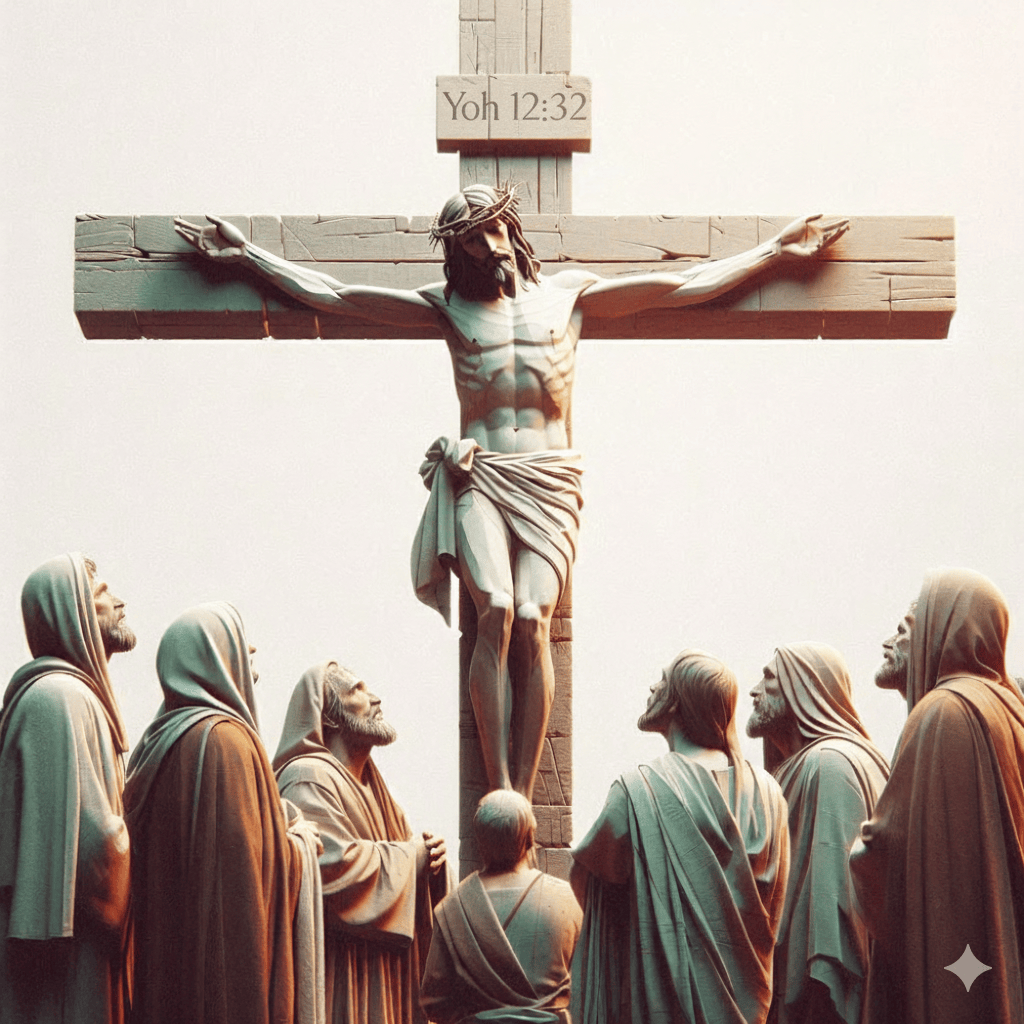
    John 12:32 — “And I, when I am lifted up from the earth, will draw all people to myself.”
    Romans 1:16 — “For I am not ashamed of the gospel, because it is the power of God that brings salvation to everyone who believes.”
    Acts 9:3–4 — “As he neared Damascus on his journey, suddenly a light from heaven flashed around him. He fell to the ground and heard a voice say to him, ‘Saul, Saul, why do you persecute me?’”


    Introduction — Magnet of Grace
    And here lies the heart of the mystery: Christ lifted up—crucified and exalted—is the Divine Magnet who draws souls irresistibly. Paul echoes this when he proclaims the Gospel as God’s power, not human philosophy. Just as iron responds to the pull of a magnet, so true faith responds to Christ’s drawing. On the Damascus road, Paul was not reasoned into belief nor persuaded by debate, but seized by divine attraction that conquered his heart, mind, and will.


    Historical Grounding
    Josephus, though no follower of Jesus, testified to the remarkable spread of the Jesus movement after His death—something inexplicable without a greater power at work. Paul himself stands as living evidence: once a fierce persecutor, he became a chief witness of the very Gospel he opposed. His transformation was not a shift in zeal but the result of encountering the risen Lord. History records the undeniable magnetism of the crucified and exalted Christ—an attraction strong enough to turn an enemy into an apostle.


    Notable Quotes
    “God loves each of us as if there were only one of us.” — Augustine of Hippo

    “Faith is taking the first step even when you don’t see the whole staircase.” — Rosa Parks


    Conclusion — Summary Truth
    The lifting up of Jesus was not weakness but the revelation of divine strength. The magnetism of the cross both breaks the chains of sin and awakens souls to new life. Paul’s three days of blindness mirrored the cleansing of his inner darkness, preparing him to see the glory of Christ. This is the essence of divine attraction: it humbles pride, shatters self-reliance, and draws us fully into God’s grace.


    Contemporary Challenge
    Why do many resist this divine attraction today? Some hearts are hardened, others distracted by worldly noise. The magnet has not lost its power, but resonance requires humility and faith. Our call is not only to speak of Christ but to live as witnesses whose lives radiate His drawing presence. When we remain close to the crucified and risen Lord, His Spirit through us becomes a living magnet, drawing others—just as He drew Paul—into the transforming orbit of grace.

  • Hidden Celebration

    Key Verses
    Matthew 21:9 — “Hosanna to the Son of David! Blessed is he who comes in the name of the Lord! Hosanna in the highest!”
    Zechariah 9:9 — “See, your king comes to you, righteous and victorious, lowly and riding on a donkey, on a colt, the foal of a donkey.”
    John 12:16 — “At first his disciples did not understand all this. Only after Jesus was glorified did they realize that these things had been written about him and that these things had been done to him.”


    Introduction
    When Jesus entered Jerusalem upon a donkey, the celebration was one His disciples could not completely comprehend. Crowds shouted with joy, waved branches, and hailed Him as King—yet their understanding was veiled. Only after the cross and resurrection did they realize they had taken part in a prophetic coronation foretold centuries earlier. It was a royal procession without earthly power, a paradox of humility that only heaven could interpret.


    Historical Grounding
    In Jewish tradition, processions into the city often marked military triumphs or royal arrivals. Josephus records several such entries in Judean history. Yet Jesus’ entry was utterly different: no army, no chariot, no crown of gold—only a borrowed donkey carrying the King promised by Zechariah.

    The irony was profound: the true King entered His city, but the people expected a political liberator. History and prophecy converged in a single moment, though most eyes could not perceive the true meaning.


    Notable Quotes
    “We are not citizens of this world trying to get to heaven, but citizens of heaven making our way through this world.” — Vance Havner

    “Never be afraid to trust an unknown future to a known God.” — Elisabeth Elliot


    Conclusion
    The triumphal entry was both joy and mystery. The disciples rejoiced, but only later recognized its depth: they had unknowingly proclaimed the arrival of the King whose throne was the cross. What seemed a festival of hope was in fact the beginning of Christ’s passion, for His kingship was unlike any earthly reign.


    Contemporary Challenge
    Even today, many celebrate Jesus without recognizing His true kingship. Some reduce Him to a moral teacher, others to a political figure, and still others to a cultural icon. Yet the hidden celebration calls us to honor Him rightly—as the humble King who reigns through the cross.

    Our task is not merely to join the crowd’s Hosanna but to follow Him through Golgotha, embracing both the joy of His victory and the cost of His kingdom.

  • Divine Magnet

    Key Verses
    John 12:32 — “And I, when I am lifted up from the earth, will draw all people to myself.”
    Mark 5:30 — “At once Jesus realized that power had gone out from him. He turned around in the crowd and asked, ‘Who touched my clothes?’”
    Ephesians 1:18 — “That you may know what is the hope to which he has called you, the riches of his glorious inheritance in the saints.”


    Introduction
    Beloved friends, let us begin with the mystery of Christ as the Divine Magnet.
    When Jesus spoke of being “lifted up,”
    He referred both to His crucifixion and His exaltation.

    A magnet draws only that which resonates with its nature; so too, Christ draws those who respond in faith. The woman with the flow of blood illustrates this truth: though surrounded by a pressing crowd, only she, by faith, drew forth His healing virtue. The principle remains the same—faith aligns us with His life, while unbelief, though near in flesh, remains far in spirit.


    Historical Grounding
    This truth is not mere poetic imagery but anchored in history. Josephus records how Jerusalem swelled with crowds during feast days, pressing around leaders and teachers. Yet proximity to holy men never transformed lives.

    The Gospels testify with clarity: Jesus alone released divine power—not through touch alone, but through faith that touched Him. This distinction sets the Gospel apart from legend; it is rooted in real time, real people, and real miracles.


    Notable Quotes
    “Faith is to believe what you do not see; the reward of this faith is to see what you believe.” — Augustine of Hippo

    “Prayer is the key, but faith is the hand that turns the key.” — Corrie ten Boom


    Conclusion
    Christ as the Divine Magnet is not passive attraction but holy interaction. The riches of His glory are released when faith meets His presence. This is why Paul affirms: “The Gospel is the power of God for salvation” (Rom. 1:16).

    The divine magnet draws, purifies, and transforms—not because of learning or lineage, but because God Himself acts in grace.


    Contemporary Challenge
    Today, many press around Jesus through tradition, ritual, or inherited religion. Yet only faith that resonates with His Spirit truly draws from His power.

    Why does His power seem less visible now? Often because hearts are distracted, dulled, or hardened. The call is to rekindle living faith—to draw near not with lips only, but with trust, expectancy, and surrender. Only then will we once more experience the power that flowed from Him in that ancient crowd, and that still flows today.

  • Gospel Mandate

    Key Verses
    Matthew 28:19–20
    Acts 10:44–45
    Romans 10:14–15


    Introduction
    The journey we have walked—from blemished offerings to the unveiled mystery, the Spirit’s seal, and the royal household—leads us here: the mandate to proclaim the Gospel.

    For without the message of Christ, even the most devout and religious remain outside the family of God. Cornelius prayed, gave alms, and feared God, yet he still needed Peter’s proclamation of Christ. Salvation does not come through devotion alone, but through hearing and believing the Gospel.


    Historical Grounding
    In the early Church, the command of Jesus—“Go therefore and make disciples of all nations” (Matt. 28:19)—was radical. Josephus records the Jewish resistance to Gentile inclusion, for Israel prized its unique covenant (Against Apion II.282).

    Yet at Caesarea, the Spirit fell upon Gentiles just as He had upon Jews at Pentecost (Acts 10:44–45). This moment shattered old divisions, proving that God was forming one family, sealed by His Spirit. From Jerusalem to Antioch, from Corinth to Rome, the Gospel spread as the apostles obeyed the divine commission—not as a suggestion, but as the heartbeat of their mission.


    Notable Quotes
    “It is the duty of every Christian to be a witness of the Gospel, for the Gospel is the power of God unto salvation.” — Charles H. Spurgeon

    “God does not call the equipped, He equips the called—and His call is to tell the world of Christ.” — Lottie Moon


    Conclusion
    The Gospel mandate is not optional. Even the righteous Cornelius needed Christ, and even the rich young ruler lacked the one thing necessary: to follow Jesus.

    The Spirit’s seal, the royal inheritance, the unveiled mystery—all of these blessings are given only through the Gospel. Therefore, to withhold it is to deny others entry into God’s family.


    Contemporary Challenge
    Today, many assume that sincerity in religion or generosity in life is enough for salvation. Others treat the Gospel as a private treasure rather than a global mandate.

    The Church must recover the urgency of proclamation—not merely inviting people to religion, but declaring Christ crucified and risen. Only then will nations be brought into God’s household, and only then will the Church fulfill its true calling as the bearer of God’s wisdom and revelation to the world.

  • Royal Household

    Key Verses
    Romans 8:16–17
    Ephesians 2:19–20
    Romans 12:1


    Introduction
    Once strangers, we are now sons and daughters. Once outsiders, we are now citizens of God’s household. Paul writes: “The Spirit Himself bears witness with our spirit that we are children of God, and if children, then heirs—heirs of God and fellow heirs with Christ” (Rom. 8:16–17).

    To belong to the royal household of God is not merely to receive blessing, but to be transformed into living sacrifices, holy and pleasing to Him.


    Historical Grounding
    In the Greco-Roman world, adoption (huiothesia) was a powerful legal act. Josephus records that Herod adopted sons into his line to secure political inheritance (Antiquities XVII.1). Once adopted, a child became a full heir—no less legitimate than a natural-born son.

    Paul employs this image to describe the believer’s new status. Through Christ, we are adopted into God’s family, sharing in His inheritance. This adoption fulfills God’s promises to Abraham, for now all nations, through faith, belong to His household (Gal. 3:29).


    Notable Quotes
    “The Son of God became the Son of Man so that the sons of men might become sons of God.” — Athanasius of Alexandria

    “I am not what I ought to be, but by the grace of God I am what I am, a child of the King.” — Fanny Crosby


    Conclusion
    The Gospel brings not only forgiveness but also identity. We are God’s family, His temple, His royal household. This identity forever silences the doubt: “Does God love me?”

    In Christ, the answer is certain: yes. He calls us heirs and seats us with Him in heavenly places. From this assurance flows our calling—to present our lives as living sacrifices (Rom. 12:1), bringing glory to the Father.


    Contemporary Challenge
    In an age of fractured families and fragile identities, many struggle to know where they belong. Too often, the Church mirrors the world’s divisions instead of embodying God’s unity.

    To live as God’s household, believers must practice sacrificial love, honor one another as members of the same body, and witness to a watching world that in Christ, all are welcomed home. Only then will the Church reflect its true royal identity—seated with Christ and shining with His glory.

  • Spirit Seal

    Key Verses
    Ephesians 1:13–14
    John 14:26
    2 Corinthians 1:21–22


    Introduction
    The Gospel not only opens hearts to Christ; it seals them with the Spirit. Paul teaches that those who believe are “sealed with the promised Holy Spirit, who is the guarantee of our inheritance” (Eph. 1:13–14). Without the Gospel, there is no Spirit, and without the Spirit, there is no true wisdom or revelation. The Spirit Himself is both God’s mark of ownership and His pledge that every promise is certain.


    Historical Grounding
    In the Roman world, a seal carried authority—it was the mark of authenticity, security, and belonging. Josephus records instances where kings sealed documents and treasures with their rings, symbolizing that none could tamper with them (Antiquities XII.4).

    Likewise, the Spirit is God’s royal seal upon His people, declaring them authentic heirs of the covenant. This sealing fulfills the prophets’ promises: Ezekiel foresaw God placing His Spirit within His people to move them to obedience (Ezek. 36:27). At Pentecost, the Spirit’s outpouring confirmed that the new covenant had begun in power, binding Jew and Gentile alike into one body.


    Notable Quotes
    “The Spirit is God’s engagement ring to His bride, assuring her of the wedding yet to come.” — Charles Spurgeon
    “Without the Spirit of God, we can do nothing. We are ships without wind, branches without sap.” — Susanna Wesley


    Conclusion
    The seal of the Spirit is not a fleeting emotion but a divine pledge. Through Him, believers gain wisdom, receive revelation, and are assured of their inheritance as God’s heirs. By His indwelling presence, the Church becomes Christ’s body—alive, secure, and equipped for His mission.

    The Gospel does not merely forgive; it indwells, marking believers with the Spirit as the guarantee of eternal glory.


    Contemporary Challenge
    Today, some reduce the Spirit’s work to outward signs—tongues, gifts, or emotional highs—while forgetting His deeper role as wisdom-giver, comforter, and seal of salvation. Others neglect Him altogether, relying only on intellect, tradition, or ritual.

    To recover the life and power of the early Church, believers must walk daily in the Spirit—yielding to His guidance, correction, and revelation of Christ. Only then will the Church live as a true heir of God’s promises, marked not by human effort but by the divine seal.

  • Unveiled Mystery

    Key Verses
    Ephesians 3:4–6
    Colossians 1:26–27
    Romans 16:25–26


    Introduction
    The Gospel does more than rescue—it unveils. For centuries, the mystery of Christ remained concealed, glimpsed only through shadows and prophecies. Even the devout, like Cornelius, or the zealous, like Paul before his conversion, could not fully perceive it. But now, in Christ, the veil is lifted, and both Jew and Gentile are welcomed into one body. This revelation is not the fruit of human intellect but the work of God’s Spirit opening blind eyes and unstopping deaf ears.


    Historical Grounding
    The prophets often spoke of Gentile inclusion, though dimly. Isaiah declared, “Nations shall come to your light” (Isa. 60:3). Yet under Persian and later Roman rule, Israel clung tightly to its national identity, awaiting a Messiah for themselves alone.

    Josephus records the pride of the Jewish nation in its covenant (Against Apion II.193), which often became a barrier against Gentiles. Against this backdrop, Paul—writing from prison—announced the radical truth: the mystery once hidden is now revealed. Gentiles are “fellow heirs, members of the same body” (Eph. 3:6). This was no minor detail; it was the breaking open of salvation’s gates to all peoples.


    Notable Quotes
    “The mystery of the Gospel is not that God loves the Jews, but that He loves the world.” — John Stott
    “Christ in you, the hope of glory—this is the unveiled secret of the ages.” — Catherine Booth


    Conclusion
    The unveiling of the mystery shows that salvation is not bound to a nation, temple, or ritual, but to Christ Himself. Through the Spirit of wisdom and revelation, believers now see what was hidden: Gentiles are no longer strangers but co-heirs with Israel, united in the same promise.

    This is the heartbeat of the Gospel—grace that transcends boundaries and forges a new family in Christ.


    Contemporary Challenge
    Today, divisions persist—racial, cultural, denominational—echoes of the old walls that Christ tore down. Many still live as though the Gospel is reserved for “us” and not “them.” To recover Paul’s vision, the Church must embrace the unveiled mystery: every believer, regardless of background, is a full participant in God’s promises.

    Only then will the world see the unity of Christ’s body—a living testimony to the power of the cross.

  • Empty Sacrifice

    Key Verses
    Malachi 1:10–11
    Mark 10:21–22
    Acts 10:1–2


    Introduction
    From the days of Malachi to the ministry of Jesus, one truth remained: human offerings, however great, cannot satisfy God apart from Christ. Some gave sacrifices carelessly, while others—like the rich young ruler—believed their devotion was sufficient. Yet both reveal the same flaw: the human heart assumes God can be appeased by works without surrender. Even Cornelius, though devout and generous, still needed Peter to proclaim the Gospel of Christ to him.


    Historical Grounding
    The prophet Malachi exposed the priests’ negligence: “You bring what is stolen, lame, or sick; should I accept that from your hand?” (Mal. 1:13). By the first century, despite rigorous temple rituals, Jesus declared that outward obedience was insufficient without wholehearted love for God (Mark 12:30).

    Josephus also observed that many pursued honor through sacrifices and almsgiving, but their hearts were far from true devotion (Antiquities XX.9). Both Jewish history and apostolic witness affirm that God does not weigh gifts by size but by the purity of the heart behind them.


    Notable Quotes
    “God does not need your good works, but your neighbor does.” — Martin Luther
    “It is not how much we give, but how much love we put into giving.” — Mother Teresa


    Conclusion
    Even the grandest sacrifices are empty apart from Christ. Cornelius’ prayers and alms rose as a memorial before God, yet they pointed him toward the need for the Gospel. Likewise, the rich young ruler’s obedience to the commandments was not enough—he lacked the surrender required to follow Jesus fully.

    The law and the prophets converge on this truth: only Christ completes what human efforts cannot.


    Contemporary Challenge
    Today, believers may still fall into the error of offering God their “leftovers”—distracted worship, reluctant service, or giving without love. Others may place confidence in charity, activism, or moral discipline, assuming these works earn favor before Him.

    The challenge is clear: will we cling to our sacrifices, or will we surrender wholly to Christ, the one true offering? To revive authentic faith, the Church must call people not to “do more,” but to “follow Him.”